


When Sri Lankan mechanic Sarath Ananda left his job in Kuwait to make traditional palm sweets, he never imagined the career switch would bring global acclaim.
Ananda returned home in 2008 and embraced his family’s traditional vocation — tapping sap from the kithul palm, becoming a fifth-generation practitioner of a craft now recognized by UNESCO as an Intangible Cultural Heritage of Humanity.
The honor has cast a global spotlight on a fragile cottage industry battling labor shortages, rampant adulteration and dwindling sap supplies.
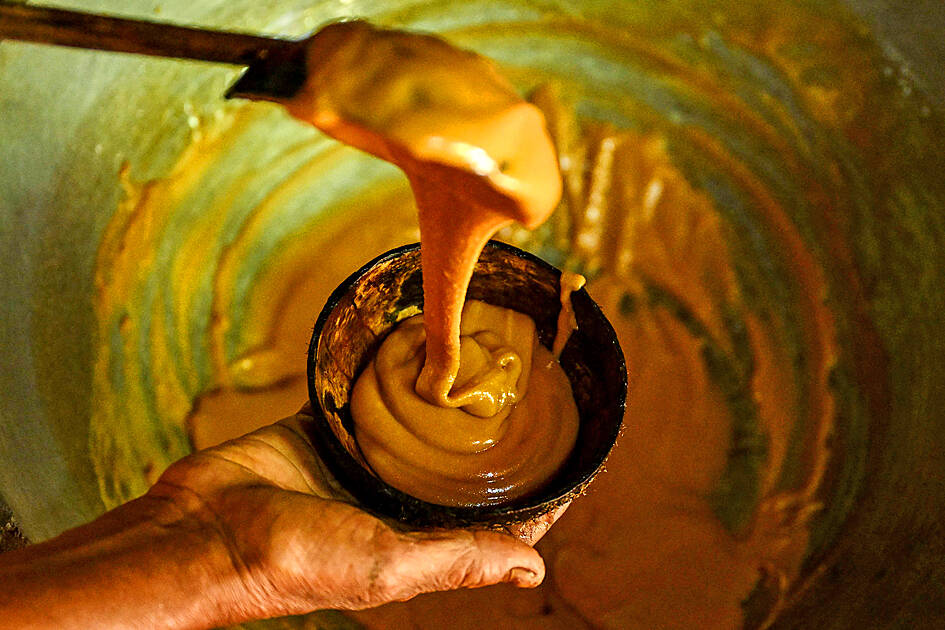
Photo: AFP
At dawn and sunset, Ananda, 63, climbs towering Caryota urens trees to collect the sweet, milky sap that is boiled into treacle — a caramel-colored syrup with a pleasant aroma that enhances the flavor of desserts.
When boiled longer, it reduces into jaggery, a mineral-rich palm sugar with a lower glycemic index than the commonly available white cane sugar.
However, the yield from his five trees — about 200 liters a day — falls far short of demand for his homemade brand. So Ananda has built a network of 55 tappers who supply their harvest to him daily, enabling exports to Australia, Britain, New Zealand and the Middle East.
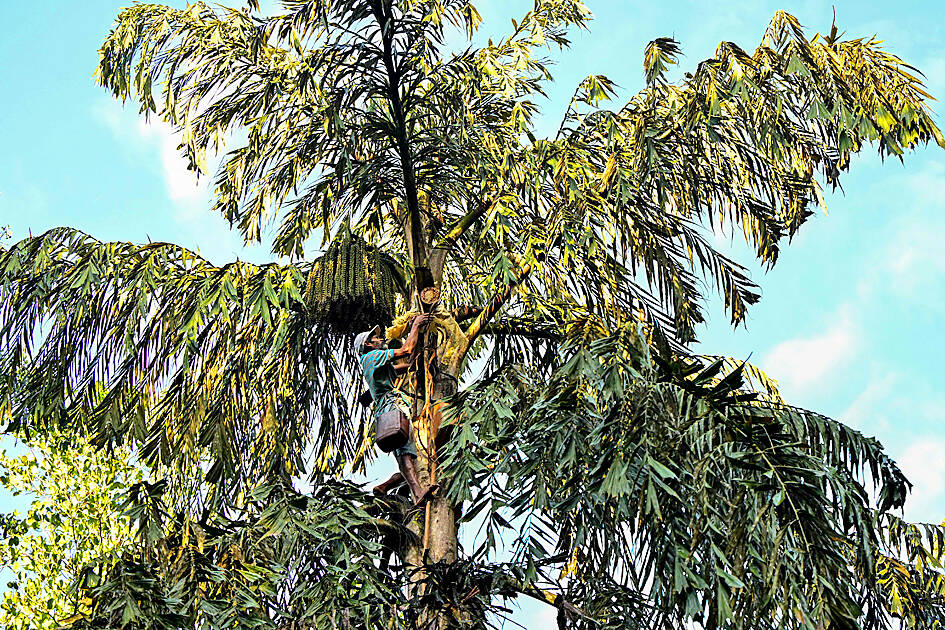
Photo: AFP
“I returned home after working in Kuwait for 10 years. Then I took up the family vocation,” he said at his village home in Ambegoda, about 100km south of the capital, Colombo.
However, he is worried the art of tapping will fade away, with the new generation unlikely to take it up.
“My son is studying engineering,” he said. “I don’t think he will want to climb trees.”
His wife, Padma Nandani Thibbotuwa, 61, handles the boiling and stirring.
“The big problem we face is adulterated products — some people add sugar,” she said. “This is because pure kithul is very expensive.”
If the sap is not boiled immediately after collection, it ferments into a potent alcoholic drink known as kithul toddy.
Most kithul-producing households divide labor the same way — husbands collect the sap while the wives process it into sweets.
The UNESCO inscription has boosted recognition for the rural industry, which is still regarded as a lowly occupation in caste-conscious Sri Lankan society.
“As a living heritage, kithul tapping is integral to communal harmony, shaping cultural identity and values, and reflecting both unity and a deep spiritual connection with nature,” UNESCO said when conferring the honor in December.
The palms grow wild and need no fertilizer, but attempts to commercially cultivate kithul have repeatedly failed.
The state-run Kithul Development Board says it is training 1,300 tappers to preserve the centuries-old craft.
“Kithul is not unique to Sri Lanka — it is found across South and Southeast Asia,” KDB chairwoman M. U. Gayani said. “But the method of tapping the flowers is practiced only by us, which is why UNESCO recognized it.”
Export earnings from kithul products totaled a modest US$1 million per year, largely due to supply shortages, she said.
Gayani estimates the island has roughly half a million kithul palms, fewer than half of which are tapped — a sign of both the industry’s struggles and its potential.
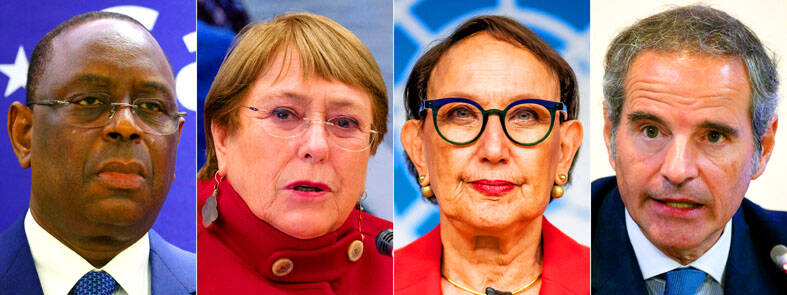
Four contenders are squaring up to succeed Antonio Guterres as secretary-general of the UN, which faces unprecedented global instability, wars and its own crushing budget crisis. Chile’s Michelle Bachelet, Argentina’s Rafael Grossi, Costa Rica’s Rebeca Grynspan and Senegal’s Macky Sall are each to face grillings by 193 member states and non-governmental organizations for three hours today and tomorrow. It is only the second time the UN has held a public question-and-answer, a format created in 2016 to boost transparency. Ultimately the five permanent members of the UN’s top body, the Security Council, hold the power, wielding vetoes over who leads the

South Korea’s air force yesterday apologized for a 2021 midair collision involving two fighter jets, a day after auditors said the pilots were taking selfies and filming during the flight and held them responsible for the accident. “We sincerely apologize to the public for the concern caused by the accident that occurred in 2021,” an air force spokesman told a news conference, adding that one of the pilots involved had been suspended from flying duties, received severe disciplinary action and has since left the military. The apology followed a report released on Wednesday by the South Korean Board of Audit and Inspection,

Young Chinese, many who fear age discrimination in their workplace after turning 35, are increasingly starting “one-person companies” that have artificial intelligence (AI) do most of the work. Smaller start-ups are already in vogue in Silicon Valley and elsewhere, with rapidly advancing AI tools seen as a welcome teammate even as they threaten layoffs at existing firms. More young people in China are subscribing to the model, as cities pledge millions of dollars in funding and rent subsidies for such ventures, in alignment with Beijing’s political goal of “technological self-reliance.” “The one-person company is a product of the AI era,” said Karen Dai

About 240 Indians claiming descent from a Biblical tribe landed at Tel Aviv airport on Thursday as part of a government operation to relocate them to Israel. The newcomers passed under a balloon arch in blue and white, the colors of the Israeli flag, as dozens of well-wishers welcomed them with a traditional Jewish song. They were the first “bnei Menashe” (“sons of Manasseh”) to arrive in Israel since the government in November last year announced funding for the immigration of about 6,000 members of the community from the states of Manipur and Mizoram in northeast India. The community claims to descend from


 RSS
RSS