


The Syrian government and Kurdish forces on Saturday extended their truce by 15 days, with Damascus saying it was to support the US transfer of Islamic State (IS) group detainees from Syria to Iraq.
Several sources had earlier said the truce would be prolonged, with a Syrian official in Damascus citing the same reason.
In a statement, the Syrian Ministry of Defense said the 15-day extension would take effect at 11pm on Saturday.
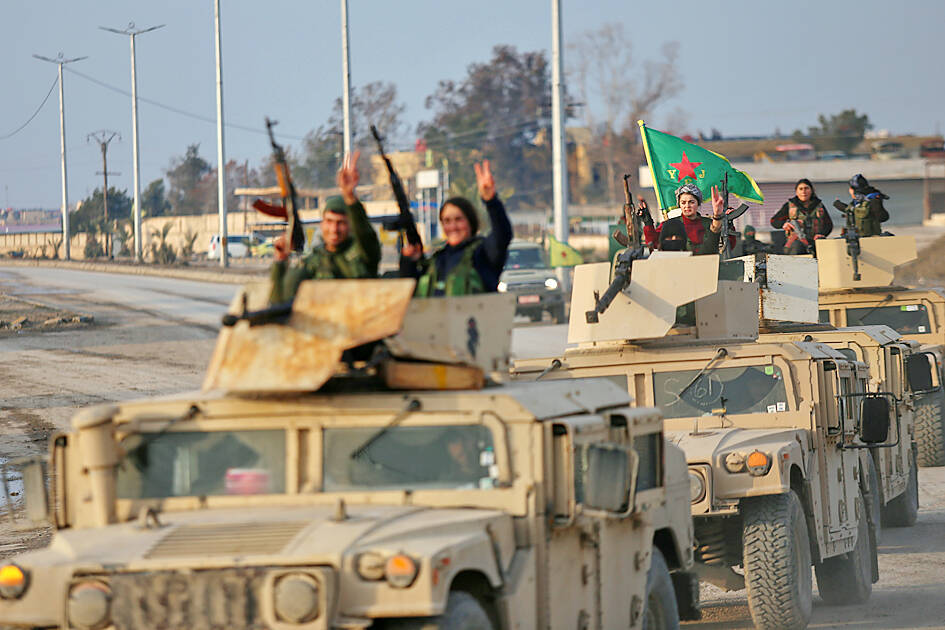
Photo: AP
“The extension of the ceasefire comes in support of the American operation to transfer Islamic State detainees from SDF [Syrian Democratic Forces] prisons to Iraq,” the statement added.
The SDF also confirmed the extension, saying it was reached “through international mediation, while dialogue with Damascus continues.”
“Our forces affirm their commitment to the agreement and their dedication to respecting it, which contributes to de-escalation, the protection of civilians, and the creation of the necessary conditions for stability,” it said in a statement.

Photo: AFP
Damascus and the SDF had initially agreed to a four-day ceasefire on Tuesday last week after Kurdish forces relinquished swathes of territory to central government troops, who also sent reinforcements to a Kurdish stronghold in the northeast.
After the SDF lost large areas to government forces, Washington said it would transfer 7,000 IS detainees to prisons in Iraq. Europeans were among the 150 senior IS detainees who were the first to be transferred on Wednesday last week, and two Iraqi officials said that a second batch of “up to 1,000 IS detainees” were being sent on Saturday.
Turkish Minister of Foreign Affairs Hakan Fidan, whose country is a key backer of Damascus but hostile to the SDF, had said during a TV interview on Friday that in light of the IS prisoner transfers, “extending the ceasefire for a while longer might be considered.”
The transfer is expected to take several days.
The IS swept across Syria and Iraq in 2014, committing massacres and other atrocities before being territorially defeated by the SDF and a US-led coalition.
The truce between Damascus and the Kurds is part of a new understanding over Kurdish-majority areas in Hasakeh province and a broader deal to integrate the Kurds’ administration into the state.
Syrian President Ahmed al-Sharaa’s forces toppled longtime ruler Bashar al-Assad in 2024. The new authorities are seeking to extend state control across Syria, resetting international ties including with the US, now a key ally.
The Kurdish source said the SDF submitted a proposal to the authorities through US envoy Tom Barrack that would have the government managing border crossings — a key Damascus demand.
It also proposes that Damascus would “allocate part of the economic resources — particularly revenue from border crossings and oil — to the Kurdish-majority areas,” the source added.
Earlier this month, the Syrian army recaptured oil fields, including the country’s largest, while advancing against Kurdish forces.
On Saturday, the central government freed at least 126 minors being held in a prison for IS detainees in Raqa province in northern Syria after taking over the facility from Kurdish forces.
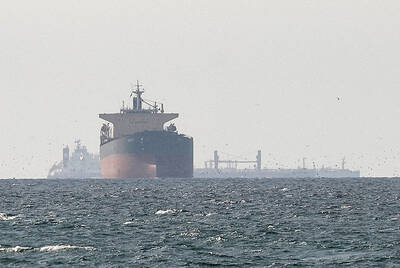
A ship that appears to be taking on the identity of a scrapped gas carrier exited the Strait of Hormuz on Friday, showing how strategies to get through the waterway are evolving as the Middle East war progresses. The vessel identifying as liquefied natural gas (LNG) carrier Jamal left the Strait on Friday morning, ship-tracking data show. However, the same tanker was also recorded as having beached at an Indian demolition yard in October last year, where it is being broken up, according to market participants and port agent’s reports. The ship claiming to be Jamal is likely a zombie vessel that
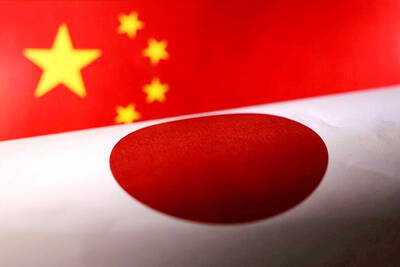
Japan is to downgrade its description of ties with China from “one of its most important” in an annual diplomatic report, according to a draft reviewed by Reuters, as relations with Beijing worsen. This year’s Diplomatic Bluebook, which Japanese Prime Minister Sanae Takaichi’s government is expected to approve next month, would instead describe China as an important neighbor and the relationship as “strategic” and “mutually beneficial.” The draft cites a series of confrontations with Beijing over the past year, including export controls on rare earths, radar lock-ons targeting Japanese military aircraft and increased pressure around Taiwan. The shift in tone underscores a deterioration
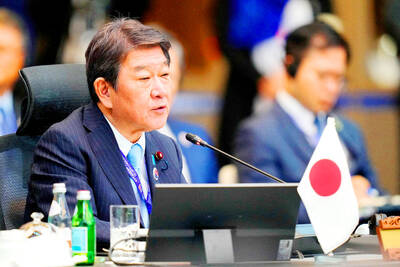
LAW CONSTRAINTS: The US has been pressing allies to send warships to open the Strait, but Tokyo’s military actions are limited under its postwar pacifist constitution Japan could consider deploying its military for minesweeping in the Strait of Hormuz if a ceasefire is reached in the war on Iran, Japanese Minister of Foreign Affairs Toshimitsu Motegi said yesterday. “If there were to be a complete ceasefire, hypothetically speaking, then things like minesweeping could come up,” Motegi said. “This is purely hypothetical, but if a ceasefire were established and naval mines were creating an obstacle, then I think that would be something to consider.” Japan’s military actions are limited under its postwar pacifist constitution, but 2015 security legislation allows Tokyo to use its Self-Defense Forces overseas if an attack,

German Chancellor Friedrich Merz’s conservative Christian Democratic Union (CDU) yesterday faced a regional election battle in Rhineland-Palatinate, now held by the center-left Social Democratic Party (SPD). Merz’s CDU has enjoyed a narrow poll lead over the SPD — their coalition partners at the national level — who have ruled the mid-sized state for 35 years. Polling third is the far-right Alternative for Germany (AfD), which spells a greater threat to the two centrist parties in several state elections in September in the country’s ex-communist east. The picturesque state of Rhineland-Palatinate, bordering France, Belgium and Luxembourg and with a population of about 4 million,


 RSS
RSS