


Vietnam’s Communist Party chief To Lam, reappointed yesterday as the country’s most powerful official, has earned a reputation as an ambitious reformer, promoting the strengthening of private conglomerates while boosting police powers.
Lam’s initial stint at the top of the Communist Party was marked by rapid, sweeping reforms and a commanding style that impressed many foreign investors and boosted Vietnam’s stock market, but also stirred discontent.
Less doctrinaire than his late predecessor, Nguyen Phu Trong, Lam has prioritized growth — which is crucial to legitimize the party’s authoritarian power — despite concerns over financial risks, controversial infrastructure and favoritism.
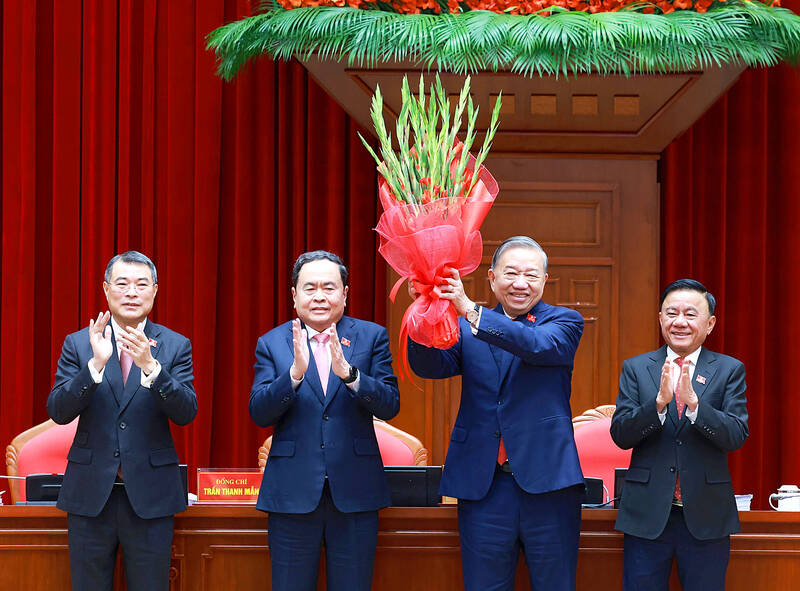
Photo: VNA via AP
Lam “is regarded as a strategic and visionary leader, likely influenced by his experience in the security and intelligence sectors,” ISEAS Yusof Ishak Institute senior fellow Le Hong Hiep said.
Lam has strived to keep good relations with all major powers, despite unilateral US tariffs on Vietnamese goods that threatened access to the country’s largest foreign market.
STELLAR RISE
Lam, son of a senior police officer, studied security, earned a doctorate in law and rose through the public ranks.
He became Vietnamese minister for public security in 2016, was promoted to four-star general nearly three years later and joined the party Politburo in 2021.
As police chief, he was a key enforcer of Trong’s sweeping anti-corruption drive in 2017, which led to the dismissal of hundreds of officials, as well as the resignation of two presidents.
Lam emerged as the dominant figure of that tumultuous period. He was appointed as Vietnamese president in May 2024, and took the party helm after Trong died the following July.
Before his reappointment, Lam vowed to continue the corruption crackdown, although the campaign has eased under his leadership after criticism it was paralyzing the public administration.
Lam relinquished the presidency a few months after becoming party chief, but he continued acting as de facto head of state, representing the country abroad and meeting foreign leaders.
He is now bidding to combine the two roles, such as Chinese President Xi Jinping (習近平) — an attempt that Hiep said “could pose risks to Vietnam’s political system,” which has traditionally hinged on collective decisionmaking.
LAM’S POLICIES
Under Lam, the security apparatus has vastly expanded, with the police gaining powers in lawmaking, project approvals and the corporate world, while increasing controls.
He is known to be directly involved in operations, having led anti-smuggling campaigns earlier in his career. More controversially, he has been viewed as the architect of the 2017 rendition of a Vietnamese national from Germany.
“Despite his long career as a security general, To Lam presents the appearance of an intellectual,” with a gentle speaking style, and a passion for music and art, Hiep said.
As minister of public security, Lam oversaw approval of a large new opera house, Hanoi’s second, opened in 2023. A third, designed by Renzo Piano, is under construction.
On foreign policy, Lam initially pursued close ties with Washington, but after disappointing trade talks and the White House’s unilateral imposition of 20 percent tariffs on Vietnamese goods, he quietly edged closer to China.
Lam is expected to continue balancing big powers under the “Bamboo Diplomacy” outlined by Trong, but “a major regional crisis may disrupt this multi-alignment strategy,” Asia-Pacific Center for Security Studies professor Alexander Vuving said.
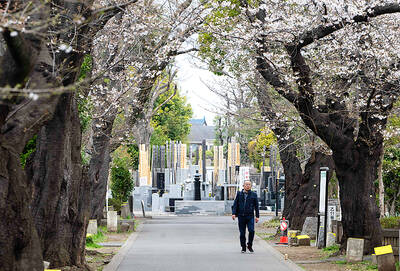
ROCKY RELATIONS: The figures on residents come as Chinese tourist numbers drop following Beijing’s warnings to avoid traveling to Japan The number of Chinese residents in Japan has continued to rise, even as ties between the two countries have become increasingly fractious, data released on Friday showed. As of the end of December last year, the number of Chinese residents had increased by 6.5 percent from the previous year to 930,428. Chinese people accounted for 22.6 percent of all foreign residents in Japan, making them by far the largest group, Japanese Ministry of Justice data showed. Beijing has criticized Tokyo in increasingly strident terms since Japanese Prime Minister Sanae Takaichi last year suggested that a military conflict around Taiwan could
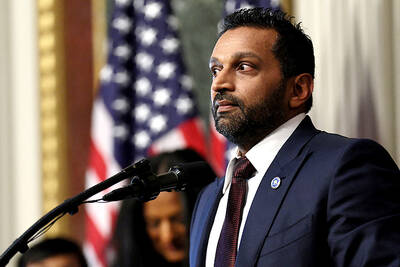
A pro-Iran hacking group claimed to breach FBI Director Kash Patel’s personal e-mail inbox and posted some of the contents online. The e-mails provided by the hacking group include travel details, correspondence with leasing agents in Washington and global entry, and loyalty account numbers. The e-mail address the hackers claim to have compromised has been previously tied to Patel’s personal details, and the leaked e-mails contain photos of Patel and others, in addition to correspondence with family members and colleagues. “The FBI is aware of malicious actors targeting Director Patel’s personal email information,” the agency said in a statement on
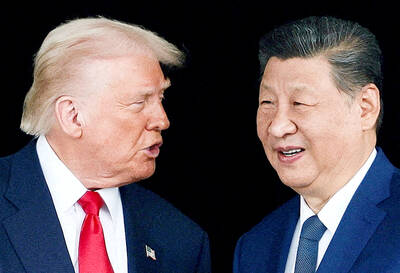
RIVALRY: ‘We know that these are merely symbolic investigations initiated by China, which is in fact the world’s most profligate disrupter of supply chains,’ a US official said China has started a pair of investigations into US trade practices, retaliating against similar probes by US President Donald Trump’s administration as the superpowers stake out positions before an expected presidential summit in May. The move, announced by the Chinese Ministry of Commerce on Friday, is a direct mirror of steps Trump took to revive his tariff agenda after the US Supreme Court last month struck down some of his duties. “China expresses its strong dissatisfaction and firm opposition to these actions,” a ministry spokesperson said in a statement, referring to the so-called Section 301 investigations initiated on March 11.

When a hiker fell from a 55m waterfall in wild New Zealand bush, rescuers were forced to evacuate the badly hurt woman without her dog, which could not be found. After strangers raised thousands of dollars for a search, border collie Molly was flown to safety by a helicopter pilot who was determined to reunite the pet and the owner. A week earlier, an emergency rescue helicopter found the woman with bruises and lacerations after a fall at a rocky spot at the waterfall on the South Island’s West Coast. She was airlifted on March 24, but they were forced to


 RSS
RSS