


Nigerian police on Tuesday made an about-turn, saying that gunmen had abducted dozens of people during Sunday mass in northern Kaduna State after dismissing the initial reports.
A senior Christian clergy and a village head had on Monday told reporters that more than 160 people were snatched from several churches on Sunday.
A security report prepared for the UN said that more than 100 people had been kidnapped at multiple churches.
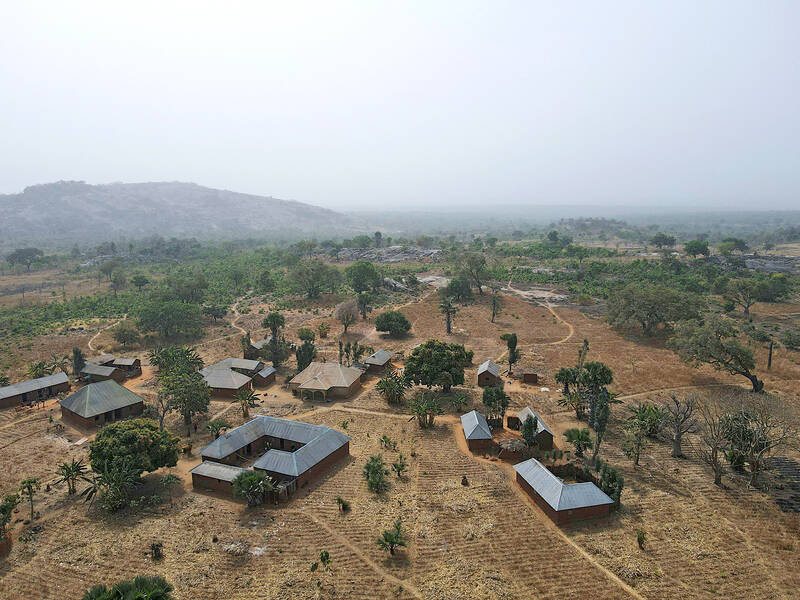
Photo: Reuters
The chief of police of Kaduna State and two senior government officials had initially issued denials, saying security officers had visited the scene of the alleged crimes and found no proof of any kidnapping, with one of them describing the reports as “totally false.”
However, in a statement late on Tuesday, Nigerian national police spokesman Benjamin Hundeyin said that an “abduction” had occurred and that the force had launched security operations, “with a clear focus on locating and safely rescuing the victims and restoring calm to the area.”
Remarks made by police and other officials from Kaduna State were “intended to prevent unnecessary panic while facts were being confirmed,” Hundeyin said.
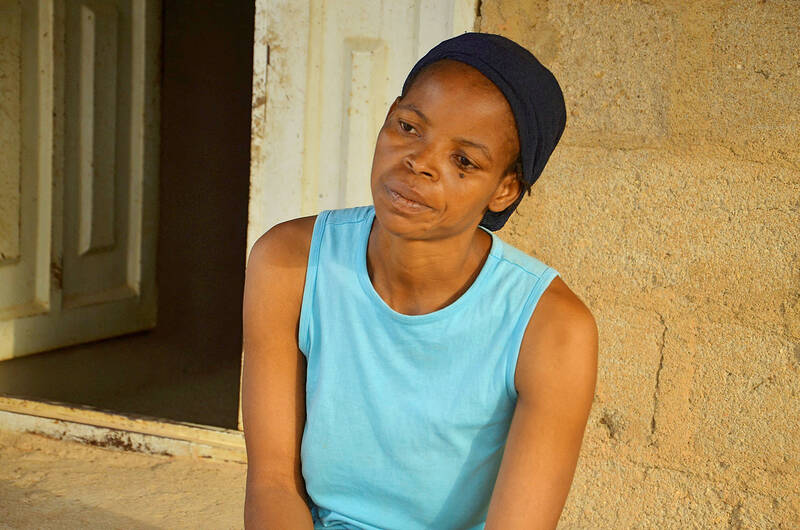
Photo: Reuters
“Those remarks, which have since been widely misinterpreted, were not a denial of the incident, but a measured response pending confirmation of details from the field, including the identities and number of those affected,” he said. “Subsequent verification from operational units and intelligence sources has confirmed that the incident did occur.”
A Christian grouping in northern Nigeria has submitted a list of people seized.
“We did produce the names of over 177 people and there is no contest that it was real,” Joseph Hayab, head of the Christian Association of Nigeria for the country’s north, told reporters on Tuesday. “Such a number couldn’t have been taken and you think you can bury it just like that.”
He said there was also evidence of “those who escaped even with injury.”
Sunday’s attacks are the latest in a wave of mass kidnappings in Nigeria.
Gangs — known in Nigeria as “bandits” — frequently carry out mass kidnappings for ransom and loot villages, mainly in the northern and central parts of Africa’s most populous country.
In November last year, armed gangs seized more than 300 students and teachers from a Catholic school in Niger State, with 50 escaping and the rest being released in two batches weeks later.
Roughly evenly split between a mostly Christian south and Muslim-majority north, Nigeria is home to myriad conflicts, which experts say kill Christians and Muslims, often without distinction.
Late last month, the US launched strikes on what it and the Nigerian government said were militants linked to the Islamic State group in northwestern Sokoto State.
Nigeria said it approved the strikes.
Nigeria has meantime struck a US$750,000-per-month deal with a US firm to lobby Washington to help Abuja communicate “its actions to protect ... Christian communities and [maintain] US support in countering west African jihadist groups,” disclosure forms filed with the US Department of Justice showed.

SPEAKING OUT: After Siranudh Scott’s allegations surfaced, celebrities and public figures took to social media to share their own experiences of sexual misconduct and abuse A high-profile alleged sexual abuse case within a wealthy Thai beer brewing family has prompted a wave of painful accounts from survivors of unconnected abuse in the conservative nation. Siranudh Scott, a member of the billionaire Thai family that founded the ubiquitous Singha beer brand, posted an emotional video this month accusing his elder brother Sunit of repeatedly abusing him when he was a teenager. Sunit, who is in his 30s, later denied the allegations in a video posted online, but Singha parent Boonrawd dismissed him from his executive role with the company on Tuesday last week. “I felt I needed to speak

SEEKING ORDER: Rodrigo Paz said that ‘anyone who wants to destroy the nation will have to deal with this president and the full force of the constitution’ Bolivian President Rodrigo Paz on Wednesday said that the nation was at a “breaking point” after nearly a month of protests that have caused shortages of food, fuel and medicine. Paz, who took office six months ago amid the worst economic crisis there in four decades, is battling a groundswell of fury over his policies. The political capital, La Paz, has been besieged by low-income workers and members of the indigenous majority calling for his resignation. “The country needs order and is reaching breaking point,” the 58-year-old said at a public event in La Paz, renewing his appeal for dialogue. On Tuesday, the Bolivian

A Hong Kong astronaut is to join a Chinese space mission for the first time as part of a three-person crew launching today, as Beijing edges closer to its goal of landing people on the moon. The Tiangong space station — crewed by teams of three astronauts that are typically rotated every six months — is the crown jewel of China’s space program, boosted by billions in state investment in a bid to catch up with the US and Russia. The Shenzhou-23 mission is to blast off at 11:08pm from the Jiuquan Satellite Launch Center in northwestern China, carrying three astronauts to
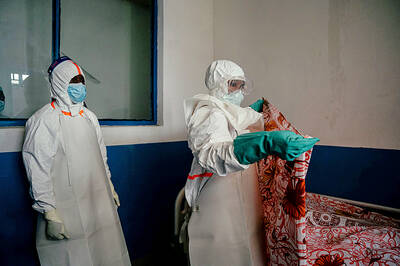
UPGRADED ALERT: The risk inside DR Congo is now considered ‘very high,’ while neighboring countries face a ‘high’ threat as the outbreak continues, the WHO said Ebola is spreading faster than responders can track it in eastern Congo, where health workers managed to follow up with barely one in five identified contacts in a single day. Authorities in the Democratic Republic of the Congo (DR Congo) reported 83 confirmed infections, 746 suspected cases and 1,603 identified contacts as of Thursday, but health workers were able to follow up on only 342 contacts that day — about 21 percent of the total under monitoring — data released by the DR Congo Ministry of Public Health on Friday showed. The figures suggest the response is falling behind the outbreak itself,


 RSS
RSS