


New regulations come into force yesterday in Britain banning daytime TV and online adverts for so-called junk foods, in what the government calls a “world-leading action” to tackle childhood obesity.
The ban — targeting ads for products high in fat, salt or sugar — is expected to remove up to 7.2 billion calories from children’s diets each year, the British Department of Health and Social Care said.
Impacting ads airing before the 9pm watershed and anytime online, it would reduce the number of children living with obesity by 20,000 and deliver about £2 billion (US$2.7 billion) in health benefits, the department added.

Photo: AP
The implementation of the measure — first announced in December 2024 — follows other steps, including an extended sugar tax on prepackaged items such as milkshakes, ready-to-go coffees and sweetened yoghurt drinks.
Local authorities have also been given the power to stop fast food shops setting up outside schools.
The British government argues evidence shows advertising influences what and when children eat, shaping preferences from a young age, and increasing the risk of obesity and related illnesses. It said 22 percent of children starting primary school in England — typically aged about 5 — are overweight or obese, rising to more than one-third by the time they progress to secondary school aged 11.
Tooth decay is the leading cause of British hospital admissions for young children, typically aged 5 to 9, officials said.
“By restricting adverts for junk food before 9pm and banning paid adverts online, we can remove excessive exposure to unhealthy foods,” British Undersecretary of State for Public Health and Prevention Ashley Dalton said in a statement.
The move was part of a strategy to make the state-funded National Health Service focus on preventing as well as treating sickness, “so people can lead healthier lives,” she said.
Katharine Jenner, executive director of the Obesity Health Alliance, said it was “a welcome and long-awaited step towards better protecting children from unhealthy food and drink advertising that can harm their health and well-being.”
The charity Diabetes UK also welcomed the ban, with chief executive Colette Marshall saying that type 2 diabetes is on the rise in young people.
“Obesity is a major risk factor for type 2 diabetes, and the condition can lead to more severe consequences in young people — leaving them at risk of serious complications like kidney failure and heart disease,” she said.
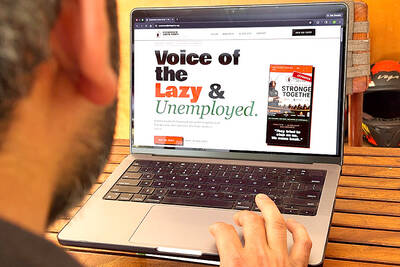
It began as a satirical online project. Now millions of young people in India are flocking to it as an outlet for their frustration. A parody political party called the Cockroach Janta Party, with the insect as its symbol, has exploded across India’s social media by turning absurdist humor into protest. Memes and short videos mocking corruption, joblessness and political dysfunction have flooded social media sites, where millions of users are embracing the cockroach — known for its ability to survive harsh conditions — as a tongue-in-cheek symbol of endurance. The online movement’s rise has been unusually rapid. The Cockroach Janta Party (CJP)

SPEAKING OUT: After Siranudh Scott’s allegations surfaced, celebrities and public figures took to social media to share their own experiences of sexual misconduct and abuse A high-profile alleged sexual abuse case within a wealthy Thai beer brewing family has prompted a wave of painful accounts from survivors of unconnected abuse in the conservative nation. Siranudh Scott, a member of the billionaire Thai family that founded the ubiquitous Singha beer brand, posted an emotional video this month accusing his elder brother Sunit of repeatedly abusing him when he was a teenager. Sunit, who is in his 30s, later denied the allegations in a video posted online, but Singha parent Boonrawd dismissed him from his executive role with the company on Tuesday last week. “I felt I needed to speak

A Hong Kong astronaut is to join a Chinese space mission for the first time as part of a three-person crew launching today, as Beijing edges closer to its goal of landing people on the moon. The Tiangong space station — crewed by teams of three astronauts that are typically rotated every six months — is the crown jewel of China’s space program, boosted by billions in state investment in a bid to catch up with the US and Russia. The Shenzhou-23 mission is to blast off at 11:08pm from the Jiuquan Satellite Launch Center in northwestern China, carrying three astronauts to
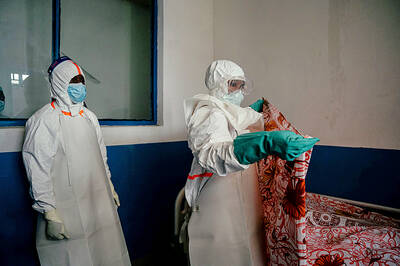
UPGRADED ALERT: The risk inside DR Congo is now considered ‘very high,’ while neighboring countries face a ‘high’ threat as the outbreak continues, the WHO said Ebola is spreading faster than responders can track it in eastern Congo, where health workers managed to follow up with barely one in five identified contacts in a single day. Authorities in the Democratic Republic of the Congo (DR Congo) reported 83 confirmed infections, 746 suspected cases and 1,603 identified contacts as of Thursday, but health workers were able to follow up on only 342 contacts that day — about 21 percent of the total under monitoring — data released by the DR Congo Ministry of Public Health on Friday showed. The figures suggest the response is falling behind the outbreak itself,


 RSS
RSS