


Many consumers feel pride in avoiding the glazed pastries in the supermarket and instead opting for “all natural” granola that comes packed with extra protein. Same goes for low-fat yogurts “made with real fruit,” “organic” plant-based milks and bottled “superfood” smoothies.
Buyer beware: Healthy grocery buzzwords like those often cover up an unhealthy amount of sugar.
Added sugars are difficult to quickly spot, because many companies use clever marketing to distract consumers, said Nicole Avena, a professor of neuroscience and psychiatry at Mount Sinai Medical School and Princeton University who has studied added sugars.
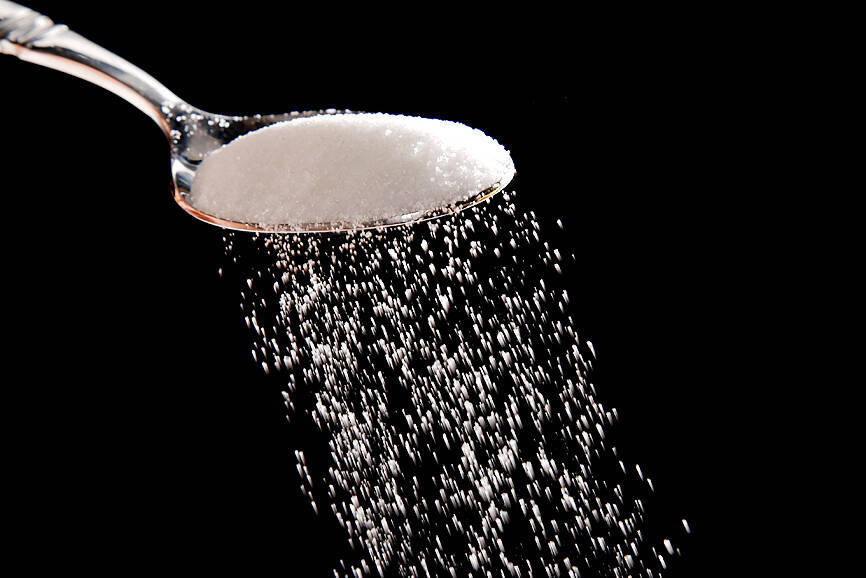
Photo: AP
While some health-forward brands know people are starting to become aware of the hazards of added sugars, “a lot of the bigger brands don’t worry so much about people’s health,” Avena said.
Along with saturated fat and salt, eating excess sugar is linked to heart disease, obesity, diabetes and other health risks.
The average American consumes 17 grams of added sugar a day, which adds up to 26kg per year, the American Heart Association said.
About half of that comes from beverages, but much of the rest is sneaked into cereal, salsa, prepared sandwiches, dairy products, bottled sauces and baked goods, including many brands of whole-grain bread.
To help control sugar intake, start by checking the nutrition label. Since 2021, food companies have been required to list the quantity of added sugars separately from total sugar content, but the plan backfired, Avena said.
Companies reduced common sweeteners such as refined beet sugar and high-fructose corn syrup, but added alternatives, such as monk fruit and the sugar alcohol erythritol, which are not considered “added sugars” under the US Food and Drug Administration (FDA) regulations.
“Now our foods are even more sweet than they were back in 2020,” Avena said.
The current FDA recommendation allows for some flexibility, said Collin Popp, a dietitian and professor at NYU Langone Health.
People should get no more than 10 percent of their calories from added sugar, which amounts to about 50g per day if eating 2,000 calories, or a bit more than what is in a typical can of soda.
However, that might be too flexible, Popp said.
“I would actually like to see that be less than 5 percent, and closer to zero for some, if they have diabetes or prediabetes,” he said.
The key is to be mindful of what you are eating, even if the product seems healthy or if the package is labeled organic, he said.
For example, roasted nuts, plant-based milks and wasabi peas can include a surprising amount of added sugars. So can English muffins and Greek yogurt.
One Chobani black cherry yogurt, for example, has zero grams of fat, but 9g of added sugar, or more than 2 teaspoons. Silk brand almond milk has 7g per cup.
Taking control of how much sugar goes into your food, Popp said. That could mean buying plain yogurt, and adding honey or berries, or asking the barista if you can put your own oat milk into your coffee.
Although they lower the calorie content of foods, artificial sweeteners such as stevia and sugar alcohols might not be better, because they can encourage people to overeat, Avena said.
Research shows that sweet flavors activate the reward center of the brain, not the sugar itself, she said.
That is not to write off sugar alternatives, including allulose for people with type 1 diabetes, as it does not affect blood sugar.
However, for the general public, minimizing dependence on the overall sweetness of food is key to improving health, Avena said.
“Don’t let the food companies decide how much sugar you’re eating,” she added.
Australians were downloading virtual private networks (VPNs) in droves, while one of the world’s largest porn distributors said it was blocking users from its platforms as the country yesterday rolled out sweeping online age restriction. Australia in December became the first country to impose a nationwide ban on teenagers using social media. A separate law now requires artificial intelligence (AI)-powered chatbot services to keep certain content — including pornography, extreme violence and self-harm and eating disorder material — from minors or face fines of up to A$49.5 million (US$34.6 million). The country also joined Britain, France and dozens of US states requiring

Hungarian authorities temporarily detained seven Ukrainian citizens and seized two armored cars carrying tens of millions of euros in cash across Hungary on suspicion of money laundering, officials said on Friday. The Ukrainians were released on Friday, following their detention on Thursday, but Hungarian officials held onto the cash, prompting Ukraine to accuse Hungary’s Russia-friendly government of illegally seizing the money. “We will not tolerate this state banditism,” Ukrainian Minister of Foreign Affairs Andrii Sybiha said. The seven detained Ukrainians were employees of the Ukrainian state-owned Oschadbank, who were traveling in the two armored cars that were carrying the money between Austria and
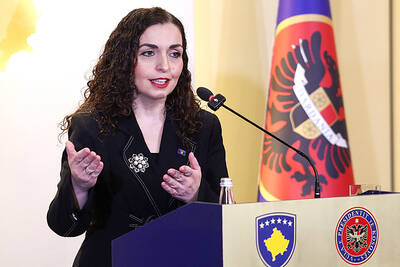
Kosovar President Vjosa Osmani on Friday after dissolving the Kosovar parliament said a snap election should be held as soon as possible to avoid another prolonged political crisis in the Balkan country at a time of global turmoil. Osmani said it is important for Kosovo to wrap up the upcoming election process and form functional institutions for political stability as the war rages in the Middle East. “Precisely because the geopolitical situation is that complex, it is important to finish this electoral process which is coming up,” she said. “It is very hard now to imagine what will happen next.” Kosovo, which declared

MORE BANS: Australia last year required sites to remove accounts held by under-16s, with a few countries pushing for similar action at an EU level and India considering its own ban Indonesia on Friday said it would ban social media access for children under 16, citing threats from online pornography, cyberbullying, online fraud and Internet addiction. “Accounts belonging to children under 16 on high-risk platforms will start to be deactivated, beginning with YouTube, TikTok, Facebook, Instagram, Threads, X, Bigo Live and Roblox,” Indonesian Minister of Communications and Digital Meutya Hafid said. “The government is stepping in so that parents no longer have to fight alone against the giants of the algorithm. Implementation will begin on March 28, 2026,” she said. The social media ban would be introduced in stages “until all platforms fulfill their


 RSS
RSS