


Chile on Sunday elected its most right-wing president in 35 years of democracy, with arch-conservative Jose Antonio Kast scoring a thumping victory over his leftist runoff rival.
Kast won about 58 percent of the vote and held an unassailable lead over Jeannette Jara, a communist who headed a broad leftist coalition.
Kast campaigned on a promise to expel more than 300,000 immigrants, seal the northern border, take a “firm hand” on near-record crime rates and restart the economy.

Photo: Bloomberg
“Chile wanted change,” he told thousands of elated supporters on Sunday evening, vowing to “restore respect for the law,” while pledging to govern for all Chileans and to listen to critics.
Once one of the Americas’ safest countries, Chile was hit hard by the COVID-19 pandemic, violent social protests and an influx of foreign organized crime groups.
In Santiago, Kast supporters beeped car horns, waved flags and cheered a man who has repeatedly defended the bloody dictatorship of Augusto Pinochet.
Retiree Gina Mello hoped Kast would “deploy the military” to the streets from day one, “lock up all the drug traffickers and deport anyone who came here to commit crimes.”
Supporters sang the national anthem, chanted “Pinochet! Pinochet!” and clasped portraits of the late autocrat. Another Kast voter came dressed as US President Donald Trump.
Police said they detained one person in a small anti-Kast demonstration in the capital.
For Kast, a 59-year-old father of nine, it was third time lucky, after two failed attempts at the presidency.
It is the latest victory for Latin America’s right, after winning elections in Argentina, Bolivia, Honduras, El Salvador and Ecuador.
Quickly after the polls closed and the scale of the victory became clear, Jara called Kast to concede, saying voters had spoken “loud and clear.”
US Secretary of State Marco Rubio and Argentine President Javier Milei were among those who sent their congratulations.
Kast is to the right of most Chileans on many social issues, including abortion, which he opposes even in cases of rape.
However, many Chileans fed up with high crime and slow growth during four years of leftist rule said they would vote for change, despite misgivings.
Polls showed that more than 60 percent of Chileans thought security is the top issue facing the country.
While statistics show that violent crime — fueled by Venezuelan, Peruvian, Colombian and Ecuadoran gangs — has risen in the past 10 years, fears about crime have risen even faster.
Richard Kouyoumdjian, a security expert and former naval officer, said Kast would have to quickly develop a strategy to secure the border, strengthen the police, bring immigration under control and end an indigenous insurgency in the south.
“On security its very basic what he’s said,” Kouyoumdjian said. “It’s policy in 200 characters on Facebook or Twitter.”
Kast’s hardline positions have raised fears that he would try to rewrite the history of a dictatorship that tortured and imprisoned tens of thousands of people.
“I’m fearful because I think we are going to have a lot of repression,” 71-year-old retiree Cecilia Mora said.
“I see him as a Pinochet out of uniform,” she said.
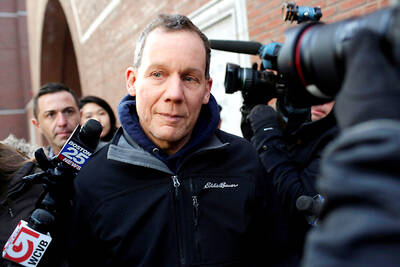
An American scientist convicted of lying to US authorities about payments from China while he was at Harvard University has rebuilt his research lab in Shenzhen, China, to pursue technology the Chinese government has identified as a national priority: embedding electronics into the human brain. Charles Lieber, 67, is among the world’s leading researchers in brain-computer interfaces. The technology has shown promise in treating conditions such as amyotrophic lateral sclerosis and restoring movement in paralyzed people. It also has potential military applications: Scientists at the Chinese People’s Liberation Army have investigated brain interfaces as a way to engineer super soldiers by boosting
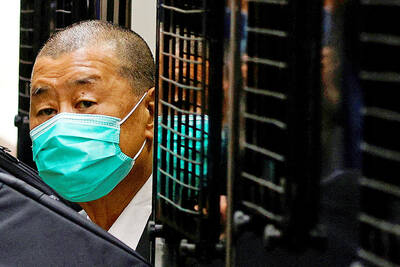
Jailed media entrepreneur Jimmy Lai (黎智英) has been awarded Deutsche Welle’s (DW) freedom of speech award for his contribution to Hong Kong’s pro-democracy movement. The German public broadcaster on Thursday said Lai would be presented in absentia with the 12th iteration of the award on June 23 at the DW Global Media Forum in Bonn. Deutsche Welle director-general Barbara Massing praised the 78-year-old founder of the now-shuttered news outlet Apple Daily for standing “unwaveringly for press freedom in Hong Kong at great personal risk.” “With Apple Daily, he gave journalists a platform for free reporting and a voice to the democracy movement in
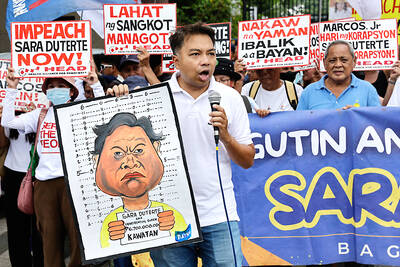
PHILIPPINE COMMITTEE: The head of the committee that made the decision said: ‘If there is nothing to hide, there is no reason to hide, there is no reason to obstruct’ A Philippine congressional committee on Wednesday ruled that there was “probable cause” to impeach Philippine Vice President Sara Duterte after hearing allegations of unexplained wealth, misuse of state funds and threats to have the president assassinated. The unanimous decision of the 53-member committee in the Philippine House of Representatives sends the two impeachment complaints to deliberations and voting by the entire lower chamber, which has more than 300 lawmakers. The complaints centered on Duterte’s alleged illegal use and mishandling of intelligence funds from the vice president’s office, and from her time as education secretary under Philippine President Ferdinand Marcos Jr. Duterte and the

Burmese President Min Aung Hlaing yesterday cut all prisoners’ sentences by one-sixth, a blanket measure that a source close to deposed leader Aung San Suu Kyi said would further shorten her detention. Aung San Suu Kyi has been sequestered since a 2021 military coup, but the senior member of her dissolved National League for Democracy (NLD) party said that while her term had been reduced, her remaining sentence is still unclear. “We also don’t know exactly how many years she has left,” the source told reporters, speaking on condition of anonymity for security reasons. The military toppled Aung San Suu Kyi’s elected government


 RSS
RSS