


An exhibition by the Franco-Chinese master printmaker Zao Wou-ki yesterday opened in Hong Kong, the first time his work has been on display in Asia.
Hong Kong’s M+ museum is hosting a collection of more experimental prints by the artist, who is considered a master of the lyrical abstraction movement and whose work regularly fetches vast sums at auction.
Visitors can explore, in chronological and topical order, the artist’s early figurative works and those inspired by Chinese calligraphy.
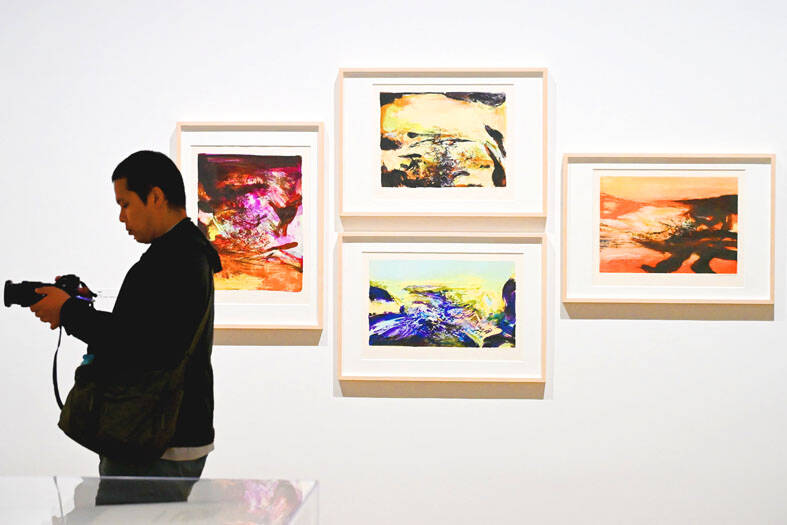
Photo: AFP
These are followed by an explosively colourful series of abstract pieces based on the artist’s vision of the elements — earth, wind and water.
Chinese inks and engravings, which Zao created for poems written by his friends, Henri Michaux and Rene Char are also on display.
The exhibition is being held following a donation of more than 200 prints and bibliographic books by his widow, Francoise Marquet-Zao.
Born into a wealthy banking family in China in 1920, Zao Wou-ki discovered art through his grandfather’s passion for calligraphy.
He became captivated by European painters as a student at the Hangzhou Fine Arts Academy before moving to Paris in 1948 to continue his training and forging ties within the French art scene.
“He didn’t want to be considered as a Chinese painter” in Paris, “or to make chinoiseries,” Zao Wou-ki Foundation art director Yann Hendgen said.
“He wanted to be a painter as Soulages,” he added, referencing the French painter and graphic artist Pierre Soulages.
Zao, who died in 2013, had a special relationship with Hong Kong.
“In 1958, Zao Wou-ki was invited to teach in Hong Kong for one semester,” M+ curator Mo Wan said. “He had a long lasting influence on the Hong Kong culture scene.”
This was his first return to Asia since departing for the French capital, which allowed him to reconnect with Chinese culture.
After Hong Kong, marking the close of a period in his oeuvre, he made a decisive turn toward the abstraction movement.

An American scientist convicted of lying to US authorities about payments from China while he was at Harvard University has rebuilt his research lab in Shenzhen, China, to pursue technology the Chinese government has identified as a national priority: embedding electronics into the human brain. Charles Lieber, 67, is among the world’s leading researchers in brain-computer interfaces. The technology has shown promise in treating conditions such as amyotrophic lateral sclerosis and restoring movement in paralyzed people. It also has potential military applications: Scientists at the Chinese People’s Liberation Army have investigated brain interfaces as a way to engineer super soldiers by boosting
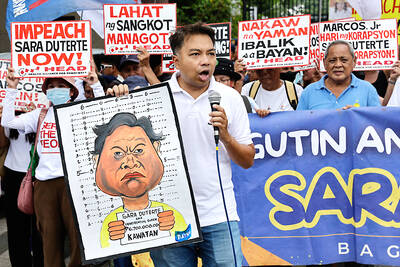
PHILIPPINE COMMITTEE: The head of the committee that made the decision said: ‘If there is nothing to hide, there is no reason to hide, there is no reason to obstruct’ A Philippine congressional committee on Wednesday ruled that there was “probable cause” to impeach Philippine Vice President Sara Duterte after hearing allegations of unexplained wealth, misuse of state funds and threats to have the president assassinated. The unanimous decision of the 53-member committee in the Philippine House of Representatives sends the two impeachment complaints to deliberations and voting by the entire lower chamber, which has more than 300 lawmakers. The complaints centered on Duterte’s alleged illegal use and mishandling of intelligence funds from the vice president’s office, and from her time as education secretary under Philippine President Ferdinand Marcos Jr. Duterte and the
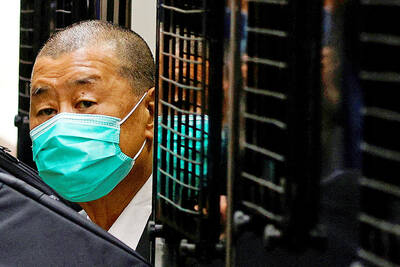
Jailed media entrepreneur Jimmy Lai (黎智英) has been awarded Deutsche Welle’s (DW) freedom of speech award for his contribution to Hong Kong’s pro-democracy movement. The German public broadcaster on Thursday said Lai would be presented in absentia with the 12th iteration of the award on June 23 at the DW Global Media Forum in Bonn. Deutsche Welle director-general Barbara Massing praised the 78-year-old founder of the now-shuttered news outlet Apple Daily for standing “unwaveringly for press freedom in Hong Kong at great personal risk.” “With Apple Daily, he gave journalists a platform for free reporting and a voice to the democracy movement in
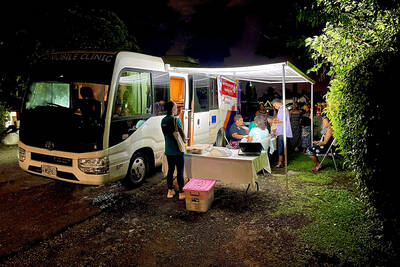
As evening falls in Fiji’s capital, a steady stream of people approaches a makeshift clinic that is a first line of defense against one of the world’s fastest-growing HIV epidemics. In the South Pacific nation — a popular tourist destination of just under a million people — more than 2,000 new HIV cases were recorded last year, a 26 percent increase from 2024. The government has declared an HIV outbreak and described it as a national crisis. “It’s spreading like wildfire,” said Siteri Dinawai, 46, who came to be tested. The Moonlight Clinic, a converted minibus parked in a suburban cul-de-sac in Suva, is


 RSS
RSS