


Pope Leo XIV was yesterday to join the leader of the world’s Orthodox Christians to celebrate 1,700 years since one of the early Church’s most important gatherings, on the second day of his visit to Turkey.
The American pope on Thursday began his four-day visit in Ankara, where he urged Turkish President Recep Tayyip Erdogan to embrace Turkey’s role as a source of “stability and rapprochement between peoples” in a world gripped by conflict.
“This land is inextricably linked to the origins of Christianity, and today it beckons the children of Abraham and all humanity to a fraternity that recognizes and appreciates differences,” he said, before flying to Istanbul where he would stay until tomorrow when he travels on to Lebanon.
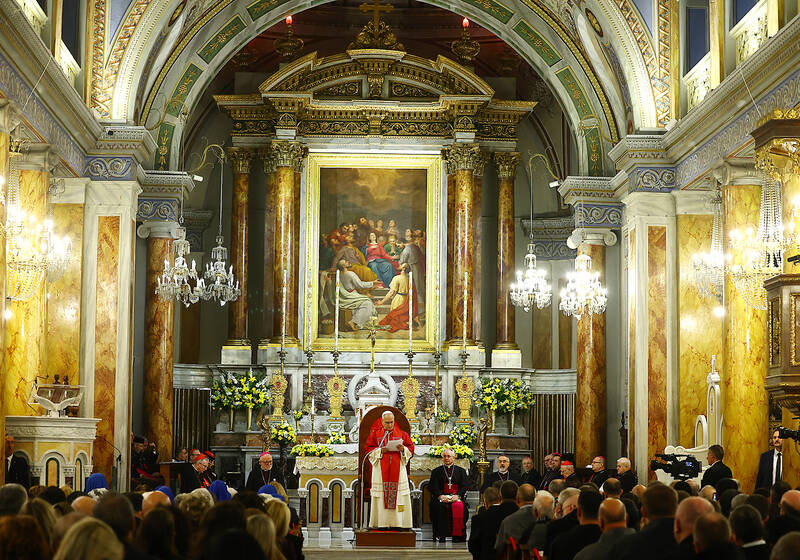
Photo: EPA
The 70-year-old pontiff spent yesterday morning with Catholic leaders before going to Iznik to celebrate the 1,700th anniversary of the First Council of Nicaea, a gathering of bishops who drew up a foundational statement of faith still central to Christianity today.
The leader of the world’s 1.4 billion Catholics joined a prayer service yesterday at Istanbul’s Catholic Cathedral of the Holy Spirit, with police shutting down a main artery of Turkey’s largest city to allow his entourage to pass. While hundreds of pilgrims were packed into the church, dozens more waited excitedly in the courtyard outside in the hope of getting a glimpse of the pontiff, many of whom got up before dawn to be in the front line.
“It’s a blessing for us, it’s so important that the first visit of the pope is to our country,” 35-year-old Turkish Catholic Ali Gunuru said. “The world needs peace, we have serious problems, especially in our area, in our country: the foreigners, refugees... I pray for them and I believe the pope will have the power to help them and that he will do everything.”
Visibly moved by his reception at the church, Leo could be seen smiling and looking much more at ease than on Thursday, encouraging his flock not to be discouraged, saying: “The logic of littleness is the Church’s true strength.”
“The Church in Turkey is a small community, yet fruitful,” he said in his address, urging them to give “special attention” to helping migrants and refugees staying in Turkey who number nearly 3 million, most of them Syrians.
“The significant presence of migrants and refugees in this country presents the Church with the challenge of welcoming and serving some of the most vulnerable,” he said.
The Holy See also acknowledges Turkey’s efforts in hosting refugees and migrants.
In the early afternoon, Leo was to be flown by helicopter to Iznik, where he has been invited by the Patriarch Bartholomew I of Constantinople, leader of the world’s Orthodox Christians, to join an ecumenical prayer service. The prayer was to take place by the ruins of a fourth-century basilica built on the site where the First Council took place.
“When the world is troubled and divided by conflict and antagonism, our meeting with Pope Leo XIV is especially significant,” Patriarch Bartholomew said. “It reminds our faithful that we are more powerful and more credible when we are united in our witness and response to the challenges of the contemporary world.”
Pope Leo is the fifth pontiff to visit Turkey, after Paul VI in 1967, John Paul II in 1979, Benedict XVI in 2006 and Francis in 2014.
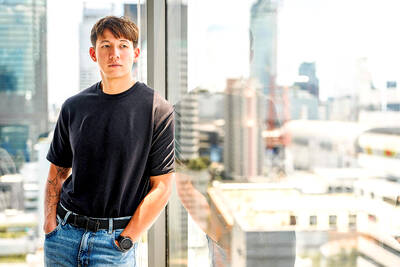
SPEAKING OUT: After Siranudh Scott’s allegations surfaced, celebrities and public figures took to social media to share their own experiences of sexual misconduct and abuse A high-profile alleged sexual abuse case within a wealthy Thai beer brewing family has prompted a wave of painful accounts from survivors of unconnected abuse in the conservative nation. Siranudh Scott, a member of the billionaire Thai family that founded the ubiquitous Singha beer brand, posted an emotional video this month accusing his elder brother Sunit of repeatedly abusing him when he was a teenager. Sunit, who is in his 30s, later denied the allegations in a video posted online, but Singha parent Boonrawd dismissed him from his executive role with the company on Tuesday last week. “I felt I needed to speak

SEEKING ORDER: Rodrigo Paz said that ‘anyone who wants to destroy the nation will have to deal with this president and the full force of the constitution’ Bolivian President Rodrigo Paz on Wednesday said that the nation was at a “breaking point” after nearly a month of protests that have caused shortages of food, fuel and medicine. Paz, who took office six months ago amid the worst economic crisis there in four decades, is battling a groundswell of fury over his policies. The political capital, La Paz, has been besieged by low-income workers and members of the indigenous majority calling for his resignation. “The country needs order and is reaching breaking point,” the 58-year-old said at a public event in La Paz, renewing his appeal for dialogue. On Tuesday, the Bolivian
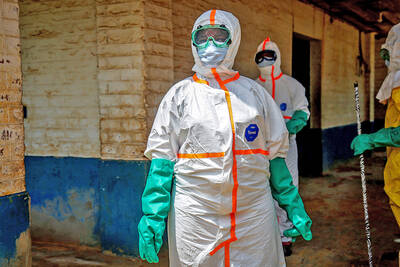
COMMUNITY CONFLICT: Concerns about disease spread from corpses has run up against friends and families’ desire to bury their dead as infection spreads in the area Angry residents of a town at the epicenter of the Ebola outbreak in the Democratic Republic of the Congo (DR Congo) attacked and burned a tent that was part of a health center where people are being treated for the virus, the staff there said Saturday. It was the second such attack in the region in a week. No one was hurt in the attack, according to reports but as patients ran out to escape the fire, 18 people with suspected Ebola infections fled the facility and are unaccounted for, a hospital director said. Angry residents arrived at the clinic in the
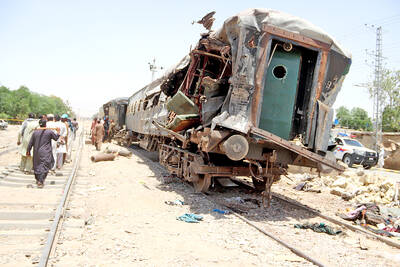
INSURGENT ACTION: A local independence movement in Balochistan, alleged by Pakistan’s government to be backed by India, claimed responsibility for the strike A suicide bomber detonated an vehicle-borne IED near a railway as a passenger train passed through the southwestern Pakistani city of Quetta yesterday, killing at least 23 people and wounding over 70, officials said. The explosion caused two of the train cars to overturn and catch fire, according to footage shared online. The attack happened in an area where security forces are usually stationed, badly damaging several nearby buildings and smashing more than a dozen vehicles parked along the road, according to witnesses and images circulating on social media. Doctors at local hospitals said they had received the wounded, with 20 in critical


 RSS
RSS