


Serial child sexual abuse cases in Australian daycare centers have spurred a rush to close security gaps that let predators through the door.
New legislation would bring in a national register of childcare workers from next year, impose compulsory safety training, ban the use of personal phones by carers and start a trial of CCTV monitoring.
It aims to address safety deficiencies in a childcare sector that has boomed thanks to government funding.
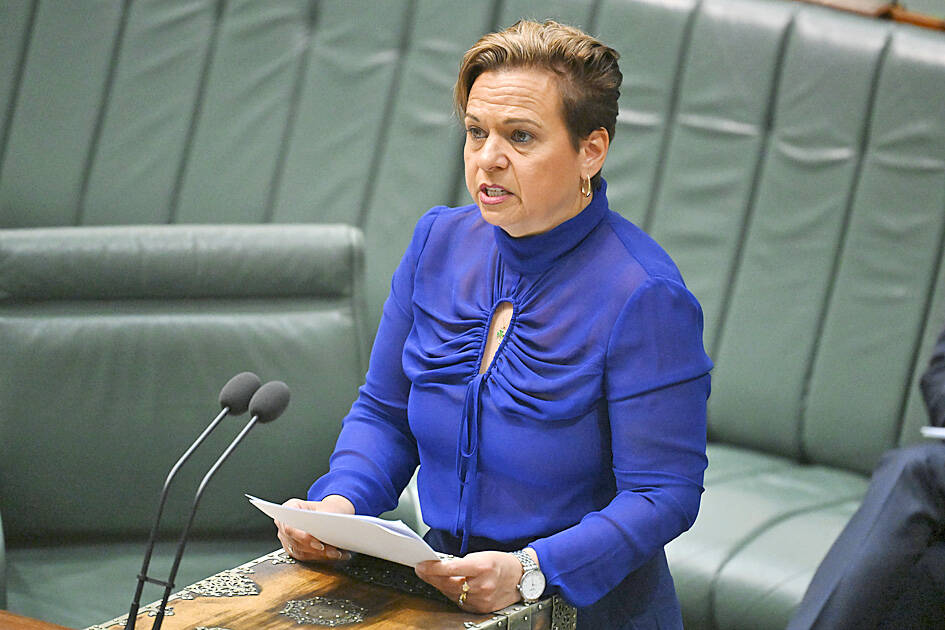
Photo: AP
In Australia’s most notorious case, nursery school worker Ashley Paul Griffith preyed on children for nearly 20 years.
He pled guilty last year to more than 300 charges of abusing and raping more than 60 children — most of them girls — while working in childcare centers from 2003 to 2022. Some of his victims might have been as young as 12 months old, police said.
Griffith, who was sentenced to life in prison with a non-parole period of 27 years, has filed for an appeal against the sentence.
In July, another case shook the sector.
The state of Victoria’s police charged 26-year-old Joshua Dale Brown with more than 70 crimes against eight children aged from five months to two years.
Brown worked at 23 Melbourne nursery schools in eight years, police said, and the authorities advised that about 2,000 children who might have been in contact with him should be tested for potential exposure to infectious diseases.
An Australian law firm acting for one parent is suing national childcare operator G8, which ran several centers where Brown worked, and it said more than 100 other families have sought its advice.
“These parents are traumatized,” Arnold Thomas & Becker principal lawyer Jodie Harris told the Age newspaper.
“One parent is ringing me saying the other one can’t get out of bed,” Harris said.
Federal and state subsidies have helped to finance a 60 percent surge in childcare centers in Australia over the past decade.
The money goes to both not-for-profit operations and profit-chasing businesses, which last year made up about 70 percent of the total.
Some of the for-profit businesses have been accused of putting money ahead of quality.
Analysts say regulations have failed to keep up with the expansion of the sector.
Is Australia’s childcare system safe?
“The answer is no,” said University of New South Wales professor Michael Salter, a leading authority on child sexual exploitation and abuse.
Childcare had expanded in the past 10 to 15 years with government policies aimed at helping women enter the workforce, while for-profit businesses have joined the industry, he said.
“Alongside that has come a lack of regulatory grunt in terms of enforcing standards and, I think, a willingness to compromise on safety standards across the sector as it’s gotten larger,” Salter said. “We are really reaping the whirlwind of that now.”
The federal government said it recognizes the system needs “long-overdue improvements.”
“Meaningful change” is needed “urgently,” Australian Attorney-General Michelle Rowland said.
“It’s time to stop predators exploiting cracks in the hodgepodge of separate systems around the country,” she said in July.
A 2017 Royal Commission into child sex abuse in institutional settings made hundreds of recommendations including mandatory reporting, better education and whistle-blower protections.
While the Australian government insists the majority of those suggestions have been put into practice, there is no national register that documents a worker’s history, qualifications and pending allegations or investigations.
Each state instead collects its own information and sharing mechanisms are not always adequate, creating a gap if the worker moves, analysts say.
“It’s a system that has allowed for these predators to slip through the cracks,” child protection group Bravehearts chief executive Alison Geale said.
“Everyone has to play their part,” Geale said. “When one element doesn’t work ... we have children that are abused.”
In August, Australia’s federal government unveiled new measures, including a national educator register to be rolled out in early next year and mandatory staff training.
Authorities are also to start a trial of CCTV in 300 childcare centers.
Staff use of mobile phones while supervising children would also be prohibited.
“We have to do everything that we can to ensure the safety of our children when they walk or when they’re carried through the doors of a childcare center,” Australian Minister for Education Jason Clare told Australian parliament. “There’s a lot more that needs to be done.”

Kouri Richins, a Utah mother who published a children’s book about grief after the death of her husband is to serve a life sentence for his murder without the possibility of parole, a judge ruled on Wednesday. Richins was convicted in March of aggravated murder for lacing a cocktail given to her husband, Eric Richins, with five times the lethal dose of fentanyl at their home near Park City in 2022. A jury also found her guilty of four other felonies, including insurance fraud, forgery and attempted murder for trying to poison her husband weeks earlier on Feb. 14, 2022, with a
‘PERSONAL MISTAKES’: Eileen Wang has agreed to plead guilty to the felony, which comes with a maximum sentence of 10 years in federal prison A southern California mayor has agreed to plead guilty to acting as an illegal agent for the Chinese government and has resigned from her city position, officials said on Monday. Eileen Wang (王愛琳), mayor of Arcadia, was charged last month with one count of acting in the US as an illegal agent of a foreign government. She was accused of doing the bidding of Chinese officials, such as sharing articles favorable to Beijing, without prior notification to the US government as required by law. The 58-year-old was elected in November 2022 to a five-person city council, from which the mayor is selected

DELA ROSA CASE: The whereabouts of the senator, who is wanted by the ICC, was unclear, while President Marcos faces a political test over the senate situation Philippine authorities yesterday were seeking confirmation of reports that a top politician wanted by the International Criminal Court (ICC) had fled, a day after gunfire rang out at the Philippine Senate where he had taken refuge fearing his arrest. Senator Ronald “Bato” dela Rosa, the former national police chief and top enforcer of former Philippine president Rodrigo Duterte’s “war on drugs,” has been under Senate protection and is wanted for crimes against humanity, the same charges Duterte is accused of. “Several sources confirmed that the senator, Senator Bato, is no longer in the Senate premises, but we are still getting confirmation,” Presidential

HELP DENIED? The US Department of State said that the Cuban leadership refuses to allow the US to provide aid to Cubans, ‘who are in desperate need of assistance’ US Secretary of State Marco Rubio on Wednesday said that Cuba’s leadership must change, as Washington renewed an offer of US$100 million in aid if the communist nation agrees to cooperate. Cuba has been suffering severe economic tumult led by an energy shortage that plunged 65 percent of the country into darkness on Tuesday. Cuba’s leaders have blamed US sanctions, but Rubio, a Cuban American and critic of the government established by Fidel Castro, said the system was to blame, including corruption by the military. “It’s a broken, nonfunctional economy, and it’s impossible to change it. I wish it were different,” he told


 RSS
RSS