


Israel yesterday intercepted a Gaza-bound aid boat, preventing the activists onboard, including Swedish campaigner Greta Thunberg, from reaching the blockaded Palestinian territory.
The Madleen departed from Italy on June 1 aiming to bring awareness to food shortages in Gaza, which the UN has called the “hungriest place on Earth.” After 21 months of war, the UN has warned the territory’s entire population is at risk of famine.
Israeli forces “forcibly intercepted” the vessel in international waters as it was approaching Gaza, the Freedom Flotilla Coalition said in a statement.

Photo: Israeli Ministry of Foreign Affair via X / Reuters
“If you see this video we have been intercepted and kidnapped in international waters,” Thunberg said in a prerecorded video shared by the coalition.
The Palestinian group Hamas condemned the diversion, saying in a statement that the boat was being taken to the Israeli port of Ashdod.
The Israeli government had vowed to prevent the “unauthorized” ship from breaching the naval blockade of Gaza, urging it to turn back.
Israeli Minister of Defense Israel Katz on Sunday said that the blockade, in place since years before the Israel-Hamas war, was needed to prevent Palestinian militants from importing weapons.
After diverting the boat, the Israeli Ministry of Foreign Affairs posted a picture of the activists all in orange life jackets being offered water and sandwiches.
“All the passengers of the ‘selfie yacht’ are safe and unharmed,” the ministry wrote on social media, adding that it expected the activists to return to their home nations.
“The tiny amount of aid that was on the yacht and not consumed by the ‘celebrities’ will be transferred to Gaza through real humanitarian channels,” it added.
Israel is facing mounting international pressure to allow more aid into Gaza to alleviate widespread shortages of food and basic supplies.
It has allowed humanitarian deliveries to resume after barring them for more than two months and began working with the newly formed, US-backed Gaza Humanitarian Foundation, but humanitarian agencies have criticized the foundation and the UN refuses to work with it, citing concerns over its practices and neutrality.
Dozens of people have been killed near foundation distribution points since late last month, according to Gaza’s civil defense agency.
It said Israeli attacks on Sunday killed at least 10 people, including five civilians hit by gunfire near an aid distribution center.
Civil defense spokesman Mahmud Bassal and witnesses said the civilians had been heading to a site west of Rafah in southern Gaza, run by the US-backed foundation.
Witness Abdallah Nour al-Din said that “people started gathering in the al-Alam area of Rafah” in the early morning.
“After about an hour and a half, hundreds moved toward the site and the army opened fire,” he said.
The Israeli military said it fired on people who “continued advancing in a way that endangered the soldiers,” despite warnings.
At a charity kitchen in Gaza City, displaced Palestinian Umm Ghassan said that she had been unable to collect aid from a foundation site “because there were so many people, and there was a lot of shooting. I was afraid to go in, but there were people who risked their lives for their children and families.”
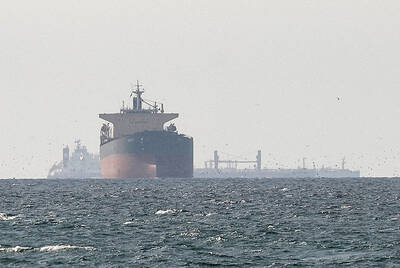
A ship that appears to be taking on the identity of a scrapped gas carrier exited the Strait of Hormuz on Friday, showing how strategies to get through the waterway are evolving as the Middle East war progresses. The vessel identifying as liquefied natural gas (LNG) carrier Jamal left the Strait on Friday morning, ship-tracking data show. However, the same tanker was also recorded as having beached at an Indian demolition yard in October last year, where it is being broken up, according to market participants and port agent’s reports. The ship claiming to be Jamal is likely a zombie vessel that
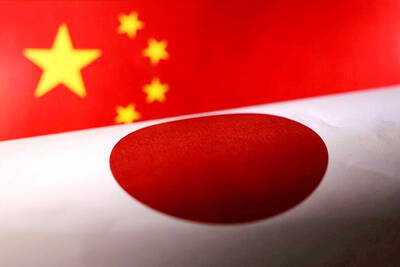
Japan is to downgrade its description of ties with China from “one of its most important” in an annual diplomatic report, according to a draft reviewed by Reuters, as relations with Beijing worsen. This year’s Diplomatic Bluebook, which Japanese Prime Minister Sanae Takaichi’s government is expected to approve next month, would instead describe China as an important neighbor and the relationship as “strategic” and “mutually beneficial.” The draft cites a series of confrontations with Beijing over the past year, including export controls on rare earths, radar lock-ons targeting Japanese military aircraft and increased pressure around Taiwan. The shift in tone underscores a deterioration

LAW CONSTRAINTS: The US has been pressing allies to send warships to open the Strait, but Tokyo’s military actions are limited under its postwar pacifist constitution Japan could consider deploying its military for minesweeping in the Strait of Hormuz if a ceasefire is reached in the war on Iran, Japanese Minister of Foreign Affairs Toshimitsu Motegi said yesterday. “If there were to be a complete ceasefire, hypothetically speaking, then things like minesweeping could come up,” Motegi said. “This is purely hypothetical, but if a ceasefire were established and naval mines were creating an obstacle, then I think that would be something to consider.” Japan’s military actions are limited under its postwar pacifist constitution, but 2015 security legislation allows Tokyo to use its Self-Defense Forces overseas if an attack,

German Chancellor Friedrich Merz’s conservative Christian Democratic Union (CDU) yesterday faced a regional election battle in Rhineland-Palatinate, now held by the center-left Social Democratic Party (SPD). Merz’s CDU has enjoyed a narrow poll lead over the SPD — their coalition partners at the national level — who have ruled the mid-sized state for 35 years. Polling third is the far-right Alternative for Germany (AfD), which spells a greater threat to the two centrist parties in several state elections in September in the country’s ex-communist east. The picturesque state of Rhineland-Palatinate, bordering France, Belgium and Luxembourg and with a population of about 4 million,


 RSS
RSS