


North Korea and Russia reached a new agreement to expand economic cooperation following high-level talks in Pyongyang this week, the North’s state media said on Thursday, as they continue to align in the face of their confrontations with Washington.
North Korea’s official Korean Central News Agency (KCNA) did not elaborate on the details of the agreement signed on Wednesday between its senior trade officials and a Russian delegation led by Alexandr Kozlov, the country’s minister of natural resources and ecology.
The Russian news agency Tass on Tuesday said officials following an earlier round of talks agreed to increase the number of charter flights between the countries to promote tourism.

Photo: AFP
Kozlov, who arrived in North Korea on Sunday, met with North Korean leader Kim Jong-un and his top economic official, North Korean Premier Kim Tok-hun, before returning home on Wednesday, KCNA said.
In another display of the countries’ growing ties, during Kozlov’s visit, Russian President Vladimir Putin’s gifted Pyongyang’s Central Zoo with more than 70 animals, including lions, bears and several species of birds, Tass said.
Kim Jong-un in recent months has prioritized relations with Moscow as he attempts to break out of international isolation and strengthen his footing, supporting Putin’s war on Ukraine while portraying the North as a player in a united front against Washington.
Kim has yet to directly acknowledge that he has been providing military equipment and troops to Russia to support its fighting against Ukraine.
The spy agency believes the North Korean soldiers were assigned to Russia’s marine and airborne forces units and some of them have already begun fighting alongside the Russians on the frontlines, said Lee Seong-kweun, a lawmaker who attended the meeting.
North Korea would be possibly getting anywhere between US$320 million to US $1.3 billion annually from Russia for sending its troops to Ukraine,, a recent study by Lim Soo-ho, a South Korean analyst at an NIS-run think tank.
However, North Korea’s troop dispatch is less about money than acquiring key Russian technologies to further advance its nuclear weapons and missile program, Lim said.
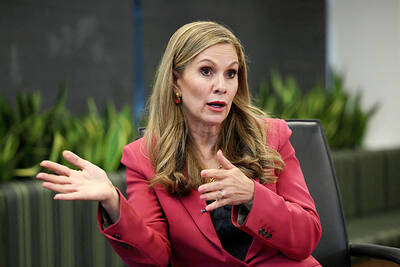
Australians were downloading virtual private networks (VPNs) in droves, while one of the world’s largest porn distributors said it was blocking users from its platforms as the country yesterday rolled out sweeping online age restriction. Australia in December became the first country to impose a nationwide ban on teenagers using social media. A separate law now requires artificial intelligence (AI)-powered chatbot services to keep certain content — including pornography, extreme violence and self-harm and eating disorder material — from minors or face fines of up to A$49.5 million (US$34.6 million). The country also joined Britain, France and dozens of US states requiring
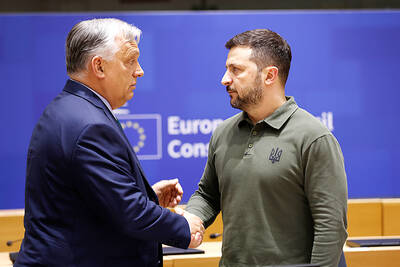
Hungarian authorities temporarily detained seven Ukrainian citizens and seized two armored cars carrying tens of millions of euros in cash across Hungary on suspicion of money laundering, officials said on Friday. The Ukrainians were released on Friday, following their detention on Thursday, but Hungarian officials held onto the cash, prompting Ukraine to accuse Hungary’s Russia-friendly government of illegally seizing the money. “We will not tolerate this state banditism,” Ukrainian Minister of Foreign Affairs Andrii Sybiha said. The seven detained Ukrainians were employees of the Ukrainian state-owned Oschadbank, who were traveling in the two armored cars that were carrying the money between Austria and
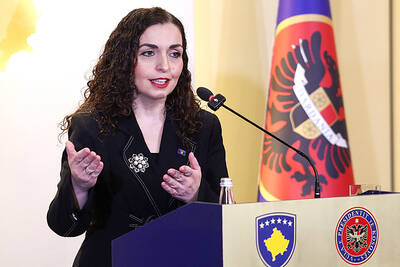
Kosovar President Vjosa Osmani on Friday after dissolving the Kosovar parliament said a snap election should be held as soon as possible to avoid another prolonged political crisis in the Balkan country at a time of global turmoil. Osmani said it is important for Kosovo to wrap up the upcoming election process and form functional institutions for political stability as the war rages in the Middle East. “Precisely because the geopolitical situation is that complex, it is important to finish this electoral process which is coming up,” she said. “It is very hard now to imagine what will happen next.” Kosovo, which declared

MORE BANS: Australia last year required sites to remove accounts held by under-16s, with a few countries pushing for similar action at an EU level and India considering its own ban Indonesia on Friday said it would ban social media access for children under 16, citing threats from online pornography, cyberbullying, online fraud and Internet addiction. “Accounts belonging to children under 16 on high-risk platforms will start to be deactivated, beginning with YouTube, TikTok, Facebook, Instagram, Threads, X, Bigo Live and Roblox,” Indonesian Minister of Communications and Digital Meutya Hafid said. “The government is stepping in so that parents no longer have to fight alone against the giants of the algorithm. Implementation will begin on March 28, 2026,” she said. The social media ban would be introduced in stages “until all platforms fulfill their


 RSS
RSS