


Authorities in the southern Chinese city of Zhuhai removed wreaths, candles and bottles of alcohol, offerings laid at the scene of the deadliest mass killing in the country in a decade, as the government scrambled to respond and censor the outrage online.
On Monday, a male driver angry at his divorce settlement rammed his car into a crowd at a sports center in the city of 2.5 million, killing 35 people and injuring 43, but the government took almost a day to announce the death toll.
This prompted an outrage on Chinese social media, where posts complaining about the government's slow response and raising questions about the mental health of a nation shaken by a recent spate of similar killings were being quickly removed.
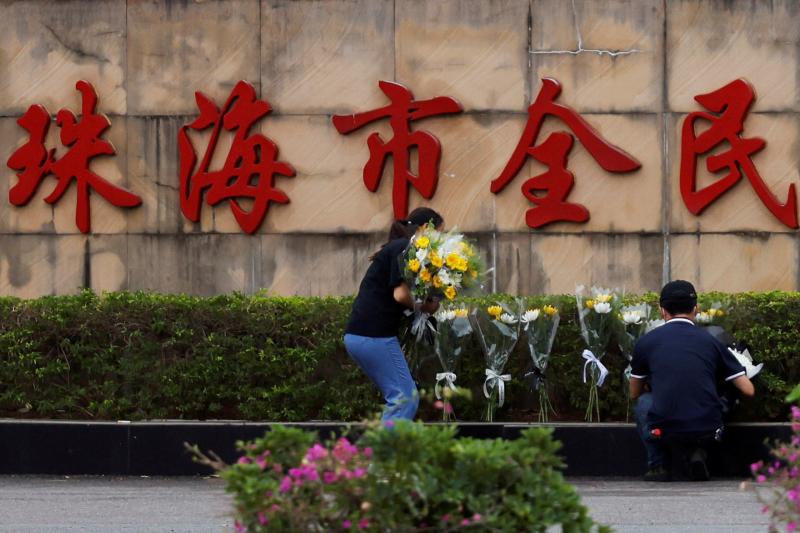
Photo: Reuters
"The authorities hadn't released any information — some colleagues mentioned it and I couldn't believe it at first, but it was confirmed later," said a 50-year-old man who identified himself as Zheng who brought flowers to the site.
"It's just a spontaneous feeling I had. Even though I don't know them personally, I had family members who passed away in the past, so I understand that feeling," Zheng said.
Delivery drivers on motorbikes kept dropping off flowers at the site today, but the bouquets were being immediately removed by security personnel deployed there, sometimes even before a person was able to put them on the ground.
Some wreaths, captured on photographs by Reuters reporters, carried handwritten notes: "Strangers travel well. May there be no demons in heaven,” read one.
On another: “May there be no thugs in heaven. Good will triumph over evil. Rest in peace.”
After initially allowing journalists to briefly speak to the people laying the flowers, a handful of security personnel sporting light blue uniforms and caps told reporters not to talk to the people or to film specific messages on the bouquets.
Addressing media questions about the incident today, the Chinese Ministry of Foreign Affairs said China was one of the safest countries in the world with a government that has and will always take measures to safeguard lives and social stability.
"As far as we know, there are no casualties that are foreign nationals in this case," ministry spokesperson Lin Jian (林劍) told a news briefing, adding that China would continue to protect the safety of foreigners.
The attack happened as Zhuhai captured China's attention with the largest aviation exhibition, which every two years showcases the nation's civil and military aerospace achievements and where a new stealth jet fighter is on display this year.
While there is no indication that the two events are related, Chinese people often pick large national events with round-the-clock media coverage in an attempt to circumvent the tight censorship and highlight their grievances.
This was the second such incident to occur during the Zhuhai airshow.
In 2008, at least four people were killed and 20 injured when a man drove a truck into a crowded schoolyard during the airshow.
Police said that attacker had been seeking revenge over a traffic dispute.
China's state broadcaster CCTV did not mention the attack in its 30-minute midday news bulletin.
Instead, the program led with Chinese President Xi Jinping's (習近平) departure for the APEC summit in Peru and devoted a portion of the airtime to the airshow.
Other state media, such as China Daily's Chinese-language Web site, also prominently displayed the news of Xi's Peru trip.
The current affairs part of China Daily's Web site and the local area page did not mention the incident either.
Weibo messaging site censored a hashtag that mentioned the death toll.
Media backed by the local government yesterday night published a 1,000-word write-up of a local officials' meeting on the killing.
It emphasized, among other things, the importance of "earnestly shouldering the political responsibility of 'promoting the development of one party and ensuring the safety of one party,'" but it did not mention the details of the incident or the death toll.
Rose Luqiu (閭丘露薇), who researches Chinese censorship at Hong Kong's Baptist University, said the way information was curtailed in Zhuhai was consistent with other incidents in China that involve significant numbers of deaths.
"The censorship is normal because all these incidents are censored to try to control the narrative. The police statement will be the only official explanation, and they won't allow people to challenge or to discuss it," Luqiu said.
"I think the purpose of this is to reduce panic and ... if you look at previous incidents like the stabbing of Japanese schoolchildren, they're also trying to reduce the copycat effect," she said.
Luqiu was referring to an incident from September, when an assailant stabbed and ultimately killed a student at a Japanese school in southern China, marking a second such attack on Japanese citizens this year.
Even though there was no indication that Japanese citizens were involved in the Zhuhai attack, the Japanese embassy in Beijing yesterday released a warning asking Japanese living in China to keep their voices down when speaking in Japanese and to avoid going out at night.
Luqiu added that in China, local officials can sometimes be fired for incidents that cause mass deaths, even if it is clearly an individual act, so they tend to be reluctant to release any information to the public.
Xi yesterday night ordered "all-out efforts" to treat the injured and demanded severe punishment for the perpetrator.
The government has dispatched a team to provide guidance on handling of the case.

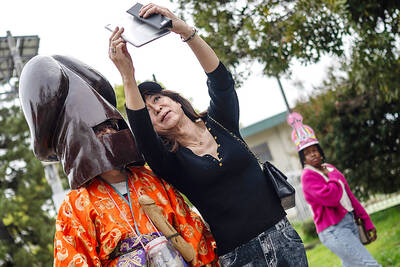
Showcasing phallus-shaped portable shrines and pink penis candies, Japan’s annual fertility festival yesterday teemed with tourists, couples and families elated by its open display of sex. The spring Kanamara Matsuri near Tokyo features colorfully dressed worshipers carrying a trio of giant phallic-shaped objects as they parade through the street with glee. The festival, as legend has it, honors a local blacksmith in the Edo Period (1603-1868) who forged an iron dildo to break the teeth of a sharp-toothed demon inhabiting a woman’s vagina that had been castrating young men on their wedding nights. A 1m black steel phallus sits in the courtyard of

JAN. 1 CLAUSE: As military service is voluntary, applications for permission to stay abroad for over three months for men up to age 45 must, in principle, be granted A little-noticed clause in sweeping changes to Germany’s military service policy has triggered an uproar after it emerged that the law requires men aged up to 45 to get permission from the armed forces before any significant stay abroad, even in peacetime. The legislation, which went into effect on Jan. 1 aims to bolster the military and demands all 18-year-old men fill out a questionnaire to gauge their suitability to serve in the armed forces, but stops short of conscription. If the “modernized” model fails to pull in enough recruits, parliament will be compelled to discuss the reintroduction of compulsory service, German
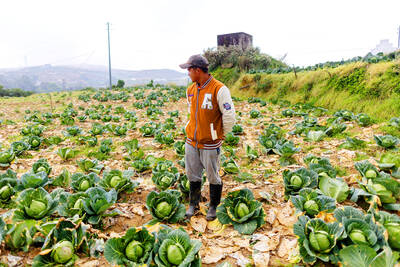
Filipino farmers like Romeo Wagayan have been left with little choice but to let their vegetables rot in the field rather than sell them at a loss, as rising oil prices linked to the Iran war drive up the cost of harvesting, labor and transport. “There’s nothing we can do,” said Wagayan, a 57-year old vegetable farmer in the northern Philippine province of Benguet. “If we harvest it, our losses only increase because of labor, transportation and packing costs. We don’t earn anything from it. That’s why we decided not to harvest at all,” he said. Soaring costs caused by the Middle East

For two decades, researchers observed members of the Ngogo chimpanzee group of Kibale National Park in Uganda spend their days eating fruits and leaves, resting, traveling and grooming in their tropical rainforest abode, but this stable community then fractured and descended into years of deadly violence. The researchers are now describing the first clearly documented example of a group of wild chimpanzees splitting into two separate factions, with one launching a series of coordinated attacks against the other. Adult males and infants were targeted, with 28 deaths. “Biting, pounding the victim with their hands, dragging them, kicking them — mostly adult males,


 RSS
RSS