

Israel’s attack on Iran likely damaged a base run by the paramilitary Revolutionary Guard that builds ballistic missiles and launches rockets as part of its own space program, satellite images analyzed by The Associated Press on Tuesday showed.
The damage at the base in Shahroud raises new questions about Israel’s attack early on Saturday, particularly as it took place in an area previously unacknowledged by Tehran and involved the Revolutionary Guard, which has so far has remained silent about any possible damage it sustained from the assault.
Iran has only identified Israeli attacks as taking place in Ilam, Khuzestan and Tehran provinces — not in rural Semnan province, where the base is.
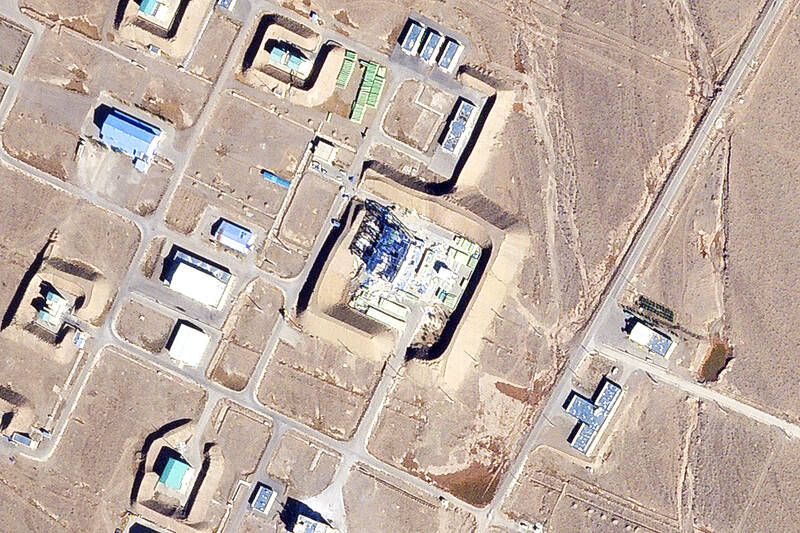
Photo: AP
It also potentially further restrains the Revolutionary Guard’s ability to manufacture the solid-fuel ballistic missiles it needs to stockpile as a deterrent against Israel.
Tehran long has relied on that arsenal, as it cannot purchase the advanced Western weapons that Israel and Tehran’s Gulf Arab neighbors have armed themselves with, particularly from the US.
Satellite photographs earlier analyzed by the AP of two military bases near Tehran also targeted by Israel showed that sites there that Iran uses in its ballistic missile manufacturing have been destroyed, further squeezing its program.
“We don’t know if Iranian production has been crippled as some people are saying or just damaged,” said Fabian Hinz, a missile expert and research fellow at the International Institute for Strategic Studies who studies Iran. “We’ve seen enough imagery to show there’s an impact.”
Iran’s mission to the UN did not immediately respond to a request for comment.
The Israeli military declined to answer questions from the AP, but sent a previous statement acknowledging it targeted “missile manufacturing facilities” in the attack.
Images show major building at the Shahroud base destroyed.
High-resolution satellite images from Planet Labs PBC taken for and analyzed by the AP showed the damage at the Revolutionary Guard’s Shahroud Space Center in Semnan, about 370km northeast of the Iranian capital, Tehran.
Semnan also hosts the Imam Khomeini Space Center, which is used by Iran’s civilian space program.
The images showed a central, major building at the Shahroud Space Center had been destroyed, the shadow of its still-standing frame seen in the image taken on Tuesday morning. Vehicles could be seen gathered around the site, likely from officials inspecting the damage, with more vehicles than normal parked at the site’s main gate nearby.
Three small buildings just to the south of the main structure also appeared to be damaged.
Iran has been constructing new buildings at the base in the past few months.
Another hangar to the northeast of the main building also appeared to have been damaged.
Iran has not acknowledged any attack at Shahroud.
However, given the damage done to multiple structures, it suggested the Israeli attack included pinpoint strikes on the base.
Low-resolution images since the attack showed signs of damage at the site not seen before the assault — further pointing to Israeli missile strikes as being the culprit.
“We can’t 100 percent exclude the possibility it’s something else, but it’s almost certain this building got damaged because of an Israeli attack,” Hinz said.
Given that the large building had been surrounded by earthen berms, that suggests it handled high explosives, said Hinz, who long has studied the site.
That central site likely deals with solid propellant mixing and casting operations, he added.
Large boxes next to the building likely are missile motor crates as well, Hinz said.
Their sizes suggest they could be used for Iran’s Kheibar Shekan ballistic missile and the Fattah 1, a missile that Iran has claimed is able to reach Mach 15.
Both have been used in Iran’s attacks on Israel during the Israel-Hamas war and the later ground invasion of Lebanon.
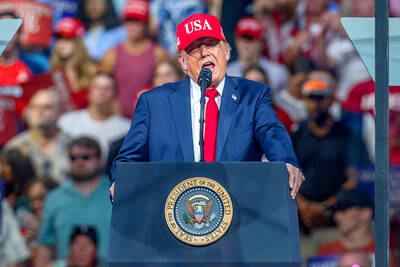
US President Donald Trump on Wednesday threatened to take action against the EU if it moves forward with European Commission President Ursula von der Leyen’s proposal to make Canada the bloc’s first associate member. “If they do that, if I think it’s at all a hostile act; I will put very serious tariffs or stop trading with Europe on many things,” Trump told reporters en route to an event in North Carolina, calling the proposal “laughable.” “If it’s a good intention, that’s fine. If it’s a bad intention, we’ll put very heavy tariffs on Europe,” he said. Von der Leyen made the proposal
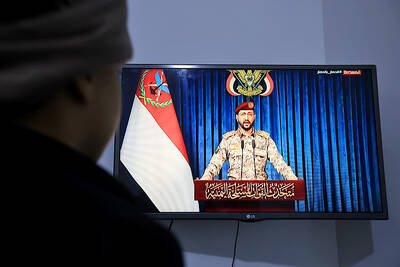
ON THE MOVE: Trump unexpectedly cut short a trip to return to the White House, while the State Department warned Americans to avoid travel to the Middle East The US on Saturday warned that hostilities between Saudi Arabia and Iran-backed Houthis could “escalate rapidly” after a missile attack targeted Riyadh for the first time since the Yemen conflict resumed. US President Donald Trump on Saturday cut short a weekend at Camp David, a secluded presidential complex in rural Maryland, to return unexpectedly to the White House. The White House gave no explanation for the early return, which comes as a new threshold was crossed in the conflict between Saudi Arabia and the Houthis, who control a large part of Yemen and are fighting government forces backed by a coalition led
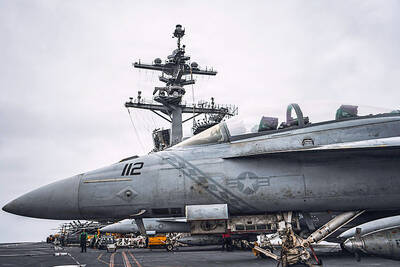
The US military came close to boarding a Chinese vessel in the Middle East earlier this year based on a flawed intelligence report prepared with the help of artificial intelligence (AI), CNN said on Friday. US intelligence indicated the ship was carrying nuclear weapons-related components, leading US forces to prepare to intercept it, the broadcaster reported, citing four anonymous sources familiar with the incident. However, the operation was called off after officials determined that an AI chatbot used by an analyst had misidentified the material the ship was carrying. The report was “entirely false,” but “almost started a war,” CNN quoted one source
World leaders gather in New York this week for the UN General Assembly, bracing for US President Donald Trump’s return to the rostrum for a second year running, with talks centering on the widening conflicts in the Middle East and Ukraine and the risks of artificial intelligence (AI). Nearly 130 heads of state meet with the post-World War II order under strain and with the UN itself struggling to remain relevant and weathering attacks from Trump, who has slashed the US’ contributions and withdrawn from dozens of UN bodies. Chinese President Xi Jinping (習近平), who last addressed the diplomatic jamboree via video


 RSS
RSS