


He used to preside over Latin America’s largest country and its 214 million people. Former Brazilian president Jair Bolsonaro now lives in a small Florida town and eats alone in a fast-food restaurant.
Bolsonaro, 67, has found an unusual refuge in the US, where he arrived in late December last year, several days before his supporters stormed government buildings in Brasilia in an attempt to overturn the election victory of his rival, Brazilain President Luiz Inacio Lula da Silva.
At home, Bolsonaro is being investigated over his alleged involvement in the unrest, which he denies.
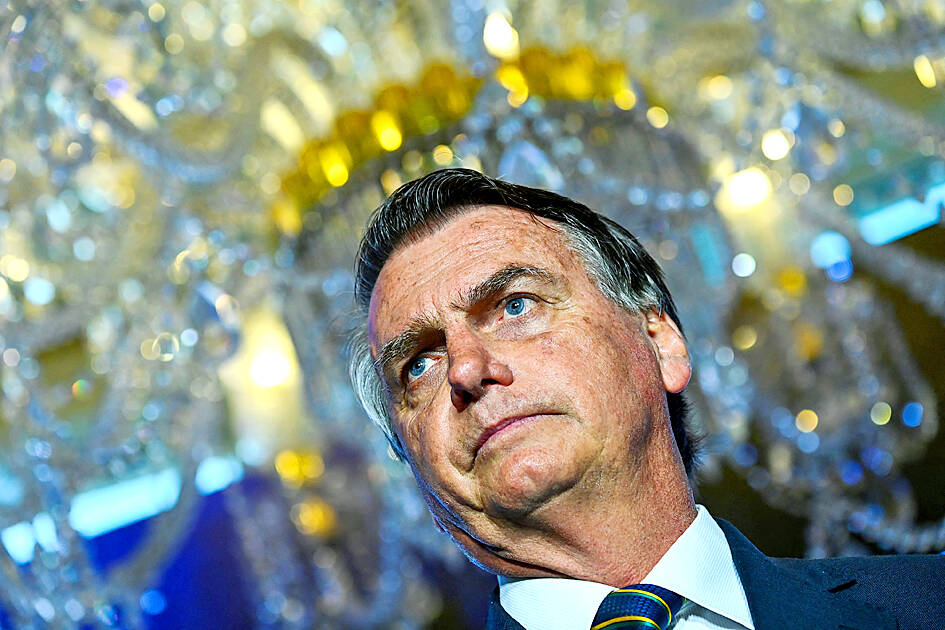
Photo: AFP
From the lavish presidential palace, Bolsonaro, a political soulmate of former US president Donald Trump, went on to live in a small community of nearly identical houses near the Disney World resort.
In his first six weeks in the US, Bolsonaro has kept a low profile, staying at the Orlando home of Brazilian former martial arts champion Jose Aldo, making a trip to a local supermarket and being photographed eating fried chicken alone at a KFC restaurant.
On Friday, the man who until recently commanded huge crowds in his home country, spoke to about 400 supporters at an event organized by the US conservative organization Turning Point USA at the Trump National hotel in the city of Doral, near Miami.
It was unclear if Trump himself played any part in organizing the event.
The meeting had the vibe of an election rally. Bolsonaro spoke passionately about fulfilling his duties to his country — except that the man dubbed the “Trump of the Tropics” was in Florida, several thousand kilometers away from his homeland.
“There is no greater satisfaction than that of having fulfilled a duty,” Bolsonaro said of his presidency.
He spoke before an audience dressed in elegant suits and dresses, as well as the yellow-and-green shirts of the Brazilian soccer team.
Three days earlier, Bolsonaro spoke in the ballroom of a shopping mall restaurant in Orlando at an event put together by the Brazilian expatriate community in Florida.
Bolsonaro, who had repeatedly cast doubt on Lula’s narrow victory in runoff on Oct. 30, again questioned his election loss, calling himself “more popular than ever.”
“Many people are still shaken by what happened in the elections ... but we will face this moment and, God willing, we will win together,” he said.
However, Bolsonaro said that he regretted “what some inconsistent people did” during the unrest.
The crowd was welcoming at both Florida events, with supporters hugging and taking selfies with him and cheering him on.
However, he faces an uncertain future.
After publicly declaring his intention to return to Brazil at the end of January, Bolsonaro last week applied for a new visa to be able to stay in the US for six more months.
One of his sons, Senator Flavio Bolsonaro, has said that the former president had no return date.
“It may be tomorrow, or six months from now, or he may never come back,” he told reporters.
At the Orlando restaurant on Tuesday, Bolsonaro nevertheless promised to “remain active in Brazilian politics.”
He did not elaborate.
Now it remains to be seen whether he maintains a low profile or whether he tries to boost his standing in the US.
“I’ve always been a huge admirer of the American people — their liberties, their patriotism and their love of the flag,” he told the gathering on Friday.
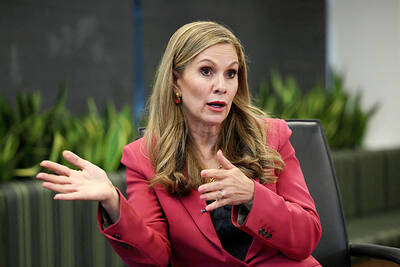
Australians were downloading virtual private networks (VPNs) in droves, while one of the world’s largest porn distributors said it was blocking users from its platforms as the country yesterday rolled out sweeping online age restriction. Australia in December became the first country to impose a nationwide ban on teenagers using social media. A separate law now requires artificial intelligence (AI)-powered chatbot services to keep certain content — including pornography, extreme violence and self-harm and eating disorder material — from minors or face fines of up to A$49.5 million (US$34.6 million). The country also joined Britain, France and dozens of US states requiring
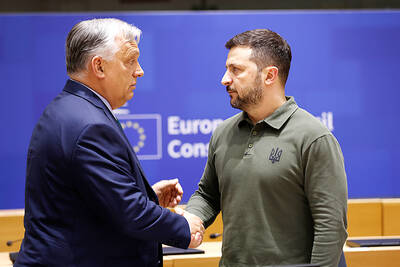
Hungarian authorities temporarily detained seven Ukrainian citizens and seized two armored cars carrying tens of millions of euros in cash across Hungary on suspicion of money laundering, officials said on Friday. The Ukrainians were released on Friday, following their detention on Thursday, but Hungarian officials held onto the cash, prompting Ukraine to accuse Hungary’s Russia-friendly government of illegally seizing the money. “We will not tolerate this state banditism,” Ukrainian Minister of Foreign Affairs Andrii Sybiha said. The seven detained Ukrainians were employees of the Ukrainian state-owned Oschadbank, who were traveling in the two armored cars that were carrying the money between Austria and
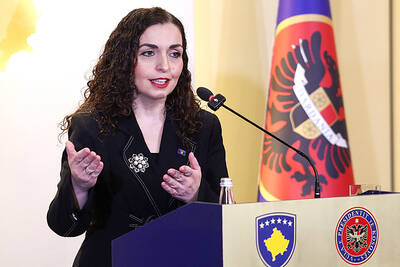
Kosovar President Vjosa Osmani on Friday after dissolving the Kosovar parliament said a snap election should be held as soon as possible to avoid another prolonged political crisis in the Balkan country at a time of global turmoil. Osmani said it is important for Kosovo to wrap up the upcoming election process and form functional institutions for political stability as the war rages in the Middle East. “Precisely because the geopolitical situation is that complex, it is important to finish this electoral process which is coming up,” she said. “It is very hard now to imagine what will happen next.” Kosovo, which declared

MORE BANS: Australia last year required sites to remove accounts held by under-16s, with a few countries pushing for similar action at an EU level and India considering its own ban Indonesia on Friday said it would ban social media access for children under 16, citing threats from online pornography, cyberbullying, online fraud and Internet addiction. “Accounts belonging to children under 16 on high-risk platforms will start to be deactivated, beginning with YouTube, TikTok, Facebook, Instagram, Threads, X, Bigo Live and Roblox,” Indonesian Minister of Communications and Digital Meutya Hafid said. “The government is stepping in so that parents no longer have to fight alone against the giants of the algorithm. Implementation will begin on March 28, 2026,” she said. The social media ban would be introduced in stages “until all platforms fulfill their


 RSS
RSS