


Laboratory-grown red blood cells have been transfused into volunteers in a world-first clinical trial that could help revolutionize treatments for people with sickle cell disease and thalassemia.
The manufactured blood cells were grown from stem cells from donors, which in future could allow donor blood to be expanded into much larger volumes for transfusion. The trial is studying the lifespan of the lab-grown cells compared with infusions of standard red blood cells from the same donor.
“This challenging and exciting trial is a huge stepping stone for manufacturing blood from stem cells,” said Ashley Toye, University of Bristol professor of cell biology and an investigator on the trial. “This is the first time lab-grown blood from [donor stem cells] has been transfused and we are excited to see how well the cells perform at the end of the clinical trial.”
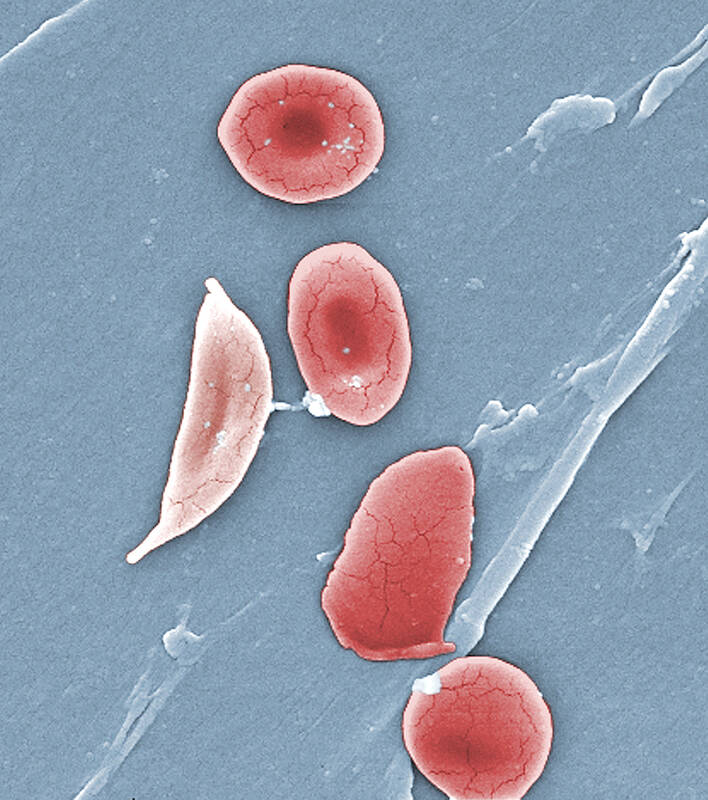
Photo: AP
Two healthy volunteers have so far been transfused with the lab-grown red cells, as part of the Restore trial, led jointly by NHS Blood and Transplant and the University of Bristol. No negative side-effects have been reported.
There are two potential near-term advantages of using lab-grown blood. First, the approach could address the donor shortage for those with rare blood types who require regular transfusions, such as patients with sickle cell disease and thalassemia.
Second, the lab-grown blood is expected to outperform standard donor blood. Red blood cells have a lifespan of about 120 days and a normal blood donation will contain cells of varying ages.
By contrast, the lab-grown blood cells are all fresh, so should perform better and last longer. This could reduce the frequency of transfusions for patients who regularly need blood and help avoid iron overload, a complication linked to repeated transfusions where too much iron accumulates in the body and has to be removed.
“We hope our lab-grown red blood cells will last longer than those that come from blood donors,” said Cedric Ghevaert, professor of transfusion medicine at the University of Cambridge and chief investigator of the trial.
“If our trial, the first such in the world, is successful, it will mean that patients who currently require regular long-term blood transfusions will need fewer transfusions in future, helping transform their care,” he said.
People with blood disorders such as thalassemia or sickle cell disease are dependent on regular transfusions of blood or red cell exchanges — some people require up to 12 units of blood every four to six weeks. There is also a shortage of donors from black and minority ethnic communities who can provide the best ethnically matched blood for the growing number of patients with blood disorders, some of which are also more prevalent in these groups.
The lab-grown blood is manufactured from adult stem cells taken from donor blood. The stem cells are placed in a nutrient solution for 18 to 21 days, which encourages the cells to multiply and develop into more mature cells. About 24 liters of nutrient solution is needed to produce one to two tablespoons of red blood cells.
The cells are labeled with a tracer that allows them to be detected in blood samples from the trial participants in the six months after the initial injection of cells.
At least 10 participants are expected receive two mini transfusions at least four months apart, one of standard donated red cells and one of lab-grown red cells, to find out if the young red blood cells made in the laboratory last longer than cells made in the body.
Marc Turner, director of the Scottish National Blood Transfusion Service, who is not involved in the trial, described it as “a really important step along the way” toward the ambition of manufacturing blood in the lab for wider clinical use. “That’s a reasonable vision in the long term,” he said, but added that blood donors would remain essential for the foreseeable future.

School bullies in Singapore are to face caning under new guidelines, but the education minister on Tuesday said it would be meted out only as a last resort with strict safeguards. Human rights groups regularly criticize Singapore for the use of corporal punishment, which remains part of the school and criminal justice systems, but authorities have defended it as a deterrent to crime and serious misconduct. Caning was discussed in the parliament after legislators asked how it would be used in relation to bullying in schools. The debate followed stricter guidelines on serious student misconduct, including bullying, unveiled by the Singaporean Ministry of

As evening falls in Fiji’s capital, a steady stream of people approaches a makeshift clinic that is a first line of defense against one of the world’s fastest-growing HIV epidemics. In the South Pacific nation — a popular tourist destination of just under a million people — more than 2,000 new HIV cases were recorded last year, a 26 percent increase from 2024. The government has declared an HIV outbreak and described it as a national crisis. “It’s spreading like wildfire,” said Siteri Dinawai, 46, who came to be tested. The Moonlight Clinic, a converted minibus parked in a suburban cul-de-sac in Suva, is

Jailed media entrepreneur Jimmy Lai (黎智英) has been awarded Deutsche Welle’s (DW) freedom of speech award for his contribution to Hong Kong’s pro-democracy movement. The German public broadcaster on Thursday said Lai would be presented in absentia with the 12th iteration of the award on June 23 at the DW Global Media Forum in Bonn. Deutsche Welle director-general Barbara Massing praised the 78-year-old founder of the now-shuttered news outlet Apple Daily for standing “unwaveringly for press freedom in Hong Kong at great personal risk.” “With Apple Daily, he gave journalists a platform for free reporting and a voice to the democracy movement in

A MESSAGE: Japan’s participation in the Balikatan drills is a clear deterrence signal to China not to attack Taiwan while the US is busy in the Middle East, an analyst said The Japan Self-Defense Forces yesterday fired a Type 88 anti-ship missile during a joint maritime exercise with US, Australian and Philippine forces, hitting a decommissioned Philippine Navy ship in waters facing the disputed South China Sea, in drills that underscore Tokyo’s rising willingness to project military power on China’s doorstep. The drill took place as Manila and Tokyo began talks on a potential defense equipment transfer, made possible by Japan’s decision to scrap restrictions on military exports. The discussions include the possible early transfer of Abukuma-class destroyers and TC-90 aircraft to the Philippines, Japanese Minister of Defense Shinjiro Koizumi said. Philippine Secretary of


 RSS
RSS