


The publisher of a new and controversial work about Anne Frank is pulling the book after a group of Dutch historians released an in-depth criticism of its “most likely scenario” of who betrayed the Jewish teenage diarist and her family in German-occupied Amsterdam during World War II.
Meanwhile, the US publisher of The Betrayal of Anne Frank: A Cold Case Investigation on Wednesday announced that it would continue to sell the book.
The cold case team’s research, published early this year in a book by Canadian academic and author Rosemary Sullivan, immediately drew criticism in the Netherlands.

Photo: EPA-EFE
In a 69-page written “refutation,” six historians and academics describe the cold case team’s findings as “a shaky house of cards.”
The book’s Dutch publisher, Ambo Anthos, repeated an earlier apology and on Tuesday night announced it was withdrawing The Betrayal of Anne Frank.
The book alleged that the person who revealed the location of the Frank family’s secret annex hiding place was likely a prominent Jewish notary, Arnold van den Bergh, who disclosed the location in an Amsterdam canal-side building to the German occupiers to save his own family from deportation and death in Nazi concentration camps.
The Dutch historians reviewed the team’s work and concluded the “accusation does not hold water.”
The historians said the book “displays a distinct pattern in which assumptions are made by the CCT [cold case team], held to be true a moment later, and then used as a building block for the next step in the train of logic. This makes the entire book a shaky house of cards, because if any single step turns out to be wrong, the cards above also collapse.”
In response, cold case team leader Pieter van Twisk told Dutch broadcaster NOS the historians’ work was “very detailed and extremely solid,” and said it “gives us a number of things to think about, but for the time being I do not see that Van den Bergh can be definitively removed as the main suspect.”
Since the book’s publication in January, the team has published detailed reactions to criticism of its work on its Web site.
Dutch filmmaker Thijs Bayens, who had the idea to put together the cold case team, in January conceded that the team did not have 100 percent certainty about Van den Bergh.
Not all publishers were dropping the book. In the US, HarperCollins Publishers issued a statement saying it stands by The Betrayal of Anne Frank, adding: “While we recognize there has been some criticism to the findings, the investigation was done with respect and the utmost care for an extremely sensitive topic.”
The Frank family and four other Jews hid in the annex, which was reached by a secret staircase hidden behind a bookcase, from July 1942 until they were discovered in August 1944 and deported to concentration camps.
Anne and her sister died in the Bergen-Belsen concentration camp. Anne was 15. Only Anne’s father, Otto Frank, survived the Holocaust. He published her diary after World War II and it quickly became an enduring symbol of loss and resilience, read by millions around the world.
Ronald Leopold, director of the Anne Frank House museum based in the building where the Frank family hid, in January said that there remained “many missing pieces of the puzzle, and those pieces need to be further investigated in order to see how we can value this new theory.”
On Wednesday, Leopold said question marks the museum had in January about the cold case team’s conclusions “are supported by the counterexamination of leading historians. You may not consign someone to history as Anne Frank’s betrayer if you do not have conclusive proof. We hope that this counterinvestigation clears Van den Bergh’s name from blame, also for his relatives, including granddaughter Mirjam de Gorter.”

An American scientist convicted of lying to US authorities about payments from China while he was at Harvard University has rebuilt his research lab in Shenzhen, China, to pursue technology the Chinese government has identified as a national priority: embedding electronics into the human brain. Charles Lieber, 67, is among the world’s leading researchers in brain-computer interfaces. The technology has shown promise in treating conditions such as amyotrophic lateral sclerosis and restoring movement in paralyzed people. It also has potential military applications: Scientists at the Chinese People’s Liberation Army have investigated brain interfaces as a way to engineer super soldiers by boosting
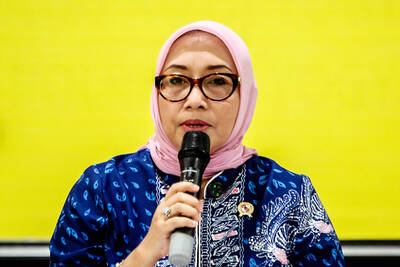
Indonesian police have arrested 13 people after shocking images of alleged abuse against small children at a daycare center went viral, sparking outrage across the nation, officials said on Monday. Police on Friday last week raided Little Aresha, a daycare center in Yogyakarta on Java island, following a report from a former employee. CCTV footage circulating on social media showed children, most younger than two, lying on the floor wearing only diapers, their hands and feet bound with rags. The police have confirmed that the footage is authentic. Police said they also found 20 children crammed into a room just 3m by 3m. “So
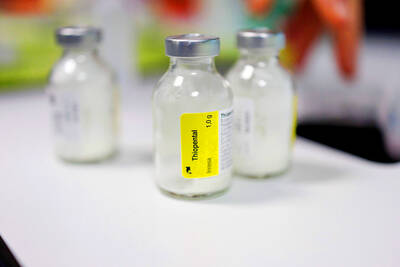
A grieving mother has ended her life at a clinic in Switzerland four years after the death of her only child. Wendy Duffy, 56, a physically healthy woman, died at the Pegasos clinic in Basel after struggling to cope with the death of her 23-year-old son, Marcus. The former care worker, from the West Midlands, England, had previously attempted to take her own life. The case comes as assisted dying would not become law in England and Wales after proposed legislation, branded “hopelessly flawed” by opponents, ran out of time. Ruedi Habegger, the founder of Pegasos, described Duffy’s death as
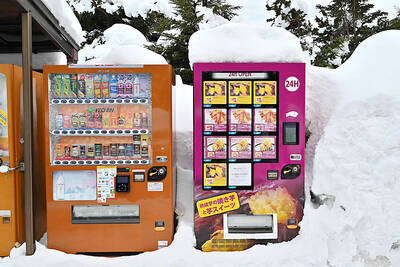
From post offices and parks to stations and even the summit of Mount Fuji, Japan’s vending machines are ubiquitous, but with the rapid pace of inflation cooling demand for their drinks, operators are being forced to rethink the business. Last month beverage giant DyDo Group Holdings announced it would remove about 20,000 vending machines — about 7 percent of their stock nationwide — by January next year, to “reconstruct a profitable network.” Pokka Sapporo Food & Beverage, based in Nagoya, also said last month it would sell its 40,000-machine operation to Osaka-based Lifedrink Co. “The strength of the vending machine


 RSS
RSS