

A firebrand monk and poster boy of Hindu nationalism on Thursday retained power in India’s most populous state, in a triumph for Indian Prime Minister Narendra Modi’s ruling party.
With just two delayed results outstanding, the Bharatiya Janata Party (BJP) had 254 seats in the 403-seat Uttar Pradesh parliament, the election commission Web site showed.
Its majority was reduced, but it was the first party to be re-elected in the state of more than 200 million people for 37 years.
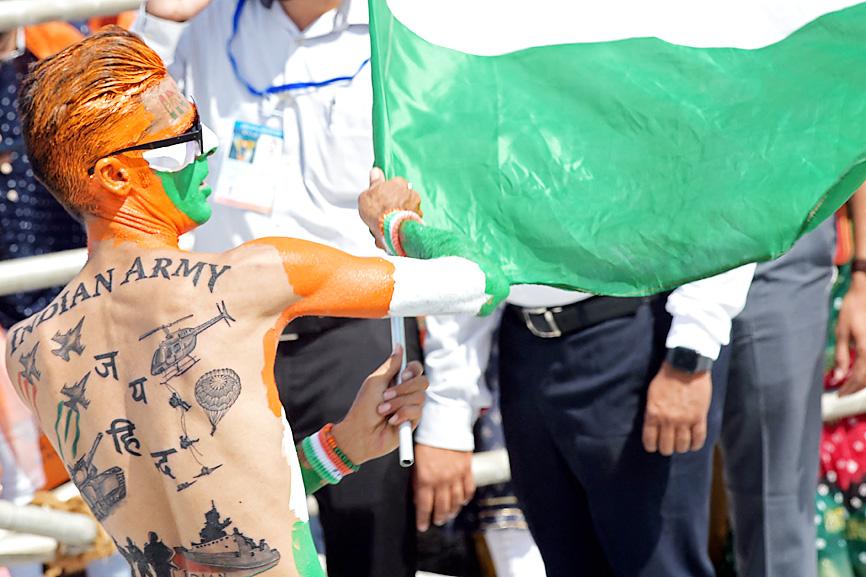
Photo: AFP
The win strengthens Chief Minister of Uttar Pradesh Yogi Adityanath’s chances of eventually succeeding Modi as an even more divisive prime minister of the world’s largest democracy.
It was a “historic victory,” Adityanath posted on Twitter, after addressing celebrating supporters in state capital, Lucknow, attributing it to “the good governance, security, nationalism and the heartwarming guidance of respected PM Narendra Modi.”
The BJP, helped by its deep pockets and influence on social media — including through misinformation, according to Agence France-Presse and other fact-checking organizations — also held the other three states where it was the incumbent.
In the last of the five polls being held, Punjab, the opposition Congress — the only other pan-national party — was crushed by the left-leaning Aam Aadmi Party in a humiliating defeat.
At the BJP national headquarters in New Delhi, Modi said pundits would proclaim the results had “sealed the fate” of the next general election, due in 2024.
Uttar Pradesh, home to more people than Brazil, is India’s biggest state-level political prize, sending the most lawmakers to the national parliament.
Adityanath’s sectarian rhetoric — coupled with a hardline approach on crime and claims of economic performance in one of India’s poorest states — proved a vote winner, experts said.
“Just like there are Islamic countries and Buddhist countries, we should become a Hindu country,” BJP supporter Neera Sinha Varsha said in Lucknow.
During the campaign, Adityanath railed against “anti-nationals” — seen as a euphemism for Muslims who make up about one-fifth of the northern state’s population.
News network The Wire analyzed Adityanath’s public speeches and found 100 distinct instances of “patterns of straightforward hate speech, anti-Muslim dog-whistling ... and a chilling focus on Hindu supremacist rhetoric.”
“Yogi has positioned himself as a darker shade of saffron [the color of Hinduism] than Modi in the last five years,” journalist and Modi biographer Nilanjan Mukhopadhyay said.
The victory is a “big endorsement of the kind of aggressive and hard-nosed politics that he has been pursuing,” he added.
Adityanath, 49, rose from humble beginnings to become head priest of an important Hindu temple and founded a vigilante youth group.
Its volunteers regularly rough up Muslims and low-caste Dalits accused of slaughtering cows — sacred to Hindus — or of seeking to seduce women from India’s majority religion.
After coming to power in Uttar Pradesh in 2017, his administration brought in a law to ban “love jihad” — Muslims marrying Hindus to convert them — and has targeted journalists and others with what critics call spurious “sedition” charges.
Media reports say more than 100 alleged criminals — most of them Muslims or Dalits — have been victims of extra-judicial police killings, a charge Adityanath denies.
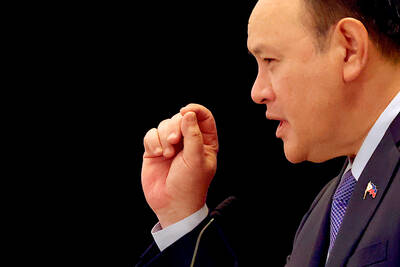
Philippine Secretary of National Defense Gilberto Teodoro Jr on Tuesday hit out at China at an international forum after a memo asserting Beijing’s position over their longstanding maritime dispute was delivered to him while he was speaking on stage. The unusual incident was captured on video at the Seoul Defense Dialogue as the secretary was responding to a question about “gray zone” coercion in the South China Sea. The video shows what appears to be a conference staffer placing it on the table next to him while speaking. “I have a note here, I think this is from China,” he said, describing

PAINSTAKING PROCESS: Ice makers freeze water for up to 72 hours, replace tainted water with a fresh batch once freezing begins, and are constantly stirring In the historic Japanese city of Kanazawa, craftsmen painstakingly shape and slice blocks of ice destined to chill negronis in some of the world’s trendiest bars. The men work for Kuramoto Ice, a century-old company in Ishikawa on the Sea of Japan coast and one of dozens of Japanese firms producing ultra-clear, premium ice. This luxury product, believed by those in the industry to melt more slowly than regular blocks, is a staple of Japan’s cocktail culture, but its popularity is also spilling over to bars abroad, from the US to Australia, who pay as much as ¥200 (US$1.28) per cube. Kuramoto Ice
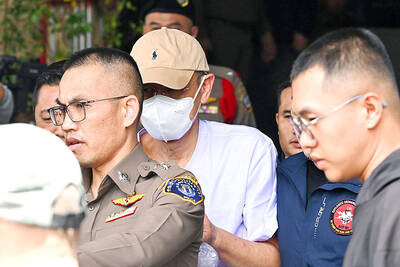
Thai police yesterday said that they arrested a senior Buddhist monk on suspicion of embezzling US$2.8 million intended for his monastery, alongside a suspected female accomplice he was having sex with. The case is the latest scandal to hit the clergy in Buddhist-majority Thailand after a sex and extortion case involving senior monks last year prompted public outrage and calls for greater scrutiny of temple finances. Phra Wachirayan Wi, the 66-year-old abbot of the 14th-century Wat Phutthaisawan in the ancient capital of Ayutthaya, was arrested on Thursday on charges including embezzlement and money laundering, lead police investigator Pattanasak Bupphasuwan said. A 47-year-old woman
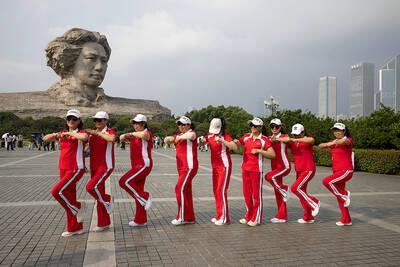
China yesterday marked half a century since the death of Mao Zedong (毛澤東), founder of the People’s Republic, who brought roughly one-quarter of the world’s population under communist rule and whose specter still haunts China’s future. Mao’s death on Sept. 9, 1976, at age 82, mourned by many and welcomed by some who suffered under his nearly three-decade rule, also hastened the end of the Cultural Revolution, a frenzied mass movement he launched in 1966. The party later condemned the Cultural Revolution as a grave error for which Mao bore primary responsibility, but still reveres him, saying his achievements outweigh his mistakes. Mao’s


 RSS
RSS