


Several parent associations in South Korea held protests yesterday against a vaccine pass mandate for children aimed at containing the spread of COVID-19 among teenagers.
The government has said that from February, anyone aged 12 or older would require a vaccine pass to enter public spaces, including private tuition centers, libraries and study cafes that most students attend after school.
The current exemption age is 17.

Photo: EPA-EFE
The mandate has sparked uproar among some parents who refuse to vaccinate their children, citing potential adverse effects.
At least 70 members of parent associations gathered in front of the Korea Disease Control and Prevention Agency building in Cheongju yesterday, holding up signs that read: “Vaccine dictatorship.”
A poll conducted this week by an advocacy group showed that 93 percent of the more than 18,000 parents who responded were against the idea of enforcing the vaccine pass mandate on students.
Health officials have said that vaccines offer protection against severe symptoms, and the rate of adverse effects reported among teenagers is lower than that of adults.
The wider vaccine pass mandate comes as infections among teenagers in South Korea have risen sharply following the resumption of full-time in-person classes last month.
Out of 100,000 children, 210 infections were reported over the past four weeks, while out of a same number of adults, only 167 tested positive. New daily infections rose this week to more than 7,000 for the first time, government data showed.
Infections in children accounted for 8.3 percent of cases in the past two weeks, and 99.8 percent of them were either unvaccinated or partially immunized.
South Korea has fully vaccinated nearly 92 percent of its adults, while 11 percent have received a booster shot. The inoculation rate for the 12-to-17 age group remains at 34 percent.
The country reported 7,102 new COVID-19 cases on Wednesday, slightly below the record high 7,175 a day earlier. Hospitals are treating 857 severe COVID-19 cases.
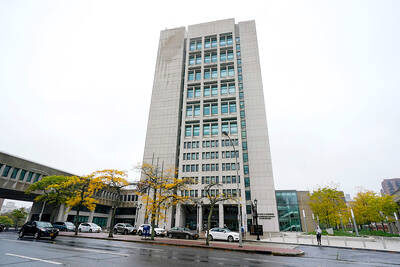
A coalition of civil rights groups on Tuesday asked a New York State judge to order one of its largest suburban counties to stop its deployment of nearly 600 license plate readers, calling it a warrantless and “indiscriminate surveillance system” that violates the state constitution. The class action lawsuit also alleged that Westchester County never got proper authorization to launch the program, which has amassed a database of 1.6 billion plate scans that has been shared with more than 50 outside law enforcement agencies. The complaint said the network “records the long-term travel patterns, daily habits, and intimate information of millions of
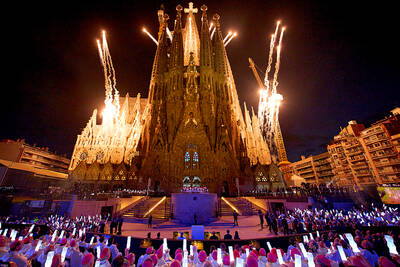
Pope Leo XIV on Wednesday blessed a giant new tower at Barcelona’s famed Sagrada Familia Basilica after celebrating mass inside what is now the world’s tallest church. A fireworks and light show illuminated the exterior of the temple at the end of the ceremony, bathing the unfinished basilica in shifting colours that highlighted its towering spires. A choir of 600 singers performed at the service which lasted around 90 minutes and was attended by Spanish Prime Minister Pedro Sanchez as well as King Felipe VI and Queen Letizia. The stained-glass windows in various colours shone brightly in between the tree-like

Scientists have discovered communities of marine life — including jellyfish, tubeworms and brittle stars — thriving on a whale graveyard. The graveyards form when whale carcasses fall to the sea floor, becoming a sustaining snack for nearby critters. This one, which is up to 7km below the surface of the southeastern Indian Ocean, spans the largest area, and is so far the deepest found. A whale’s sheer size and the unique chemistry of its bones are the keys to forming these unique underwater neighborhoods, said Song Xikun (宋希坤), a biologist with the Chinese Academy of Sciences’ Institute of Deep-sea Science and Engineering

Voters in Switzerland yesterday cast their ballots on an initiative championed by the top right-wing party to cap the Alpine country’s population at 10 million. As of press time last night, early results showed that Swiss voters were leaning against it. The populist Swiss People’s Party, which has the most seats in parliament, has stirred up and fostered anti-migration sentiment over the years, notably about an influx of workers from the neighboring EU. Critics called the bid a self-inflicted wound, saying the boom in migration over the past generation has brought foreign labor and skills to sectors such as healthcare, finance, pharmaceuticals


 RSS
RSS