


The US has ordered an arms embargo on Cambodia, citing deepening Chinese military influence, corruption, and human rights abuses by the government and armed forces in the Southeast Asian country.
The restrictions on defense-related goods and services took effect yesterday.
A notice in the Federal Register said that developments in Cambodia were “contrary to US national security and foreign policy interests.”
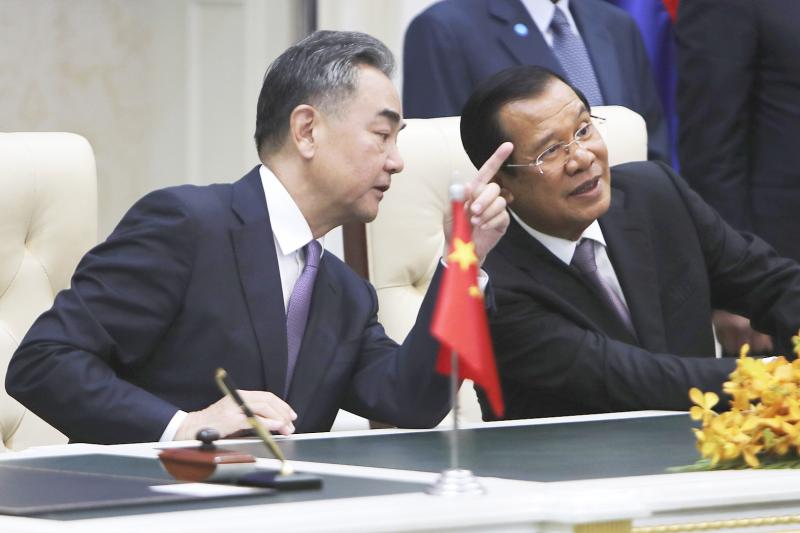
Photo: AP
The aim of the embargo is to ensure that defense-related items are not available to Cambodia’s military and intelligence services without advance review by the US government, it said.
The restrictions follow the US Department of the Treasury last month ordering sanctions against two senior Cambodian military officials for corruption, and come amid increasing concern about Beijing’s sway.
At the time, the US government issued an advisory cautioning US businesses about potential exposure to entities in Cambodia, such as its military, that “engage in human rights abuses, corruption and other destabilizing conduct.”
Cambodia branded those sanctions as “politically motivated” and said it would not discuss them with Washington.
The US has similar controls on exports of items that might be diverted to “military end users” in Myanmar, China, Russia and Venezuela.
US exports to Cambodia in 2019 totaled US$5.6 billion.
The US is the largest export market for Cambodia, a major garments manufacturing hub, but three-quarters of Cambodia’s imports are from China and other countries in Asia.
The US halted military assistance to Cambodia following a 1997 coup in which the country’s leader, Hun Sen, grabbed full power after ousting his joint prime minister, Prince Norodom Ranariddh. Hun Sen remains prime minister.
In August 2005, former president George W. Bush waved the ban, citing Phnom Penh’s agreement to exempt US citizens in Cambodia from prosecution by the Netherlands-based International Criminal Court.
Since direct military ties between the two countries were restored in 2006, the US has pledged millions of US dollars in military aid, initially to help improve its border security and peacekeeping operations.
China is Cambodia’s biggest investor and closest political partner. It was the chief backer of the murderous regime of Pol Pot in the 1970s and has long maintained strong relations with Hun Sen, who has ruled for more than 30 years and grown increasingly repressive.
Beijing’s support allows Cambodia to disregard Western concerns about its poor record in human and political rights, and in turn Cambodia generally supports Beijing’s geopolitical positions on issues such as its territorial claims in the South China Sea.
The construction of new Chinese military facilities at Cambodia’s Ream Naval Base is a point of strong contention with Washington.
Ream faces the Gulf of Thailand, adjacent to the South China Sea, where China has aggressively asserted its claim to virtually the entire strategic waterway. The US has refused to recognize China’s sweeping claims, and the US Navy’s 7th Fleet routinely sails past Chinese-held islands in what it terms freedom of navigation operations.
In recent years, Hun Sen’s government has cracked down on the political opposition, shut media outlets and forced hundreds of Cambodian politicians, human rights advocates and journalists into exile.
Human rights groups say the government has engaged in arbitrary arrests and other abuses, and worked to portray peaceful dissent over corruption, land rights and other issues as attempts to overthrow the government.

Kouri Richins, a Utah mother who published a children’s book about grief after the death of her husband is to serve a life sentence for his murder without the possibility of parole, a judge ruled on Wednesday. Richins was convicted in March of aggravated murder for lacing a cocktail given to her husband, Eric Richins, with five times the lethal dose of fentanyl at their home near Park City in 2022. A jury also found her guilty of four other felonies, including insurance fraud, forgery and attempted murder for trying to poison her husband weeks earlier on Feb. 14, 2022, with a
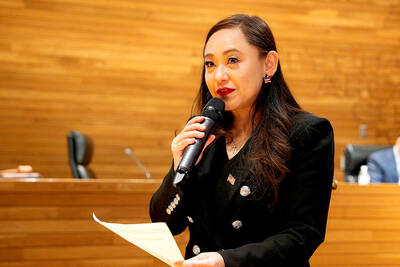
‘PERSONAL MISTAKES’: Eileen Wang has agreed to plead guilty to the felony, which comes with a maximum sentence of 10 years in federal prison A southern California mayor has agreed to plead guilty to acting as an illegal agent for the Chinese government and has resigned from her city position, officials said on Monday. Eileen Wang (王愛琳), mayor of Arcadia, was charged last month with one count of acting in the US as an illegal agent of a foreign government. She was accused of doing the bidding of Chinese officials, such as sharing articles favorable to Beijing, without prior notification to the US government as required by law. The 58-year-old was elected in November 2022 to a five-person city council, from which the mayor is selected
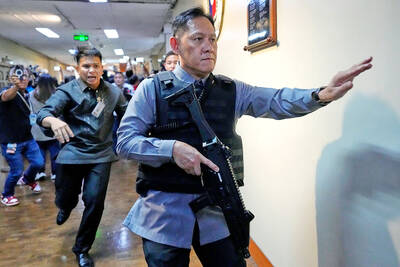
DELA ROSA CASE: The whereabouts of the senator, who is wanted by the ICC, was unclear, while President Marcos faces a political test over the senate situation Philippine authorities yesterday were seeking confirmation of reports that a top politician wanted by the International Criminal Court (ICC) had fled, a day after gunfire rang out at the Philippine Senate where he had taken refuge fearing his arrest. Senator Ronald “Bato” dela Rosa, the former national police chief and top enforcer of former Philippine president Rodrigo Duterte’s “war on drugs,” has been under Senate protection and is wanted for crimes against humanity, the same charges Duterte is accused of. “Several sources confirmed that the senator, Senator Bato, is no longer in the Senate premises, but we are still getting confirmation,” Presidential
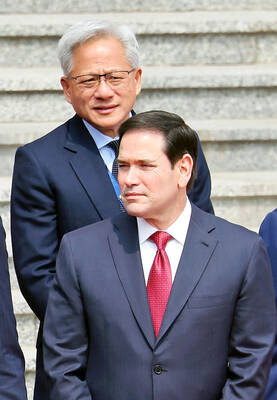
HELP DENIED? The US Department of State said that the Cuban leadership refuses to allow the US to provide aid to Cubans, ‘who are in desperate need of assistance’ US Secretary of State Marco Rubio on Wednesday said that Cuba’s leadership must change, as Washington renewed an offer of US$100 million in aid if the communist nation agrees to cooperate. Cuba has been suffering severe economic tumult led by an energy shortage that plunged 65 percent of the country into darkness on Tuesday. Cuba’s leaders have blamed US sanctions, but Rubio, a Cuban American and critic of the government established by Fidel Castro, said the system was to blame, including corruption by the military. “It’s a broken, nonfunctional economy, and it’s impossible to change it. I wish it were different,” he told


 RSS
RSS