


Somalian artisan Muse Mohamud Olosow carefully sorts through a huge pile of camel bones, discarded by a slaughterhouse in Mogadishu, selecting pieces that he would carve into jewelry and ornate beads used by fellow Muslims while reciting prayers.
Olosow, 55, has endured hardships to keep his trade alive. In 2006, he was shot in the arm by the brother of the owner of a camel bone heap where he sifts for material.
To Olosow’s knowledge, he is one of just four artisans in his country of 16 million people who work with the bones of camels.
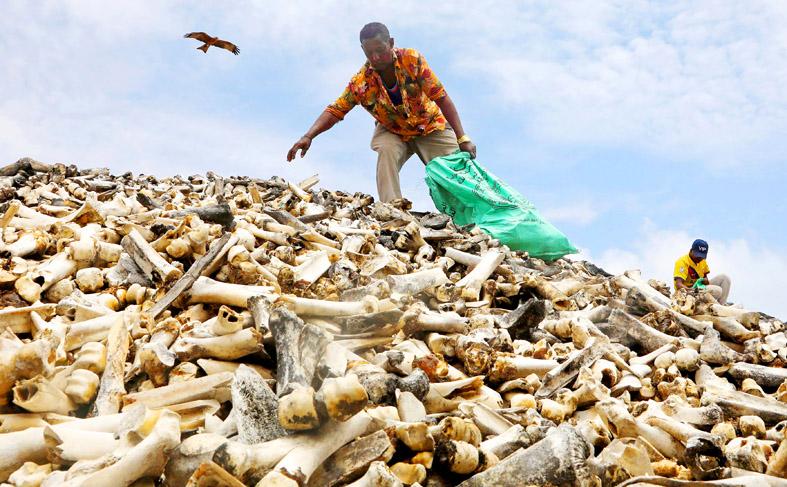
Photo: Reuters
In 1978, in one of Somalia’s many periods of war and turmoil, dozens of craftsmen were killed in Mogadishu and another town by gunmen, he said.
For years, he carved his bones secretly at home and then took them to markets to sell discreetly.
Olosow, whose strong hands and arms bear callouses and muscles from his work, learned his craft from his father in 1976.
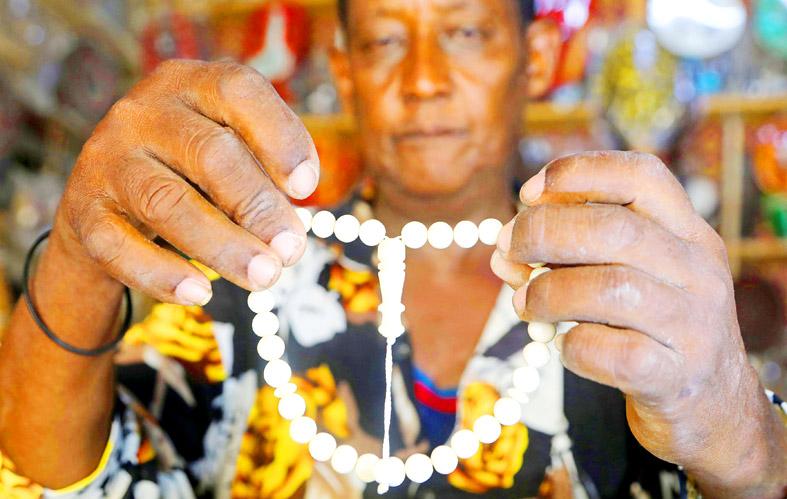
Photo: Reuters
He plans to ensure this decades-old tradition does not fade away after he is gone.
“My kids will inherit these skills from me that I inherited from my father. I do not want these skills to stop,” he said from his workshop in the Somalian capital, Mogadishu, surrounded by bones.
His clients are mostly government officials or wealthy Somalians living abroad. Just one of his painstakingly carved prayer beads can cost about US$50, in a country where seven in 10 people live on less than US$2 per day.
A customer visiting his shop said the work justified the price.
“What matters is quality not price. I prefer this one to beads imported from other countries like China,” the customer said.
Somalia is home to the world’s largest camel population, and pastoralism of camels and other livestock provide livelihoods for 60 percent of the population, a 2019 US government study found.
For Olosow and his family, carving bones has been their main source of income for decades. They invested nearly US$5,000 to import machines from Italy to chisel and puncture the tough bones, he said, making it faster and safer to work “without bruises.”
Painstaking work by hand, passed down by his father, is what yields some the details that make his jewelry and beads distinctive.
He dreams of selling his work abroad.
“Our plan is to export these items to other countries. We shall continue this art craft until we become rich. God willing,” he said.

An American scientist convicted of lying to US authorities about payments from China while he was at Harvard University has rebuilt his research lab in Shenzhen, China, to pursue technology the Chinese government has identified as a national priority: embedding electronics into the human brain. Charles Lieber, 67, is among the world’s leading researchers in brain-computer interfaces. The technology has shown promise in treating conditions such as amyotrophic lateral sclerosis and restoring movement in paralyzed people. It also has potential military applications: Scientists at the Chinese People’s Liberation Army have investigated brain interfaces as a way to engineer super soldiers by boosting
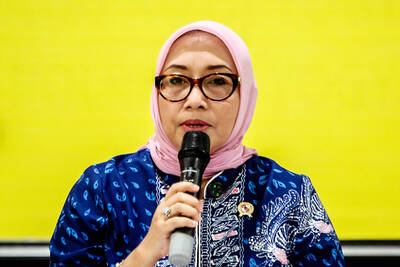
Indonesian police have arrested 13 people after shocking images of alleged abuse against small children at a daycare center went viral, sparking outrage across the nation, officials said on Monday. Police on Friday last week raided Little Aresha, a daycare center in Yogyakarta on Java island, following a report from a former employee. CCTV footage circulating on social media showed children, most younger than two, lying on the floor wearing only diapers, their hands and feet bound with rags. The police have confirmed that the footage is authentic. Police said they also found 20 children crammed into a room just 3m by 3m. “So
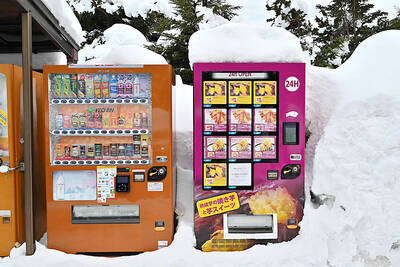
From post offices and parks to stations and even the summit of Mount Fuji, Japan’s vending machines are ubiquitous, but with the rapid pace of inflation cooling demand for their drinks, operators are being forced to rethink the business. Last month beverage giant DyDo Group Holdings announced it would remove about 20,000 vending machines — about 7 percent of their stock nationwide — by January next year, to “reconstruct a profitable network.” Pokka Sapporo Food & Beverage, based in Nagoya, also said last month it would sell its 40,000-machine operation to Osaka-based Lifedrink Co. “The strength of the vending machine

A highway bomb attack in a restive region of southwestern Colombia on Saturday killed 14 people and injured at least 38, the latest spate of violence ahead of next month’s presidential election. Authorities blamed the attack in the Cauca department — a conflict-ridden, coca-growing region — on dissidents of the now-disbanded FARC guerrilla army, who have been sowing violence across the country. “Those who carried out this attack ... are terrorists, fascists and drug traffickers,” Colombian President Gustavo Petro said on social media. “I want our very best soldiers to confront them,” he added. The leftist leader blamed the bombing


 RSS
RSS