


A Chinese university appears to have asked its colleges to make lists of their LGBTQ+ students and report on their “state of mind,” a purported internal directive published online on Chinese and foreign social media platforms said.
Shanghai University has not confirmed the request or responded to queries about its intention, but it has sparked alarm among young Chinese, coming after a crackdown on campus groups and organizations supporting LGBTQ+ and feminist communities.
The “campus survey,” citing “relevant requirements,” asked colleges to “investigate [and] research” students identified as LGBTQ+.
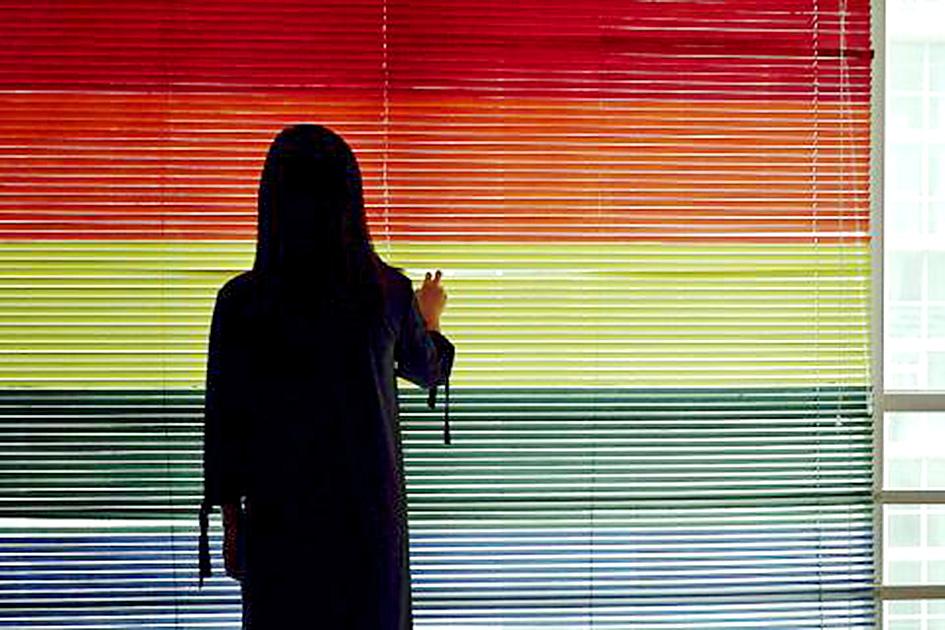
Photo: AFP
It also requested information on the students’ state of mind and psychological condition, including political stance, social contacts and mental health status.
The questionnaire did not explain what “relevant requirements” it was referring to.
Students and LGBTQ+ rights advocates have expressed concern that the information-gathering exercise could signal further targeting of students. Some legal experts on Chinese social media sites are questioning whether such a practice would contravene China’s new data privacy law.
Shanghai University’s communications department could not be reached for comment.
Other departments referred the Guardian to the communications department.
The original post on a microblogging site with a screenshot of the document was shared or liked tens of thousands of times.
The user who first posted the document said that the post has now been taken down.
Attempts by the Guardian to access the original post also returned an error message.
The screenshot of the questionnaire was also shared on Western social media including Twitter, generating a heated discussion about China’s ongoing crackdowns on sexual minorities.
The incident comes amid Chinese authorities’ worsening intolerance for gender and sexual minority groups, particularly those engaged in activism.
Over the past few months authorities have targeted feminist groups and individuals who have sought to resist discrimination .
Until recent years, China had a growing and vibrant LGBTQ+ community on its university campuses, but as the political and social dynamics have changed in China in the past few years, the LGBTQ+ community has become increasingly marginalized.
Shanghai Pride, China’s sole major annual celebration of sexual minorities, last year announced its shutdown.
The organizers of the event said that the move meant “the end of the rainbow” for them.
“It’s been a great 12-year ride, and we are honored and proud to have traveled this journey of raising awareness and promoting diversity for the LGBTQ community,” they wrote in an open letter.
Last month, dozens of social media accounts run by LGBTQ+ university students were blocked and then deleted without warning. The accounts were a mix of registered student clubs and unofficial grassroots groups, and some had operated for years as safe spaces for China’s LGBTQ+ youth, with tens of thousands of followers.
The move sparked outrage among some university students and advocates.
China watchers were divided over Shanghai University’s move.
“Hoping this is just a misguided demographic study,” said Eric Hundman, an assistant professor at New York University Shanghai.
Foreign Policy deputy editor James Palmer, who authored several books on Chinese politics, said that it was “not great, to say the least.”
“My guess is that this isn’t going to be about homophobic persecution as much as it about the system’s constant need to identify and monitor — especially potential activists,” he said.
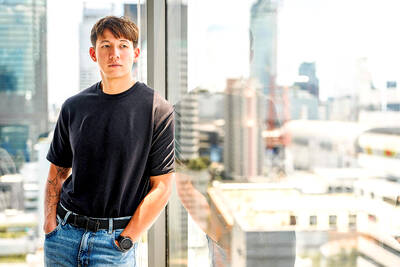
SPEAKING OUT: After Siranudh Scott’s allegations surfaced, celebrities and public figures took to social media to share their own experiences of sexual misconduct and abuse A high-profile alleged sexual abuse case within a wealthy Thai beer brewing family has prompted a wave of painful accounts from survivors of unconnected abuse in the conservative nation. Siranudh Scott, a member of the billionaire Thai family that founded the ubiquitous Singha beer brand, posted an emotional video this month accusing his elder brother Sunit of repeatedly abusing him when he was a teenager. Sunit, who is in his 30s, later denied the allegations in a video posted online, but Singha parent Boonrawd dismissed him from his executive role with the company on Tuesday last week. “I felt I needed to speak

SEEKING ORDER: Rodrigo Paz said that ‘anyone who wants to destroy the nation will have to deal with this president and the full force of the constitution’ Bolivian President Rodrigo Paz on Wednesday said that the nation was at a “breaking point” after nearly a month of protests that have caused shortages of food, fuel and medicine. Paz, who took office six months ago amid the worst economic crisis there in four decades, is battling a groundswell of fury over his policies. The political capital, La Paz, has been besieged by low-income workers and members of the indigenous majority calling for his resignation. “The country needs order and is reaching breaking point,” the 58-year-old said at a public event in La Paz, renewing his appeal for dialogue. On Tuesday, the Bolivian

A Hong Kong astronaut is to join a Chinese space mission for the first time as part of a three-person crew launching today, as Beijing edges closer to its goal of landing people on the moon. The Tiangong space station — crewed by teams of three astronauts that are typically rotated every six months — is the crown jewel of China’s space program, boosted by billions in state investment in a bid to catch up with the US and Russia. The Shenzhou-23 mission is to blast off at 11:08pm from the Jiuquan Satellite Launch Center in northwestern China, carrying three astronauts to
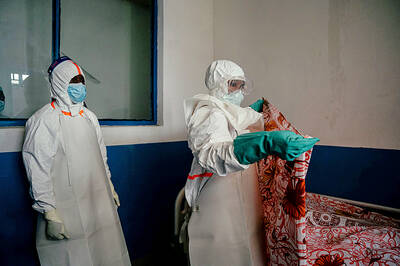
UPGRADED ALERT: The risk inside DR Congo is now considered ‘very high,’ while neighboring countries face a ‘high’ threat as the outbreak continues, the WHO said Ebola is spreading faster than responders can track it in eastern Congo, where health workers managed to follow up with barely one in five identified contacts in a single day. Authorities in the Democratic Republic of the Congo (DR Congo) reported 83 confirmed infections, 746 suspected cases and 1,603 identified contacts as of Thursday, but health workers were able to follow up on only 342 contacts that day — about 21 percent of the total under monitoring — data released by the DR Congo Ministry of Public Health on Friday showed. The figures suggest the response is falling behind the outbreak itself,


 RSS
RSS