


More than 90 policy and rights groups around the world yesterday published an open letter urging Apple to abandon plans for scanning children’s messages for nudity and the phones of adults for images of child sex abuse.
“Though these capabilities are intended to protect children and to reduce the spread of child sexual abuse material, we are concerned that they will be used to censor protected speech, threaten the privacy and security of people around the world, and have disastrous consequences for many children,” the groups wrote.
The largest campaign to date over an encryption issue at a single company was organized by the US-based nonprofit Center for Democracy & Technology.
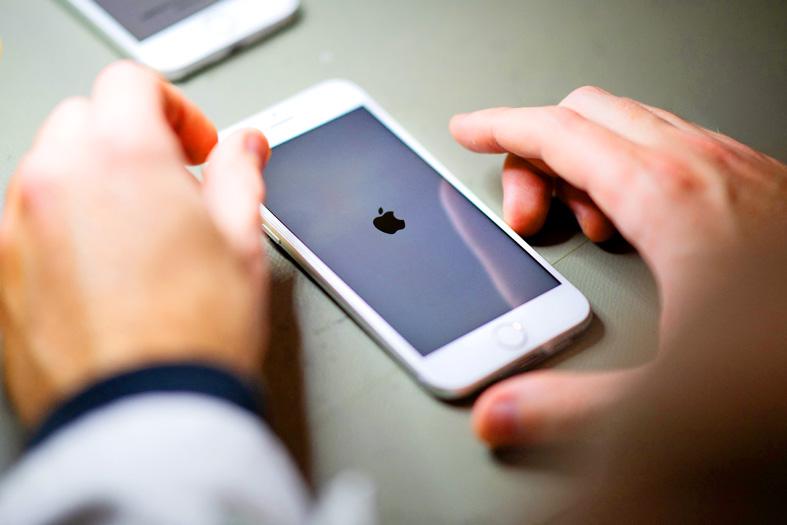
Photo: AFP
Some overseas signatories in particular are worried about the impact of the changes in nations with different legal systems, including some already hosting heated fights over encryption and privacy.
“It’s so disappointing and upsetting that Apple is doing this, because they have been a staunch ally in defending encryption in the past,” said Sharon Bradford Franklin, codirector of center’s security and surveillance project.
An Apple spokesman said the company had addressed privacy and security concerns in a document on Friday last week, outlining why the complex architecture of the scanning software should resist attempts to subvert it.
Those signing included multiple groups in Brazil, where courts have repeatedly blocked Facebook’s WhatsApp for failing to decrypt messages in criminal probes, and the senate has passed a bill that would require traceability of messages, which would require somehow marking their content. A similar law was passed in India this year.
“Our main concern is the consequence of this mechanism, how this could be extended to other situations and other companies,” said Flavio Wagner, president of the independent Brazil chapter of the Internet Society, which signed the letter. “This represents a serious weakening of encryption.”
Surprised by the earlier outcry following its announcement two weeks ago, Apple offered a series of explanations and documents to argue that the risks of false detections are low.
Apple said it would refuse demands to expand the image-detection system beyond pictures of children flagged by clearinghouses in multiple jurisdictions, although it has not said it would pull out of a market rather than obeying a court order.
Although most of the objections so far have been over device-scanning, the coalition’s letter also faults a change to iMessage in family accounts, which would try to identify and blur nudity in children’s messages, letting them view it only if parents are notified.
The signers said the step could endanger children in intolerant homes or those seeking educational material. More broadly, they said the change would break end-to-end encryption for iMessage, which Apple has staunchly defended in other contexts.
“Once this backdoor feature is built in, governments could compel Apple to extend notification to other accounts, and to detect images that are objectionable for reasons other than being sexually explicit,” the letter said.
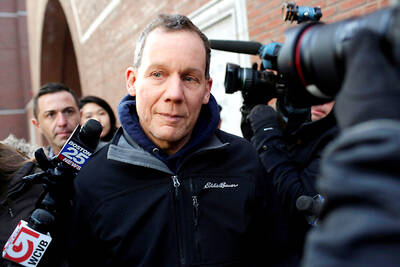
An American scientist convicted of lying to US authorities about payments from China while he was at Harvard University has rebuilt his research lab in Shenzhen, China, to pursue technology the Chinese government has identified as a national priority: embedding electronics into the human brain. Charles Lieber, 67, is among the world’s leading researchers in brain-computer interfaces. The technology has shown promise in treating conditions such as amyotrophic lateral sclerosis and restoring movement in paralyzed people. It also has potential military applications: Scientists at the Chinese People’s Liberation Army have investigated brain interfaces as a way to engineer super soldiers by boosting

Indonesian police have arrested 13 people after shocking images of alleged abuse against small children at a daycare center went viral, sparking outrage across the nation, officials said on Monday. Police on Friday last week raided Little Aresha, a daycare center in Yogyakarta on Java island, following a report from a former employee. CCTV footage circulating on social media showed children, most younger than two, lying on the floor wearing only diapers, their hands and feet bound with rags. The police have confirmed that the footage is authentic. Police said they also found 20 children crammed into a room just 3m by 3m. “So

A grieving mother has ended her life at a clinic in Switzerland four years after the death of her only child. Wendy Duffy, 56, a physically healthy woman, died at the Pegasos clinic in Basel after struggling to cope with the death of her 23-year-old son, Marcus. The former care worker, from the West Midlands, England, had previously attempted to take her own life. The case comes as assisted dying would not become law in England and Wales after proposed legislation, branded “hopelessly flawed” by opponents, ran out of time. Ruedi Habegger, the founder of Pegasos, described Duffy’s death as
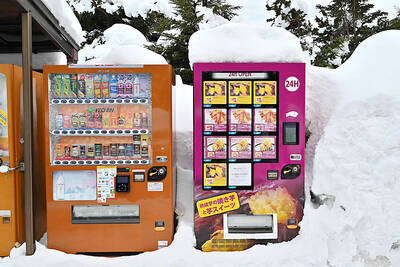
From post offices and parks to stations and even the summit of Mount Fuji, Japan’s vending machines are ubiquitous, but with the rapid pace of inflation cooling demand for their drinks, operators are being forced to rethink the business. Last month beverage giant DyDo Group Holdings announced it would remove about 20,000 vending machines — about 7 percent of their stock nationwide — by January next year, to “reconstruct a profitable network.” Pokka Sapporo Food & Beverage, based in Nagoya, also said last month it would sell its 40,000-machine operation to Osaka-based Lifedrink Co. “The strength of the vending machine


 RSS
RSS