


The Amazon rainforest is emitting 1 billion tonnes of carbon dioxide per year, a study has found. The giant forest had been absorbing the emissions driving the climate crisis, but is now causing its acceleration, researchers said.
Most of the emissions are caused by fires, many deliberately set to clear land for beef and soy production, but even without fires, hotter temperatures and droughts mean that the southeastern Amazon has become a source of carbon dioxide.
Growing trees and plants have taken up about one-quarter of all fossil-fuel emissions since 1960, with the Amazon playing a major role as the largest tropical forest. Losing the Amazon’s power to capture carbon dioxide is a stark warning that slashing emissions from fossil fuels is more urgent than ever, scientists said.
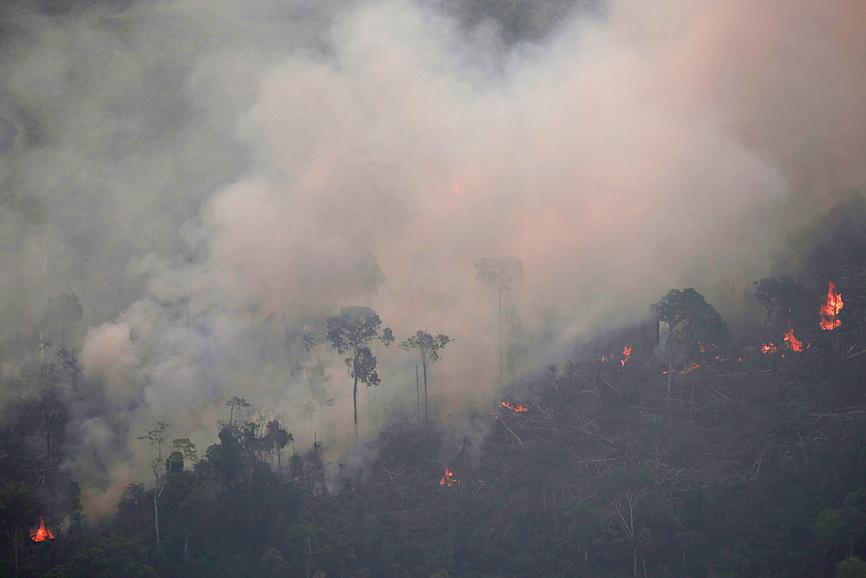
Photo: Reuters
The research used small airplanes to measure carbon dioxide levels up to 4,500m above the forest over the past decade, showing how the whole Amazon is changing.
Previous studies indicating that the Amazon was becoming a source of carbon dioxide were based on satellite data, which can be hampered by cloud cover, or ground measurements of trees, which can cover only part of the vast region.
The scientists said the discovery that part of the Amazon was emitting carbon even without fires was particularly worrying.
They said it was most likely that the result of each year’s deforestation and fires were making adjacent forests more susceptible the next year. The trees produce much of the region’s rain, so fewer trees means more severe droughts and heat waves, and more tree deaths and fires.
The government of Brazilian President Jair Bolsonaro has been harshly criticized for encouraging more deforestation, which has surged to a 12-year high, while fires last month hit their highest level since 2007.
“The first very bad news is that forest burning produces around three times more carbon dioxide than the forest absorbs. The second bad news is that the places where deforestation is 30 percent or more show carbon emissions 10 times higher than where deforestation is lower than 20 percent,” said Luciana Gatti of Brazil’s National Institute for Space Research, who led the research.
Fewer trees meant less rain and higher temperatures, making the dry season even worse for the remaining forest, she said.
“We have a negative loop that makes the forest more susceptible to uncontrolled fires,” Gatti said. “We need a global agreement to save the Amazon.”
Some European nations have said that they would block an EU trade deal with Brazil and other countries unless Bolsonaro agrees to do more to tackle destruction in the Amazon.
The research, published in the journal Nature, involved taking 600 vertical profiles of carbon dioxide and carbon monoxide, which is produced by the fires, at four sites in the Brazilian Amazon from 2010 to 2018.
It found that fires produced about 1.5 billion tonnes of carbon dioxide per year, with forest growth removing 0.5 billion tonnes. The 1 billion tonnes left in the atmosphere is equivalent to the annual emissions of Japan, the world’s fifth-biggest polluter.
“This is a truly impressive study,” Simon Lewis of University College London said. “Flying every two weeks and keeping consistent laboratory measurements for nine years is an amazing feat.”
“The positive feedback — where deforestation and climate change drive a release of carbon from the remaining forest and reinforces additional warming and more carbon loss — is what scientists have feared would happen,” he said.
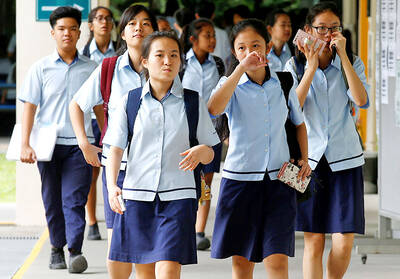
School bullies in Singapore are to face caning under new guidelines, but the education minister on Tuesday said it would be meted out only as a last resort with strict safeguards. Human rights groups regularly criticize Singapore for the use of corporal punishment, which remains part of the school and criminal justice systems, but authorities have defended it as a deterrent to crime and serious misconduct. Caning was discussed in the parliament after legislators asked how it would be used in relation to bullying in schools. The debate followed stricter guidelines on serious student misconduct, including bullying, unveiled by the Singaporean Ministry of

As evening falls in Fiji’s capital, a steady stream of people approaches a makeshift clinic that is a first line of defense against one of the world’s fastest-growing HIV epidemics. In the South Pacific nation — a popular tourist destination of just under a million people — more than 2,000 new HIV cases were recorded last year, a 26 percent increase from 2024. The government has declared an HIV outbreak and described it as a national crisis. “It’s spreading like wildfire,” said Siteri Dinawai, 46, who came to be tested. The Moonlight Clinic, a converted minibus parked in a suburban cul-de-sac in Suva, is
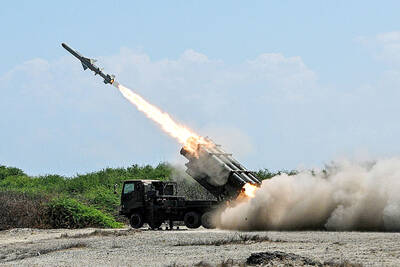
A MESSAGE: Japan’s participation in the Balikatan drills is a clear deterrence signal to China not to attack Taiwan while the US is busy in the Middle East, an analyst said The Japan Self-Defense Forces yesterday fired a Type 88 anti-ship missile during a joint maritime exercise with US, Australian and Philippine forces, hitting a decommissioned Philippine Navy ship in waters facing the disputed South China Sea, in drills that underscore Tokyo’s rising willingness to project military power on China’s doorstep. The drill took place as Manila and Tokyo began talks on a potential defense equipment transfer, made possible by Japan’s decision to scrap restrictions on military exports. The discussions include the possible early transfer of Abukuma-class destroyers and TC-90 aircraft to the Philippines, Japanese Minister of Defense Shinjiro Koizumi said. Philippine Secretary of
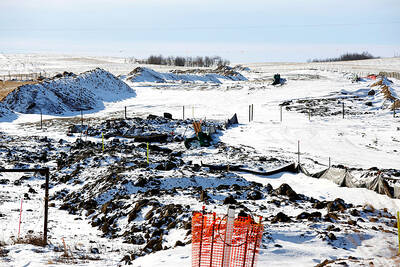
Separatists in Alberta are preparing to submit a petition tomorrow that they said has enough signatures to force a referendum on independence for the oil-rich Canadian province. Polls indicate the pro-independence camp remains a minority among Alberta’s 5 million people, but has hit a historic high of roughly 30 percent. Alberta separatists are also closer than ever to forcing a referendum, riding momentum fueled by intensifying grievances over Ottawa’s control of the provincial oil industry. They have also undeniably gotten a boost from the return to power of US President Donald Trump. After launching a petition in January, Stay Free Alberta, the group


 RSS
RSS