


The death of Dhafer Eliyahu hit Iraq hard, not only because the doctor treated the neediest for free, but because with his passing, only four Jews remain in the country.
At the Habibiya Jewish cemetery in the capital, Baghdad, wedged between the Martyr Monument erected by former Iraqi president Saddam Hussein and the restive Shiite stronghold of Sadr City in east Baghdad, an aged Muslim man still tends to the graves, but visitors are rare.
On the day of Eliyahu’s burial, “it was me who prayed over his grave,” the doctor’s sister told reporters.
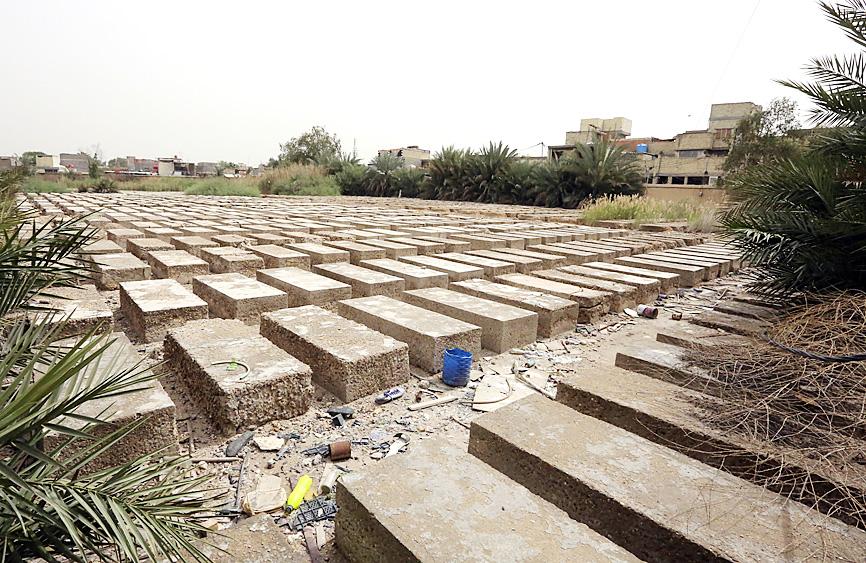
Photo: AFP
“There were friends” of other faiths who prayed too, each in their own way, she added, refusing to give her name.
To hear Jewish prayer out in the open is rare in Baghdad, where there is but one synagogue that only opens occasionally and no rabbis.
However, Jewish roots in Iraq go back 2,600 years.
According to biblical tradition, they arrived in 586 BC as prisoners of Babylonian king Nebuchadnezzar II after he destroyed Solomon’s Temple in Jerusalem.
In Iraq, they wrote the Babylonian Talmud on the very land where the patriarch Abraham was born and where the Garden of Eden is by some considered to have been located, in the heart of the Mesopotamian marshlands.
More than 2,500 years later, in Ottoman-ruled Baghdad, Jews were the second-largest community in the city, making up 40 percent of its inhabitants.
Some were very prominent members of society like Sassoon Eskell, Iraq’s first ever minister of finance in 1920, who made a big impression on British adventurer and writer Gertrude Bell.
At the start of last century, the day of rest and prayer was Saturday, as per the Jewish tradition, not Islam’s Friday, as it is today.
Today, “one prays at home,” said a Baghdad resident knowledgeable of the city’s Jewish community, who also chose to remain anonymous.
When people with a Jewish name deal with the city administration, “they will not be well received,” he added.
Edwin Shuker, a Jew born in Iraq in 1955 and exiled in Britain since he was 16, said that “there are only four Jews with Iraqi nationality who are descendant of Jewish parents” left in the country, not including the autonomous Kurdish region.
A turning point for Jewish history in Iraq came with the first pogroms in the middle of last century. In June 1941, the Farhud pogrom in Baghdad left more than 100 Jews dead, properties looted and homes destroyed.
In 1948, Israel was created amid a war with an Arab military coalition that included Iraq.
Almost all of Iraq’s 150,000 Jews went into exile in the ensuing years.
Their identity cards were taken away and replaced by documents that made them targets wherever they showed them.
The majority preferred to sign documents saying that they would “voluntarily” leave, and renounce their nationality and property.
Still today, Iraqi law forbids the restoration of their citizenship, Shuker said.
By 1951, 96 percent of the community had left. Almost all the rest follow after the public hangings of “Israeli spies” in 1969 by the Baath Party, which had just come to power in a coup.
“Promotion of Zionism” was punishable by death and that legislation has remained unchanged.
Decades of conflict and instability — with the 1980s Iran-Iraq war, the invasion of Kuwait, an international embargo, the 2003 US invasion and the ensuing violence — completed the erosion of the Jewish community.
By the end of 2009, only eight members remained, according to a US diplomatic cable.
The haemorrhage did not end there. A jeweller threatened by militants who coveted his goldsmith’s work went into exile, followed in 2011 by Amer Moussa Nassim, the grand nephew of author and renowned economist Mir Basri.
At 38, Nassim left Baghdad to finally live “a normal life” and get married, as the only remaining Jewish women in the city of millions of people were two elderly ladies.
Six months ago, one of the two, known as Sitt Marcelle, a tireless advocate of the community, passed away.
On March 15, she was followed by Elyahu, aged 61.
Israel, on the other hand, is now home to 219,000 Jews of Iraqi origin.
They left behind in Iraq homes and synagogues, which, up until 2003, “were in perfect condition and each owner identifiable,” Shuker said.
“All it takes is a vote in parliament” to return everything to the families, he added.
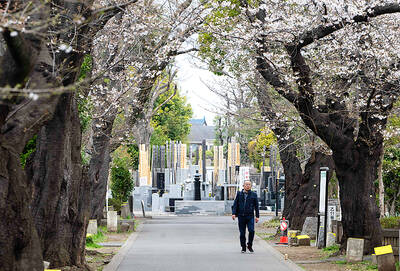
ROCKY RELATIONS: The figures on residents come as Chinese tourist numbers drop following Beijing’s warnings to avoid traveling to Japan The number of Chinese residents in Japan has continued to rise, even as ties between the two countries have become increasingly fractious, data released on Friday showed. As of the end of December last year, the number of Chinese residents had increased by 6.5 percent from the previous year to 930,428. Chinese people accounted for 22.6 percent of all foreign residents in Japan, making them by far the largest group, Japanese Ministry of Justice data showed. Beijing has criticized Tokyo in increasingly strident terms since Japanese Prime Minister Sanae Takaichi last year suggested that a military conflict around Taiwan could
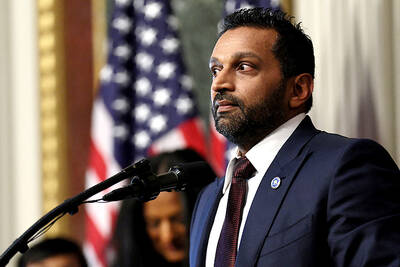
A pro-Iran hacking group claimed to breach FBI Director Kash Patel’s personal e-mail inbox and posted some of the contents online. The e-mails provided by the hacking group include travel details, correspondence with leasing agents in Washington and global entry, and loyalty account numbers. The e-mail address the hackers claim to have compromised has been previously tied to Patel’s personal details, and the leaked e-mails contain photos of Patel and others, in addition to correspondence with family members and colleagues. “The FBI is aware of malicious actors targeting Director Patel’s personal email information,” the agency said in a statement on
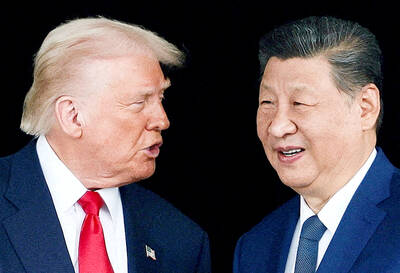
RIVALRY: ‘We know that these are merely symbolic investigations initiated by China, which is in fact the world’s most profligate disrupter of supply chains,’ a US official said China has started a pair of investigations into US trade practices, retaliating against similar probes by US President Donald Trump’s administration as the superpowers stake out positions before an expected presidential summit in May. The move, announced by the Chinese Ministry of Commerce on Friday, is a direct mirror of steps Trump took to revive his tariff agenda after the US Supreme Court last month struck down some of his duties. “China expresses its strong dissatisfaction and firm opposition to these actions,” a ministry spokesperson said in a statement, referring to the so-called Section 301 investigations initiated on March 11.

When a hiker fell from a 55m waterfall in wild New Zealand bush, rescuers were forced to evacuate the badly hurt woman without her dog, which could not be found. After strangers raised thousands of dollars for a search, border collie Molly was flown to safety by a helicopter pilot who was determined to reunite the pet and the owner. A week earlier, an emergency rescue helicopter found the woman with bruises and lacerations after a fall at a rocky spot at the waterfall on the South Island’s West Coast. She was airlifted on March 24, but they were forced to


 RSS
RSS