


A minivan with a Wi-Fi router attached to the dashboard and a satellite antenna on the roof is helping 200 disadvantaged students in Santa Ana, close to Los Angeles, cope with the rigors of distance learning during the COVID-19 pandemic.
“When the school district launched the new school year last month, some of the parents had challenges,” said Roman Reyna, who is overseeing the “Wi-Fi on wheels” project launched by JFK Transportation, which organizes school runs in the district.
“A lot of our students don’t have access to Wi-Fi. So it’s difficult for them to hear some of the messages or learning lessons behind the computer,” Reyna said.

Photo: AFP
As many schools began the year with teaching online, the head of the company, Kevin Watson, came up with the idea of equipping some of his vans with Internet relays and parking them at strategic points in the city, where students with no Internet at home could stay on top of their school work.
“We park the van, and we’re here about eight hours to ensure that the students are connected during the day,” Watson said. “The Wi-Fi signal will reach approximately three and a half football fields, that’s about 350 yards [320 meters].”
The connection is secured by a password and accessible only to students, he added.
“The Wi-Fi routers are 5G, it’s one of the best and very quick,” said Watson, who is African-American and grew up in neighborhoods of Santa Ana, where many immigrant families live and often struggle to make ends meet.
Each van is able to connect some 200 students, and seven have already been deployed as part of the project.
Financial negotiations are ongoing with the school district and the hope is to have a fleet of about 50 of the vehicles, Watson said.
The project has highlighted inequalities in a state that boasts the fifth-largest economy in the world and is home to Silicon Valley and some of the biggest tech companies.
A report estimates that 25 percent of students in the state — about 1.5 million — did not have adequate Internet access or computing devices needed for distance learning.
The same applies in other US states, in part because of high Internet costs — which average about US$60 per month — and poor infrastructure.
In Mississippi, for example, half of the students lack access to Wi-Fi or laptops, according to a study by the non-governmental organization Common Sense Media and the Boston Consulting Group.
It would take US$6 billion to US$11 billion to eradicate this digital divide across the country, the equivalent of 1 to 2 percent of the defense budget, the study showed.
In Santa Ana, it is estimated that about 10,000 students do not have access to Wi-Fi, local Councilman Vincent Sarmiento said.
The city had been trying to create as many hotspots as possible, and initiatives such Watson’s had helped relieve the pressure, he said.
For the students, the relay vans offer a chance to keep up with school work.
“I had Wi-Fi trouble ... and sometimes I would go to my friend’s house and they let me work there,” said 13-year-old Angel, who now has a “Wi-Fi on wheels” parked near his home.
“Now, it’s working good and I’ve returned all my assignments,” Angel added.

EUROPEAN FUTURE? Albanian Prime Minister Edi Rama says only he could secure EU membership, but challenges remain in dealing with corruption and a brain drain Albanian Prime Minister Edi Rama seeks to win an unprecedented fourth term, pledging to finally take the country into the EU and turn it into a hot tourist destination with some help from the Trump family. The artist-turned-politician has been pitching Albania as a trendy coastal destination, which has helped to drive up tourism arrivals to a record 11 million last year. US President Donald Trump’s son-in-law, Jared Kushner, also joined in the rush, pledging to invest US$1.4 billion to turn a largely deserted island into a luxurious getaway. Rama is expected to win another term after yesterday’s vote. The vote would
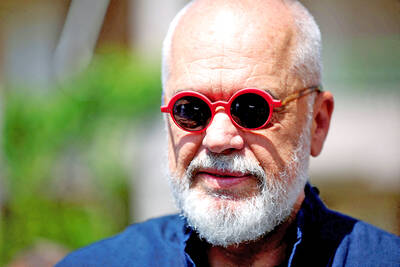
FRAUD ALLEGED: The leader of an opposition alliance made allegations of electoral irregularities and called for a protest in Tirana as European leaders are to meet Albanian Prime Minister Edi Rama’s Socialist Party scored a large victory in parliamentary elections, securing him his fourth term, official results showed late on Tuesday. The Socialist Party won 52.1 percent of the vote on Sunday compared with 34.2 percent for an alliance of opposition parties led by his main rival Sali Berisha, according to results released by the Albanian Central Election Commission. Diaspora votes have yet to be counted, but according to initial results, Rama was also leading there. According to projections, the Socialist Party could have more lawmakers than in 2021 elections. At the time, it won 74 seats in the

CANCER: Jose Mujica earned the moniker ‘world’s poorest president’ for giving away much of his salary and living a simple life on his farm, with his wife and dog Tributes poured in on Tuesday from across Latin America following the death of former Uruguayan president Jose “Pepe” Mujica, an ex-guerrilla fighter revered by the left for his humility and progressive politics. He was 89. Mujica, who spent a dozen years behind bars for revolutionary activity, lost his battle against cancer after announcing in January that the disease had spread and he would stop treatment. “With deep sorrow, we announce the passing of our comrade Pepe Mujica. President, activist, guide and leader. We will miss you greatly, old friend,” Uruguayan President Yamandu Orsi wrote on X. “Pepe, eternal,” a cyclist shouted out minutes later,
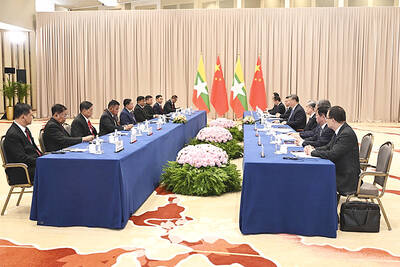
Myanmar’s junta chief met Chinese President Xi Jinping (習近平) for the first time since seizing power, state media reported yesterday, the highest-level meeting with a key ally for the internationally sanctioned military leader. Senior General Min Aung Hlaing led a military coup in 2021, overthrowing Myanmar’s brief experiment with democracy and plunging the nation into civil war. In the four years since, his armed forces have battled dozens of ethnic armed groups and rebel militias — some with close links to China — opposed to its rule. The conflict has seen Min Aung Hlaing draw condemnation from rights groups and pursued by the


 RSS
RSS