


A Brazilian Supreme Federal Court judge on Monday ordered a probe into accusations by former Brazilian minister of justice and public security Sergio Moro that Brazilian President Jair Bolsonaro sought to “interfere” with police investigations.
Judge Celso de Mello gave the federal police 60 days to question Moro about his explosive allegations against the president.
The findings, which would be handed over to the attorney general, could result in either a request for a political trial against Bolsonaro or an indictment against Moro for false testimony.

Photo: AFP
The alleged crimes seem to have “an intimate connection with the exercise of the presidential mandate,” De Mello said, thus allowing for an investigation of the leader.
Moro, a former anti-corruption judge, on Friday last week resigned after clashing with Bolsonaro over the dismissal of the federal police chief, accusing the president of political interference.
De Mello listed seven accusations against Bolsonaro, including obstruction of justice.
Should the investigation confirm the allegations, it would be up to the Brazilian Chamber of Deputies to initiate impeachment proceedings against Bolsonaro.
In 2017, the prosecutor-general’s office asked to open two investigations against then-Brazilian president Michel Temer, and in both cases the requests were rejected by the lower chamber.
The tensions come at the height of the COVID-19 pandemic.
Bolsonaro has repeatedly downplayed the danger of the novel coronavirus and earlier this month fired former Brazilian minister of health Luiz Henrique Mandetta, who supported isolation as a tool to contain the spread of the pandemic.
A poll published on Monday night showed divided opinions about Bolsonaro’s future, with 45 percent of respondents saying that the Brazilian National Congress should open impeachment proceedings against him.
In comparison, 48 percent thought that Bolsonaro should not be impeached, according to the Datafolha poll, which was published in Folha de S. Paulo.
Behind the scenes, changing the head of the federal police, an investigative body that reports to the Brazilian Ministry of Justice and Public Security, has been seen as an attempt by Bolsonaro to control investigations that surround his family and political allies.
One probe, opened in March last year, is investigating false news campaigns to threaten or slander the court’s judges who opposed Bolsonaro’s projects.
Another, initiated by the attorney general last week, is investigating a demonstration outside the army headquarters in Brasilia by Bolsonaro supporters, who called for military intervention in handling the pandemic while protesting against stay-at-home orders.
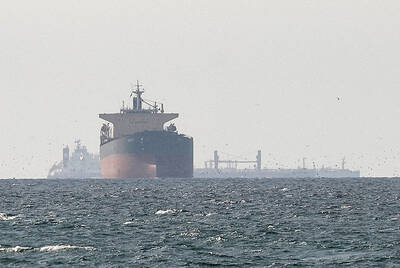
A ship that appears to be taking on the identity of a scrapped gas carrier exited the Strait of Hormuz on Friday, showing how strategies to get through the waterway are evolving as the Middle East war progresses. The vessel identifying as liquefied natural gas (LNG) carrier Jamal left the Strait on Friday morning, ship-tracking data show. However, the same tanker was also recorded as having beached at an Indian demolition yard in October last year, where it is being broken up, according to market participants and port agent’s reports. The ship claiming to be Jamal is likely a zombie vessel that
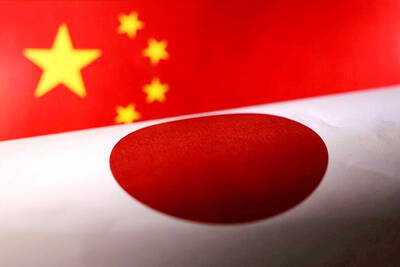
Japan is to downgrade its description of ties with China from “one of its most important” in an annual diplomatic report, according to a draft reviewed by Reuters, as relations with Beijing worsen. This year’s Diplomatic Bluebook, which Japanese Prime Minister Sanae Takaichi’s government is expected to approve next month, would instead describe China as an important neighbor and the relationship as “strategic” and “mutually beneficial.” The draft cites a series of confrontations with Beijing over the past year, including export controls on rare earths, radar lock-ons targeting Japanese military aircraft and increased pressure around Taiwan. The shift in tone underscores a deterioration
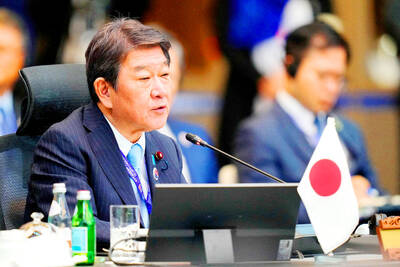
LAW CONSTRAINTS: The US has been pressing allies to send warships to open the Strait, but Tokyo’s military actions are limited under its postwar pacifist constitution Japan could consider deploying its military for minesweeping in the Strait of Hormuz if a ceasefire is reached in the war on Iran, Japanese Minister of Foreign Affairs Toshimitsu Motegi said yesterday. “If there were to be a complete ceasefire, hypothetically speaking, then things like minesweeping could come up,” Motegi said. “This is purely hypothetical, but if a ceasefire were established and naval mines were creating an obstacle, then I think that would be something to consider.” Japan’s military actions are limited under its postwar pacifist constitution, but 2015 security legislation allows Tokyo to use its Self-Defense Forces overseas if an attack,

German Chancellor Friedrich Merz’s conservative Christian Democratic Union (CDU) yesterday faced a regional election battle in Rhineland-Palatinate, now held by the center-left Social Democratic Party (SPD). Merz’s CDU has enjoyed a narrow poll lead over the SPD — their coalition partners at the national level — who have ruled the mid-sized state for 35 years. Polling third is the far-right Alternative for Germany (AfD), which spells a greater threat to the two centrist parties in several state elections in September in the country’s ex-communist east. The picturesque state of Rhineland-Palatinate, bordering France, Belgium and Luxembourg and with a population of about 4 million,


 RSS
RSS