


The Argentine grandson of Nazi war criminal Erich Priebke wants to change his last name, just weeks after the death of his grandfather sparked turmoil when various countries refused his body.
Tomas Erick Ramon Priebke Ortiz, 23, told the press in Bariloche, the southern Argentine city where he lives, that the Priebke name is a hurtful label, according to an interview that came out on Friday.
“Why carry a last name that does me bad because it did harm to people? It doesn’t make sense. It’s a label that has nothing to do with me,” he said in an exclusive interview with news agency ANBariloche.
The city, a picturesque resort town at the foot of the Andes about 1,800km southwest of Buenos Aires, was also home to the elder Priebke, a former Nazi official who took refuge and lived there for 40 years until he was extradited to Italy in 1995 over a World War II massacre.
The grandson hired an attorney to begin the process of removing the Priebke name so as to “part with so much pain and bring closure to this story.”
The 100-year-old Priebke died two weeks ago while living under house arrest in Rome for his role in the massacre of 335 people — almost all of them innocent civilians — in the Ardeatine complex of caves near Rome in 1944.
The Nazi was unrepentant to the end, and his grandson had no contact with him after he was extradited then sentenced to life in prison three years later.
“When my grandfather died, I thought I would feel a little more peace, that I would get a break from so much pain, but the truth is not really,” said Tomas Priebke Ortiz, who has not seen his father, Jorge Priebke, for two years since his parents separated.
“I don’t identify with that name. I don’t have much connection with my [paternal] family nor with my dad,” he said.
In the video interview, Tomas Priebke Ortiz said that what triggered his decision was the response his father gave when a reporter asked about the elderly Priebke’s burial after Germany, Italy and Argentina responded unfavorably to receiving the body.
“My old man said they could take his body anywhere, to Israel. I’m not OK with continuing to hurt people. It would have been wiser to say nothing,” he said.
According to the 23-year-old, the reporter also described his father as loyal to Nazi ideology, which “fell very heavy. I don’t want to be associated for even a moment” with that sort of thinking, he said.
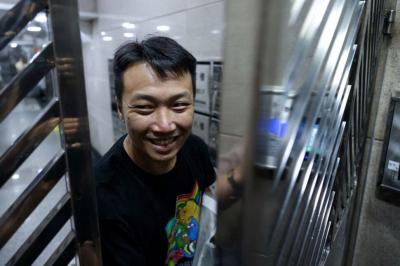
Four people jailed in the landmark Hong Kong national security trial of "47 democrats" accused of conspiracy to commit subversion were freed today after more than four years behind bars, the second group to be released in a month. Among those freed was long-time political and LGBTQ activist Jimmy Sham (岑子杰), who also led one of Hong Kong’s largest pro-democracy groups, the Civil Human Rights Front, which disbanded in 2021. "Let me spend some time with my family," Sham said after arriving at his home in the Kowloon district of Jordan. "I don’t know how to plan ahead because, to me, it feels
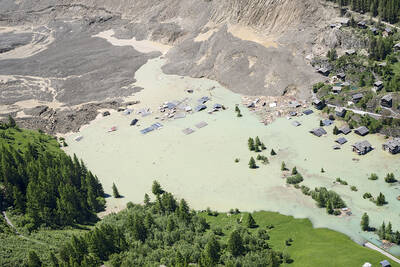
The collapse of the Swiss Birch glacier serves as a chilling warning of the escalating dangers faced by communities worldwide living under the shadow of fragile ice, particularly in Asia, experts said. Footage of the collapse on Wednesday showed a huge cloud of ice and rubble hurtling down the mountainside into the hamlet of Blatten. Swiss Development Cooperation disaster risk reduction adviser Ali Neumann said that while the role of climate change in the case of Blatten “still needs to be investigated,” the wider impacts were clear on the cryosphere — the part of the world covered by frozen water. “Climate change and

Poland is set to hold a presidential runoff election today between two candidates offering starkly different visions for the country’s future. The winner would succeed Polish President Andrzej Duda, a conservative who is finishing his second and final term. The outcome would determine whether Poland embraces a nationalist populist trajectory or pivots more fully toward liberal, pro-European policies. An exit poll by Ipsos would be released when polls close today at 9pm local time, with a margin of error of plus or minus 2 percentage points. Final results are expected tomorrow. Whoever wins can be expected to either help or hinder the
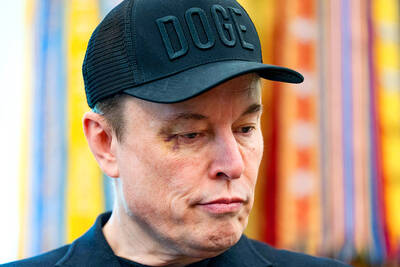
DENIAL: Musk said that the ‘New York Times was lying their ass off,’ after it reported he used so much drugs that he developed bladder problems Elon Musk on Saturday denied a report that he used ketamine and other drugs extensively last year on the US presidential campaign trail. The New York Times on Friday reported that the billionaire adviser to US President Donald Trump used so much ketamine, a powerful anesthetic, that he developed bladder problems. The newspaper said the world’s richest person also took ecstasy and mushrooms, and traveled with a pill box last year, adding that it was not known whether Musk also took drugs while heading the so-called US Department of Government Efficiency (DOGE) after Trump took power in January. In a


 RSS
RSS