


The grim barracks where Romania’s brutal communist despot Nicolae Ceausescu and his wife Elena were executed are to be opened to the public in the latest bid to boost “dictator tourism.”
The former military unit at Targoviste, 100km northwest of Bucharest, is to be turned into a museum and is due to welcome its first visitors in next month.
“Many Romanians and foreigners said they wanted to see the wall against which Ceausescu and his wife Elena were shot on Dec. 25, 1989,” said Ovidiu Carstina, director of the museum.
The death of the Ceausescus became one of the defining images of the revolutions which convulsed eastern and central Europe in 1989.
On Dec. 22, as angry crowds gathered in front of the Communist Party headquarters, they fled the capital Bucharest in a helicopter. It was to be their final journey. They were stopped by the army, detained in Targoviste, and shot after a makeshift trial.
It brought to a grisly end more than 20 years of repressive rule aided by a huge security apparatus, where any free speech was ruthlessly suppressed. The population suffered from food and power shortages and on top of that, Ceascescu’s rule was marked by nepotism, paranoia and a deeply ingrained personality cult. Wife Elena was seen as the regime’s “No. 2.”
“Our aim is to present events as they unfolded, without making comments on the trial, the Ceausescus’ life or the cult of personality,” Carstina said.
In the barracks, built in 1907, time seems to have stood still since the execution.
The makeshift dock where Nicolae and Elena, dressed in their winter coats, sat listening to the charges against them will be put back in the very place where the couple were tried and sentenced to death.
Outside, the wall against which they were shot just a few minutes later still carries bullet holes.
Sociologist Vasile Dancu said “every nation must acknowledge its history, without trying to hide certain events.”
A group of Swedish tourists has already booked tickets for the museum, Carstina said.
Also on their must-see list is the grandiose Palace of Parliament in the heart of Bucharest.
To erect the building, initially called “House of the People,” Ceausescu ordered the razing of much of the city’s historic district, forcing the relocation of about 40,000 people, who lost their homes.
The palace is now one of Romania’s top attractions. More than 144,000 tourists visited it in last year, 110,000 of them foreigners.
However, Lucia Morariu, head of the local tour operators’ association, felt turning Ceausescu into a tourist brand was not a good idea.
“Why encourage those who mourn him? Romania boasts other highlights,” she said, citing the Danube delta, part of UNESCO’s heritage, or the picturesque natural reserve of the Retezat mountains, home to Europe’s biggest bear and wolves populations.

EUROPEAN FUTURE? Albanian Prime Minister Edi Rama says only he could secure EU membership, but challenges remain in dealing with corruption and a brain drain Albanian Prime Minister Edi Rama seeks to win an unprecedented fourth term, pledging to finally take the country into the EU and turn it into a hot tourist destination with some help from the Trump family. The artist-turned-politician has been pitching Albania as a trendy coastal destination, which has helped to drive up tourism arrivals to a record 11 million last year. US President Donald Trump’s son-in-law, Jared Kushner, also joined in the rush, pledging to invest US$1.4 billion to turn a largely deserted island into a luxurious getaway. Rama is expected to win another term after yesterday’s vote. The vote would
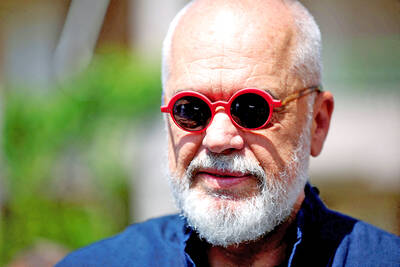
FRAUD ALLEGED: The leader of an opposition alliance made allegations of electoral irregularities and called for a protest in Tirana as European leaders are to meet Albanian Prime Minister Edi Rama’s Socialist Party scored a large victory in parliamentary elections, securing him his fourth term, official results showed late on Tuesday. The Socialist Party won 52.1 percent of the vote on Sunday compared with 34.2 percent for an alliance of opposition parties led by his main rival Sali Berisha, according to results released by the Albanian Central Election Commission. Diaspora votes have yet to be counted, but according to initial results, Rama was also leading there. According to projections, the Socialist Party could have more lawmakers than in 2021 elections. At the time, it won 74 seats in the
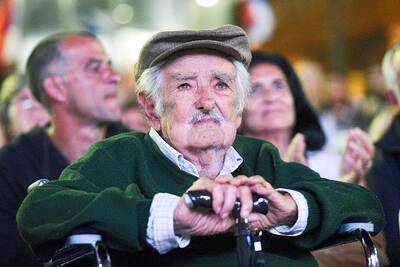
CANCER: Jose Mujica earned the moniker ‘world’s poorest president’ for giving away much of his salary and living a simple life on his farm, with his wife and dog Tributes poured in on Tuesday from across Latin America following the death of former Uruguayan president Jose “Pepe” Mujica, an ex-guerrilla fighter revered by the left for his humility and progressive politics. He was 89. Mujica, who spent a dozen years behind bars for revolutionary activity, lost his battle against cancer after announcing in January that the disease had spread and he would stop treatment. “With deep sorrow, we announce the passing of our comrade Pepe Mujica. President, activist, guide and leader. We will miss you greatly, old friend,” Uruguayan President Yamandu Orsi wrote on X. “Pepe, eternal,” a cyclist shouted out minutes later,

Myanmar’s junta chief met Chinese President Xi Jinping (習近平) for the first time since seizing power, state media reported yesterday, the highest-level meeting with a key ally for the internationally sanctioned military leader. Senior General Min Aung Hlaing led a military coup in 2021, overthrowing Myanmar’s brief experiment with democracy and plunging the nation into civil war. In the four years since, his armed forces have battled dozens of ethnic armed groups and rebel militias — some with close links to China — opposed to its rule. The conflict has seen Min Aung Hlaing draw condemnation from rights groups and pursued by the


 RSS
RSS