


A new book has revealed rare historical gems buried in New Zealand’s national archives, including a bizarre WWII plan to create a “tsunami bomb” and military files detailing supposed UFO sightings.
Author Ray Waru said he wrote Secrets and Treasures to highlight the material publicly available at Archives New Zealand in Wellington — where almost 100km of shelf space is crammed with historical artifacts.
“It was totally overwhelming at the beginning,” he said. “I knew I wanted to get in the important things, the Treaty of Waitangi [New Zealand’s founding document], the Declaration of Independence, the women’s suffrage petition and a few other things, but once you start digging, one story leads on to another and I’d just follow my nose.”
The suffrage petition Waru refers to contains 36,000 signatures and was dramatically unfurled on the floor of the New Zealand parliament in 1893 by supporters of women’s right to vote.
Stretching for almost 300m, the petition, currently undergoing restoration, proved successful and led New Zealand, then a British colony, to become the first country in the world to grant women the vote later that year.
Alongside notable historical documents, such as a letter written by explorer captain James Cook before his final voyage, are curiosities like “Project Seal,” a top-secret US-New Zealand attempt to create a doomsday device to rival the nuclear bomb.
The project was launched in June 1944 after a US naval officer noticed that blasting operations to clear coral reefs around Pacific islands sometimes produced a large wave, raising the possibility of creating a “tsunami bomb.”
Explosive tests carried out in waters north of Auckland led scientists to conclude that the weapon was feasible and a series of 10 massive blasts offshore could create a 10m tsunami capable of inundating a small coastal city.
“It was absolutely astonishing,” Waru said. “First that anyone would come up with the idea of developing a weapon of mass destruction based on a tsunami ... and also that New Zealand seems to have successfully developed it to the degree that it might have worked. I only came across it because they were still vetting the report, so there it was sitting on somebody’s desk [in the archives].”
Waru said the project was shelved in early 1945, despite the success of initial, small-scale tests.
“If you put it in a James Bond movie, it would be viewed as fantasy, but it was a real thing,” he said.
Among the other oddities in the archives are New Zealand Department of Defence records of hundreds of UFO sightings by members of the public, military personnel and commercial pilots, mostly involving moving lights in the sky.
Some of the accounts include drawings of flying saucers, descriptions of aliens wearing “pharaoh masks” and alleged examples of extra-terrestrial writing.
New Zealand’s most famous close encounter was when a TV crew recorded strange lights off the South Island town of Kaikoura in 1978.
However, in a disappointment for ET spotters, the military concluded the lights could be explained by natural phenomena such as lights from boats being reflected off clouds or an unusual view of the planet Venus.
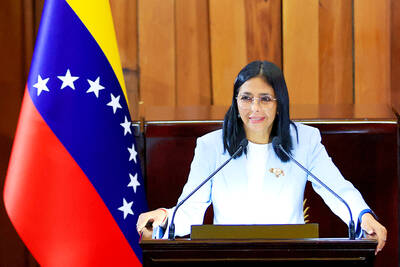
VAGUE: The criteria of the amnesty remain unclear, but it would cover political violence from 1999 to today, and those convicted of murder or drug trafficking would not qualify Venezuelan Acting President Delcy Rodriguez on Friday announced an amnesty bill that could lead to the release of hundreds of prisoners, including opposition leaders, journalists and human rights activists detained for political reasons. The measure had long been sought by the US-backed opposition. It is the latest concession Rodriguez has made since taking the reins of the country on Jan. 3 after the brazen seizure of then-Venezuelan president Nicolas Maduro. Rodriguez told a gathering of justices, magistrates, ministers, military brass and other government leaders that the ruling party-controlled Venezuelan National Assembly would take up the bill with urgency. Rodriguez also announced the shutdown
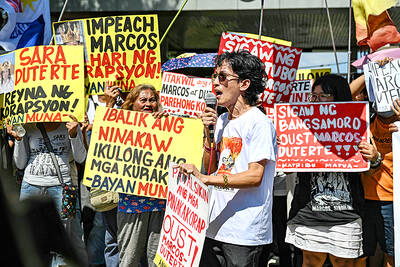
Civil society leaders and members of a left-wing coalition yesterday filed impeachment complaints against Philippine Vice President Sara Duterte, restarting a process sidelined by the Supreme Court last year. Both cases accuse Duterte of misusing public funds during her term as education secretary, while one revives allegations that she threatened to assassinate former ally Philippine President Ferdinand Marcos Jr. The filings come on the same day that a committee in the House of Representatives was to begin hearings into impeachment complaints against Marcos, accused of corruption tied to a spiraling scandal over bogus flood control projects. Under the constitution, an impeachment by the
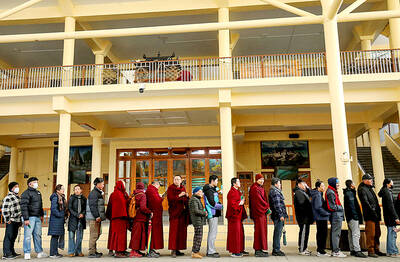
Exiled Tibetans began a unique global election yesterday for a government representing a homeland many have never seen, as part of a democratic exercise voters say carries great weight. From red-robed Buddhist monks in the snowy Himalayas, to political exiles in megacities across South Asia, to refugees in Australia, Europe and North America, voting takes place in 27 countries — but not China. “Elections ... show that the struggle for Tibet’s freedom and independence continues from generation to generation,” said candidate Gyaltsen Chokye, 33, who is based in the Indian hill-town of Dharamsala, headquarters of the government-in-exile, the Central Tibetan Administration (CTA). It
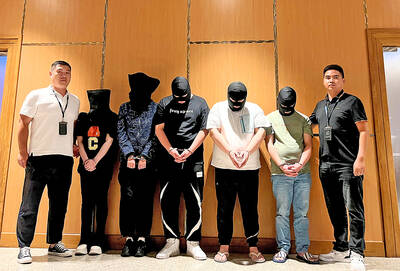
China executed 11 people linked to Myanmar criminal gangs, including “key members” of telecom scam operations, state media reported yesterday, as Beijing toughens its response to the sprawling, transnational industry. Fraud compounds where scammers lure Internet users into fake romantic relationships and cryptocurrency investments have flourished across Southeast Asia, including in Myanmar. Initially largely targeting Chinese speakers, the criminal groups behind the compounds have expanded operations into multiple languages to steal from victims around the world. Those conducting the scams are sometimes willing con artists, and other times trafficked foreign nationals forced to work. In the past few years, Beijing has stepped up cooperation


 RSS
RSS