


Sweden’s Loreen won the Eurovision Song Contest in Azerbaijan yesterday before an international TV audience of 100 million, days after angering Azeri authorities by meeting rights activists critical of the host country’s human rights record. Opposition groups have used the Eurovision spotlight, intended by Azerbaijan to promote the oil-rich country as a destination for tourism and business, to demand democratic reform and the resignation of the government.
Dozens of peaceful protesters have been arrested this month in Baku. Activists say some buildings in the center of the city were torn down to make way for the Eurovision arena, an extravagantly illuminated 23,000-seat “Crystal Hall” on the shores of the Caspian Sea, and residents were forcibly evicted without proper compensation.
The 28-year-old pop singer won with the song Euphoria in the annual competition of 42 countries, delighting viewers and the contest’s professional judges and dancing barefoot as she sang. After the show, traditionally heavy on kitsch, bizarre costumes and dramatic presentation, but low on politics, Loreen steered clear of any controversial statements.

Photo: AFP
“This is about all of us. Thank you so very much,” she told a news conference.
“Time has stopped,” Loreen said about her feelings after she was announced as winner.
Russia’s entry, rural folk group Buranovskiye Babushki (“Grannies from Buranovo”), dressed in traditional peasant dress and somewhat incongruous in the dancing spotlights, came in second. Serbia’s Zeljko Joksimovic was third.
Last week, Loreen met activists who accuse the government of forcing people from their homes for the building of the hall, an accusation Baku denies. Azeri authorities accused her of making political statements that had no place at a musical event.
“Human rights are violated in Azerbaijan every day,” the opposition newspaper Azadliq quoted Loreen as saying after last week’s encounter. “One should not be silent about such things.”
Opposition activists and international rights groups accuse Azeri President Ilham Aliyev of stifling dissent in the southern Caucasus nation, which became independent of the Soviet Union in 1991. Aliyev, who denies the accusation, has run the country since 2003, when he succeeded his father.
After the result was announced, hundreds of people poured onto a roundabout in central Stockholm, dancing in a fountain, honking horns and waving flags and playing the winning song.
“This is historical and magical. I think I’m going to die. This is the best thing that has happened to Sweden in 13 years!” said 20-year-old Tanja Tuuliainen, wearing a Swedish flag and drinking from a bottle of champagne with her girlfriends on the edge of a fountain in downtown Stockholm.
Sweden’s entry last won the Eurovision competition in 1999. Celebrants bathed in their underwear in the fountain, where Swedes traditionally celebrate major sporting event wins.
Hundreds sang: “We’re going up up up up up,” repeating a line from Loreen’s song.
The Eurovision Song Contest has been a launching pad for international careers. Swedish pop group Abba became famous after winning in 1974 with Waterloo and Canada’s Celine Dion took top honors in 1988 for Switzerland.
To promote talent over politically and geographically motivated bloc voting, professional judges now account for 50 percent of a performer’s score. The other half comes from telephone and SMS votes received by each contestant, with fans unable to vote for their own country’s entry. As winner, Sweden will host the next Eurovision contest.
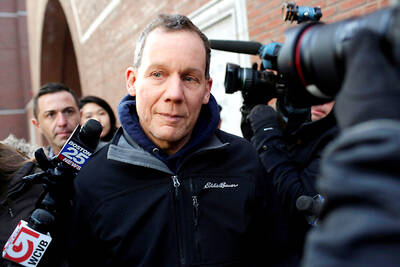
An American scientist convicted of lying to US authorities about payments from China while he was at Harvard University has rebuilt his research lab in Shenzhen, China, to pursue technology the Chinese government has identified as a national priority: embedding electronics into the human brain. Charles Lieber, 67, is among the world’s leading researchers in brain-computer interfaces. The technology has shown promise in treating conditions such as amyotrophic lateral sclerosis and restoring movement in paralyzed people. It also has potential military applications: Scientists at the Chinese People’s Liberation Army have investigated brain interfaces as a way to engineer super soldiers by boosting
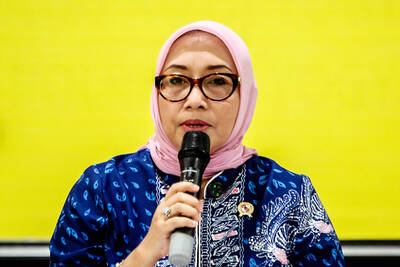
Indonesian police have arrested 13 people after shocking images of alleged abuse against small children at a daycare center went viral, sparking outrage across the nation, officials said on Monday. Police on Friday last week raided Little Aresha, a daycare center in Yogyakarta on Java island, following a report from a former employee. CCTV footage circulating on social media showed children, most younger than two, lying on the floor wearing only diapers, their hands and feet bound with rags. The police have confirmed that the footage is authentic. Police said they also found 20 children crammed into a room just 3m by 3m. “So
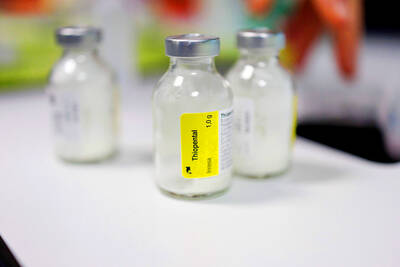
A grieving mother has ended her life at a clinic in Switzerland four years after the death of her only child. Wendy Duffy, 56, a physically healthy woman, died at the Pegasos clinic in Basel after struggling to cope with the death of her 23-year-old son, Marcus. The former care worker, from the West Midlands, England, had previously attempted to take her own life. The case comes as assisted dying would not become law in England and Wales after proposed legislation, branded “hopelessly flawed” by opponents, ran out of time. Ruedi Habegger, the founder of Pegasos, described Duffy’s death as
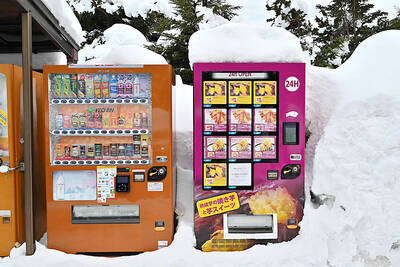
From post offices and parks to stations and even the summit of Mount Fuji, Japan’s vending machines are ubiquitous, but with the rapid pace of inflation cooling demand for their drinks, operators are being forced to rethink the business. Last month beverage giant DyDo Group Holdings announced it would remove about 20,000 vending machines — about 7 percent of their stock nationwide — by January next year, to “reconstruct a profitable network.” Pokka Sapporo Food & Beverage, based in Nagoya, also said last month it would sell its 40,000-machine operation to Osaka-based Lifedrink Co. “The strength of the vending machine


 RSS
RSS