


Every year, just more than four out of every 1,000 Swedish women are diagnosed with carpal tunnel syndrome, far fewer than those in the US, according to a Swedish study.
For men, the number of new cases hovered just under two per 1,000 per year, according to the study led by Isam Atroshi at Hassleholm Hospital in Sweden and published in the Archives of Internal Medicine.
Carpal tunnel syndrome is a painful condition caused by a pinched nerve in the wrist. Though it sometimes goes away by itself, it may require treatment, with surgery possible to relieve pressure on the pinched nerve if wrist splints or corticosteroid hormone injections fail.
“A few studies have estimated the incidence of carpal tunnel syndrome (CTS), showing large differences between countries,” Atroshi wrote. “We estimate the incidence of physician-diagnosed CTS and surgery in the general population in southern Sweden and compare it with corresponding incidence in a US general population.”
Previous studies have produced similar results.
One, in which Russell -Gelfman of the Mayo Clinic took part, found that about twice as many people in Olmsted County, Minnesota, were diagnosed with CTS, compared with the rates seen in Sweden.
“This study adds to our observations that there are differences in the incidence of medically attended carpal tunnel syndrome and surgical treatment between countries,” he wrote in an e-mail to Reuters Health.
He was not involved in the recent study.
What accounts for the differences is still unclear, but both medical and social factors could be at play, Atroshi wrote.
For instance, it could be related to obesity or to different types of work, he added.
Carpal tunnel is often the result of repetitive motions that cause the ligaments in the wrist to become inflamed and pinch a nerve.
Gelfman said that as many as 15 percent of the population may have symptoms, but only about 5 percent or fewer are diagnosed with carpal tunnel syndrome.
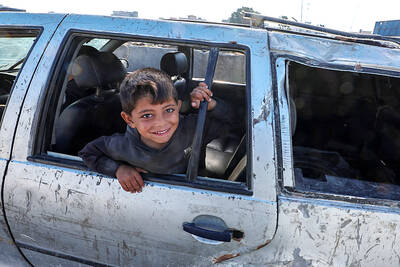
Gaza is rapidly running out of its limited fuel supply and stocks of food staples might become tight, officials said, after Israel blocked the entry of fuel and goods into the war-shattered territory, citing fighting with Iran. The Israeli military closed all Gaza border crossings on Saturday after announcing airstrikes on Iran carried out jointly with the US. Israeli authorities late on Monday night said that they would reopen the Kerem Shalom crossing from Israel to Gaza yesterday, for “gradual entry of humanitarian aid” into the strip, without saying how much. Israeli authorities previously said the crossings could not be operated safely during

Hungarian authorities temporarily detained seven Ukrainian citizens and seized two armored cars carrying tens of millions of euros in cash across Hungary on suspicion of money laundering, officials said on Friday. The Ukrainians were released on Friday, following their detention on Thursday, but Hungarian officials held onto the cash, prompting Ukraine to accuse Hungary’s Russia-friendly government of illegally seizing the money. “We will not tolerate this state banditism,” Ukrainian Minister of Foreign Affairs Andrii Sybiha said. The seven detained Ukrainians were employees of the Ukrainian state-owned Oschadbank, who were traveling in the two armored cars that were carrying the money between Austria and
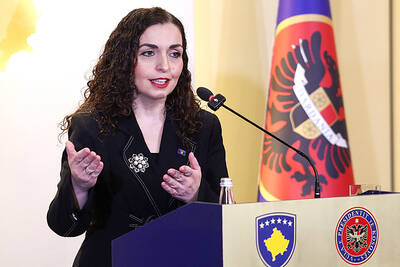
Kosovar President Vjosa Osmani on Friday after dissolving the Kosovar parliament said a snap election should be held as soon as possible to avoid another prolonged political crisis in the Balkan country at a time of global turmoil. Osmani said it is important for Kosovo to wrap up the upcoming election process and form functional institutions for political stability as the war rages in the Middle East. “Precisely because the geopolitical situation is that complex, it is important to finish this electoral process which is coming up,” she said. “It is very hard now to imagine what will happen next.” Kosovo, which declared

MORE BANS: Australia last year required sites to remove accounts held by under-16s, with a few countries pushing for similar action at an EU level and India considering its own ban Indonesia on Friday said it would ban social media access for children under 16, citing threats from online pornography, cyberbullying, online fraud and Internet addiction. “Accounts belonging to children under 16 on high-risk platforms will start to be deactivated, beginning with YouTube, TikTok, Facebook, Instagram, Threads, X, Bigo Live and Roblox,” Indonesian Minister of Communications and Digital Meutya Hafid said. “The government is stepping in so that parents no longer have to fight alone against the giants of the algorithm. Implementation will begin on March 28, 2026,” she said. The social media ban would be introduced in stages “until all platforms fulfill their


 RSS
RSS