


The UN’s former nuclear chief has yet to return home to his native Egypt after almost a quarter century monitoring the world’s atomic programs, but the 2005 Nobel Peace Prize winner has already created the biggest political stir in his homeland in years by hinting at a new career in politics.
Mohamed ElBaradei may one day regret plunging into Egypt’s politics — where challenges to the regime have been few and swiftly dealt with — but his move has injected fresh hope into the country’s stagnant political atmosphere.
Egypt has been ruled for nearly 30 years by President Hosni Mubarak, now 81, who appears to be trying to set up a political dynasty by grooming his son to succeed him.
Respected throughout the world and untouched by the corruption tainting much of the regime in Egypt, ElBaradei could well be the most credible opposition leader to emerge in the country in living memory.
However, the chances of ElBaradei of even being allowed to run in the 2011 presidential race are slim, thanks to a series of constitutional amendments pushed through by the government in 2005 and 2007 that practically limit the candidacies to senior members of the ruling party or a few token, officially sanctioned, opposition parties.
Even if he did run, he would be faced by a ruling party candidate backed by the government’s vast resources and enjoying the support of the security agencies, the most powerful players in Egyptian elections.
“But the frustration within Egypt is such that such a figure could inspire a real sense of opposition even if such sentiments are primarily a rejection of the status quo,” said Egyptian-American analyst Michael Hanna of the Century Foundation in New York. “He is a very compelling figure.”
ElBaradei is not expected to return home from Vienna for another month, but in an open letter responding to a campaign by young Egyptians urging him to run for president, he said he would only run if there were guarantees that elections would be free, fully supervised by the judiciary and monitored by the international community.
He also wants the Constitution amended to remove restrictions on who is eligible to run.
“What I want is for Egypt to become a democratic nation ... my words are not driven by a personal desire or motive but by a firm conviction that the people of Egypt deserve 10 times better than what they have,” he told the independent al-Shorouk daily in an interview last month.
Egypt’s authoritarian ruler of 28 years, Mubarak has not named a successor and never had a vice president since he took office in 1981.
Some commentators say the soft-spoken ElBaradei could be of more use to Egypt if he did not seek the presidency and focused instead on creating a popular movement to press for reform.
“Entering the presidential arena is the wrong start,” Abdel-Azeem Hamad, editor of al-Shorouk, warned ElBaradei in a recent article, suggesting instead a run for parliament in next year’s general election.
Others, however, say he could be the country’s savior, delivering its 80 million people from what is widely seen as policies biased in favor of the rich and against the poor and forcing Mubarak, or his successor, into introducing genuine reforms.
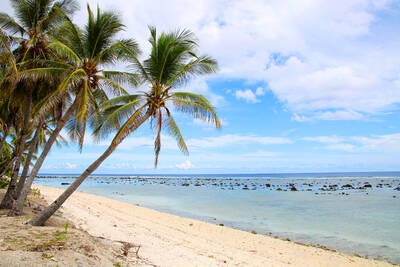
Nauru has started selling passports to fund climate action, but is so far struggling to attract new citizens to the low-lying, largely barren island in the Pacific Ocean. Nauru, one of the world’s smallest nations, has a novel plan to fund its fight against climate change by selling so-called “Golden Passports.” Selling for US$105,000 each, Nauru plans to drum up more than US$5 million in the first year of the “climate resilience citizenship” program. Almost six months after the scheme opened in February, Nauru has so far approved just six applications — covering two families and four individuals. Despite the slow start —
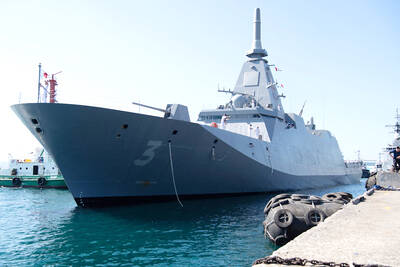
MOGAMI-CLASS FRIGATES: The deal is a ‘big step toward elevating national security cooperation with Australia, which is our special strategic partner,’ a Japanese official said Australia is to upgrade its navy with 11 Mogami-class frigates built by Japan’s Mitsubishi Heavy Industries, Australian Minister for Defence Richard Marles said yesterday. Billed as Japan’s biggest defense export deal since World War II, Australia is to pay US$6 billion over the next 10 years to acquire the fleet of stealth frigates. Australia is in the midst of a major military restructure, bolstering its navy with long-range firepower in an effort to deter China. It is striving to expand its fleet of major warships from 11 to 26 over the next decade. “This is clearly the biggest defense-industry agreement that has ever
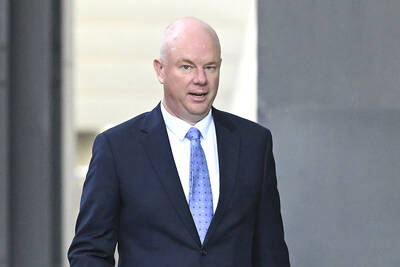
DEADLY TASTE TEST: Erin Patterson tried to kill her estranged husband three times, police said in one of the major claims not heard during her initial trial Australia’s recently convicted mushroom murderer also tried to poison her husband with bolognese pasta and chicken korma curry, according to testimony aired yesterday after a suppression order lapsed. Home cook Erin Patterson was found guilty last month of murdering her husband’s parents and elderly aunt in 2023, lacing their beef Wellington lunch with lethal death cap mushrooms. A series of potentially damning allegations about Patterson’s behavior in the lead-up to the meal were withheld from the jury to give the mother-of-two a fair trial. Supreme Court Justice Christopher Beale yesterday rejected an application to keep these allegations secret. Patterson tried to kill her
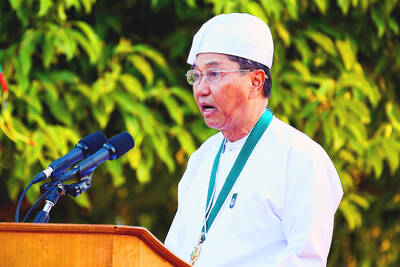
MILITARY’S MAN: Myint Swe was diagnosed with neurological disorders and peripheral neuropathy disease, and had authorized another to perform his duties Myint Swe, who became Myanmar’s acting president under controversial circumstances after the military seized power from the elected government of Aung San Suu Kyi more than four years ago, died yesterday, the military said. He was 74. He died at a military hospital in the capital, Naypyidaw, in the morning, Myanmar’s military information office said in a statement. Myint Swe’s death came more than a year after he stopped carrying out his presidential duties after he was publicly reported to be ailing. His funeral is to be held at the state level, but the date had not been disclosed, a separate statement from the


 RSS
RSS