


The laughing young man has a perfect set of teeth, his golden incisors glinting in the sunlight.
Suddenly he pops out a pair of dentures, revealing a gap-toothed smile, the four upper front teeth missing, a common sight among mixed-race Capetonians that has spawned outrageous myths and stereotypes.
A group of youngsters clad in baggy sweaters, caps drawn low over shiny sunglasses, mill around curiously before they start to pop out their own dentures, showing off gummy smiles and striking gangster poses.

PHOTO: AFP
“It is fashion, everyone has it,” said 21-year-old Yazeed Adams, who insists he had to take out his healthy incisors because they were “huge.”
One of the most enduring images of mixed-race South Africans known as coloreds is the frequent absence of their front teeth, a mystery to many but popularly believed to facilitate oral sex.
This sexual myth — not borne out by research — has seen the trend referred to as the “Passion Gap” or the “Cape Flats smile,” after a populous neighborhood.
Jacqui Friedling of the University of Cape Town’s human biology department studied the phenomenon in 2003 and found fashion and peer pressure the main reasons for removing teeth, followed by gangsterism and medical reasons.
“It is the ‘in’ thing to do. It went through a wave, it was fashionable in my parents’ time,” she said of the practice which has been around for at least 60 years.
In Cape Town the practice of dental modification abounds, often as a rite of passage for teenagers — almost exclusively from poorer families.
Rob Barry from the dentistry faculty at the University of the Western Cape said the practice has surged, even though dentists are ethically barred from removing healthy teeth.
“Almost every week I get some or other teenager in here wanting teeth out,” he said.
He said he has made thousands of partial dentures for people who need to look acceptable at work or for special occasions.
Friedling said the dentures themselves have become a fashion statement, some decorated with gold or bits of precious stone or various designs.
Kevin Brown, 33, sits in his “office,” a crate on the corner of Long Street, the city’s nightlife hub, where he hands out cards for a brothel, popping out his teeth at passers by — often tourists — and laughing at their reactions.
“I am the pimp,” he smiles, displaying four gold incisors. “It is a fashionable thing.”
“I think it was initially a form of identity. If you look at the colored people they are a hodge podge of everyone that came in, they couldn’t claim any of those ancestries of their own,” Friedling said.
To her surprise, she also discovered the practice among a few whites, blacks and even one or two Chinese living alongside poor colored areas.
In interviews with 2,167 people, 41 percent had modified their teeth of which 44.8 percent were male, in the only study of its kind.
Peer pressure was cited by 42 percent while 10 percent removed their teeth due to gangsterism practices.
“They said when they have gang fights they take the people’s teeth away, it is taking a bit of their wealth away,” said Friedling, adding that different gangs would also have different implants.
Not everyone is pleased with their decision.
Ebrahim Jardin, 33, is not wearing his silver, gold or plain pair of dentures today.
“I should have kept my front teeth. Most of the younger people do it, but I don’t think it’s cool anymore. It is people expressing their stupidity,” he said.
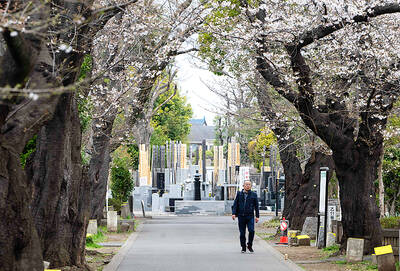
ROCKY RELATIONS: The figures on residents come as Chinese tourist numbers drop following Beijing’s warnings to avoid traveling to Japan The number of Chinese residents in Japan has continued to rise, even as ties between the two countries have become increasingly fractious, data released on Friday showed. As of the end of December last year, the number of Chinese residents had increased by 6.5 percent from the previous year to 930,428. Chinese people accounted for 22.6 percent of all foreign residents in Japan, making them by far the largest group, Japanese Ministry of Justice data showed. Beijing has criticized Tokyo in increasingly strident terms since Japanese Prime Minister Sanae Takaichi last year suggested that a military conflict around Taiwan could

Germany is considering Australia’s Ghost Bat robot fighter as it looks to select a combat drone to modernize its air force, German Minister of Defense Boris Pistorius said yesterday. Germany has said it wants to field hundreds of uncrewed fighter jets by 2029, and would make a decision soon as it considers a range of German, European and US projects developing so-called “collaborative combat aircraft.” Australia has said it will integrate the Ghost Bat, jointly developed by Boeing Australia and the Royal Australian Air Force, into its military after a successful weapons test last year. After inspecting the Ghost Bat in Queensland yesterday,
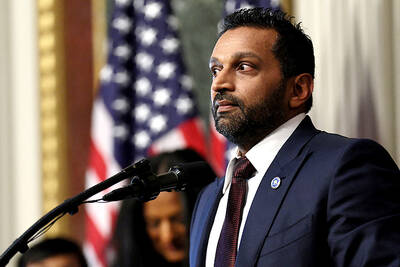
A pro-Iran hacking group claimed to breach FBI Director Kash Patel’s personal e-mail inbox and posted some of the contents online. The e-mails provided by the hacking group include travel details, correspondence with leasing agents in Washington and global entry, and loyalty account numbers. The e-mail address the hackers claim to have compromised has been previously tied to Patel’s personal details, and the leaked e-mails contain photos of Patel and others, in addition to correspondence with family members and colleagues. “The FBI is aware of malicious actors targeting Director Patel’s personal email information,” the agency said in a statement on
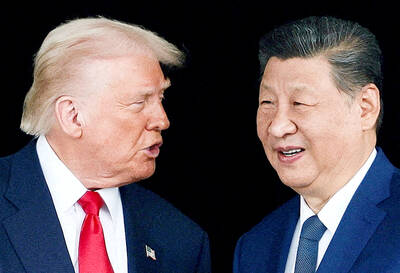
RIVALRY: ‘We know that these are merely symbolic investigations initiated by China, which is in fact the world’s most profligate disrupter of supply chains,’ a US official said China has started a pair of investigations into US trade practices, retaliating against similar probes by US President Donald Trump’s administration as the superpowers stake out positions before an expected presidential summit in May. The move, announced by the Chinese Ministry of Commerce on Friday, is a direct mirror of steps Trump took to revive his tariff agenda after the US Supreme Court last month struck down some of his duties. “China expresses its strong dissatisfaction and firm opposition to these actions,” a ministry spokesperson said in a statement, referring to the so-called Section 301 investigations initiated on March 11.


 RSS
RSS