


A UN envoy criticized Israel on Saturday for demolishing Palestinian homes in the occupied West Bank, calling the practice a violation of a six-month-old moratorium and a setback to peacemaking efforts.
Israel, which took the West Bank in a 1967 war, has often demolished dwellings built there without its permission. After a Palestinian revolt erupted in 2000, Israel also razed the homes of militants but abandoned the tactic five years later.
UN envoy Robert Serry said in a statement that Israel undertook in April to suspend demolitions but recently resumed them.
An Israeli official denied there had been any moratorium.
Serry’s statement deplored “the impact of these actions on some of the most vulnerable populations in the West Bank, with many poor families rendered destitute.”
The demolitions, Serry said, “send a discouraging signal regarding [Israel’s] support for the strenuous and concerted effort under way to improve conditions in the occupied Palestinian territory and build greater trust and confidence in support for the political process.”
Serry did not cite any specific demolition, but Israeli Foreign Ministry spokesman Yigal Palmor said at least some of the houses were built illegally on public land.
“The fact that the UN continues to ignore the specific circumstances of each case and prefers to express generalized criticism makes these statements very unhelpful,” Palmor said.
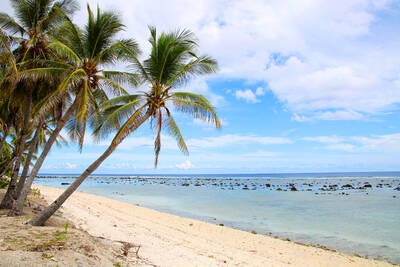
Nauru has started selling passports to fund climate action, but is so far struggling to attract new citizens to the low-lying, largely barren island in the Pacific Ocean. Nauru, one of the world’s smallest nations, has a novel plan to fund its fight against climate change by selling so-called “Golden Passports.” Selling for US$105,000 each, Nauru plans to drum up more than US$5 million in the first year of the “climate resilience citizenship” program. Almost six months after the scheme opened in February, Nauru has so far approved just six applications — covering two families and four individuals. Despite the slow start —
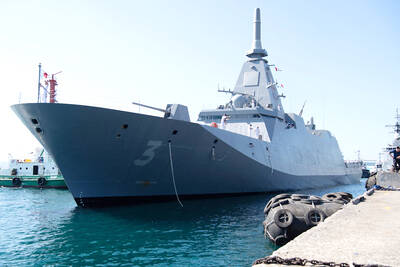
MOGAMI-CLASS FRIGATES: The deal is a ‘big step toward elevating national security cooperation with Australia, which is our special strategic partner,’ a Japanese official said Australia is to upgrade its navy with 11 Mogami-class frigates built by Japan’s Mitsubishi Heavy Industries, Australian Minister for Defence Richard Marles said yesterday. Billed as Japan’s biggest defense export deal since World War II, Australia is to pay US$6 billion over the next 10 years to acquire the fleet of stealth frigates. Australia is in the midst of a major military restructure, bolstering its navy with long-range firepower in an effort to deter China. It is striving to expand its fleet of major warships from 11 to 26 over the next decade. “This is clearly the biggest defense-industry agreement that has ever

DEADLY TASTE TEST: Erin Patterson tried to kill her estranged husband three times, police said in one of the major claims not heard during her initial trial Australia’s recently convicted mushroom murderer also tried to poison her husband with bolognese pasta and chicken korma curry, according to testimony aired yesterday after a suppression order lapsed. Home cook Erin Patterson was found guilty last month of murdering her husband’s parents and elderly aunt in 2023, lacing their beef Wellington lunch with lethal death cap mushrooms. A series of potentially damning allegations about Patterson’s behavior in the lead-up to the meal were withheld from the jury to give the mother-of-two a fair trial. Supreme Court Justice Christopher Beale yesterday rejected an application to keep these allegations secret. Patterson tried to kill her
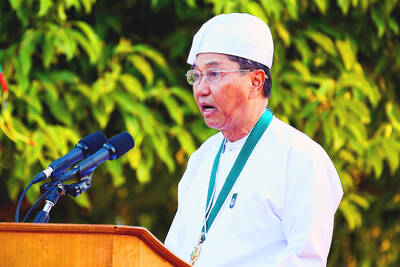
MILITARY’S MAN: Myint Swe was diagnosed with neurological disorders and peripheral neuropathy disease, and had authorized another to perform his duties Myint Swe, who became Myanmar’s acting president under controversial circumstances after the military seized power from the elected government of Aung San Suu Kyi more than four years ago, died yesterday, the military said. He was 74. He died at a military hospital in the capital, Naypyidaw, in the morning, Myanmar’s military information office said in a statement. Myint Swe’s death came more than a year after he stopped carrying out his presidential duties after he was publicly reported to be ailing. His funeral is to be held at the state level, but the date had not been disclosed, a separate statement from the


 RSS
RSS