


Australians protesting against Pope Benedict XVI’s visit to Sydney took a creative turn yesterday, staging an “annoying” fashion show of T-shirts displaying anti-Catholic slogans.
The show, a response to new laws against causing “annoyance” to pilgrims attending Catholic World Youth day next week, came just a day after Australian Prime Minister Kevin Rudd called on all Australians to show the Pope respect.
“They are not from Milan,” acknowledged Rachel Evans, spokeswoman of the NoToPope group, as T-shirts featuring slogans such as “The Pope is wrong, put a condom on” were displayed outside the New South Wales state parliament.
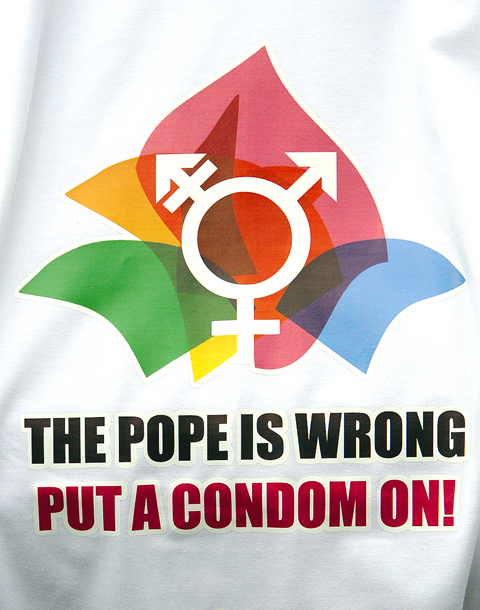
Photo: AFP
Other shirts, which are selling for A$20 (US$19), read “Pope go homo,” “There is no God” and “Does the history of your church annoy you?”
Among the most graphic was one featuring Benedict XVI standing with arms outstretched but with pointed, red devil ears and a tail superimposed on the image under the slogan “Chief homophobe.”
NoToPope, a coalition including Christians, atheists and gay groups, was protesting at new regulations giving police power to stop conduct that “causes annoyance or inconvenience to participants” in World Youth Day.
Failure to comply with the laws can attract a penalty of up to A$5,500, prompting one designer last week to come up with a T-shirt reading “$5,500, a small price to pay for annoying Catholics.”
Evans slammed the laws, which will be in force for the duration of the July 15 to July 20 World Youth Day and may threaten a NoToPope rally planned for July 19, during which members plan to hand out condoms to pilgrims.
“This again is an attempt to intimidate people to not come to our rally and say their piece against the Pope,” she told reporters.
World Youth Day is a global celebration of the Catholic faith aimed at young people and is expected to attract hundreds of thousands of local and foreign pilgrims.

An American scientist convicted of lying to US authorities about payments from China while he was at Harvard University has rebuilt his research lab in Shenzhen, China, to pursue technology the Chinese government has identified as a national priority: embedding electronics into the human brain. Charles Lieber, 67, is among the world’s leading researchers in brain-computer interfaces. The technology has shown promise in treating conditions such as amyotrophic lateral sclerosis and restoring movement in paralyzed people. It also has potential military applications: Scientists at the Chinese People’s Liberation Army have investigated brain interfaces as a way to engineer super soldiers by boosting
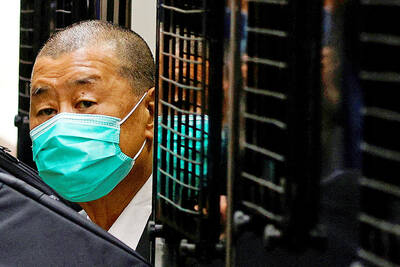
Jailed media entrepreneur Jimmy Lai (黎智英) has been awarded Deutsche Welle’s (DW) freedom of speech award for his contribution to Hong Kong’s pro-democracy movement. The German public broadcaster on Thursday said Lai would be presented in absentia with the 12th iteration of the award on June 23 at the DW Global Media Forum in Bonn. Deutsche Welle director-general Barbara Massing praised the 78-year-old founder of the now-shuttered news outlet Apple Daily for standing “unwaveringly for press freedom in Hong Kong at great personal risk.” “With Apple Daily, he gave journalists a platform for free reporting and a voice to the democracy movement in
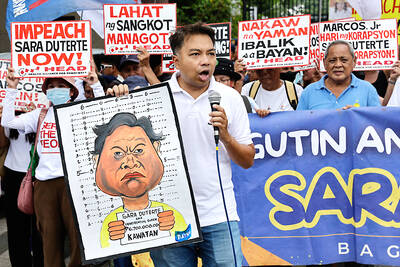
PHILIPPINE COMMITTEE: The head of the committee that made the decision said: ‘If there is nothing to hide, there is no reason to hide, there is no reason to obstruct’ A Philippine congressional committee on Wednesday ruled that there was “probable cause” to impeach Philippine Vice President Sara Duterte after hearing allegations of unexplained wealth, misuse of state funds and threats to have the president assassinated. The unanimous decision of the 53-member committee in the Philippine House of Representatives sends the two impeachment complaints to deliberations and voting by the entire lower chamber, which has more than 300 lawmakers. The complaints centered on Duterte’s alleged illegal use and mishandling of intelligence funds from the vice president’s office, and from her time as education secretary under Philippine President Ferdinand Marcos Jr. Duterte and the
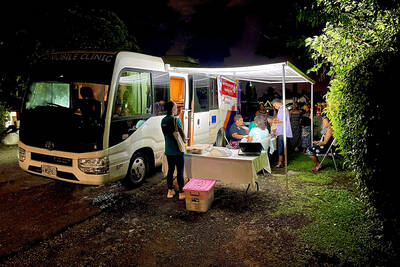
As evening falls in Fiji’s capital, a steady stream of people approaches a makeshift clinic that is a first line of defense against one of the world’s fastest-growing HIV epidemics. In the South Pacific nation — a popular tourist destination of just under a million people — more than 2,000 new HIV cases were recorded last year, a 26 percent increase from 2024. The government has declared an HIV outbreak and described it as a national crisis. “It’s spreading like wildfire,” said Siteri Dinawai, 46, who came to be tested. The Moonlight Clinic, a converted minibus parked in a suburban cul-de-sac in Suva, is


 RSS
RSS