


Israel was to allow cement into the Gaza Strip late yesterday for the first time in a year as crossings with the Palestinian territory were reopened in accordance with a ceasefire, an Israeli spokesman said.
Four crossings between Israel and Gaza reopened on schedule yesterday, Israel and the Hamas rulers of Gaza said. Since a truce began on June 19, Israel has closed the passages a total of six days in retaliation for the firing of rockets.
“After evaluating the situation where we had a couple of days where rockets were fired, no rockets were fired yesterday and this has enabled us to reopen the crossings,” Israeli army spokesman Peter Lerner said.
The crossings had last been closed on Tuesday, after Israel said two rockets hit Israel on Monday. Hamas denies that those rockets were fired.
The Hamas interior ministry said yesterday that Israel would allow in fuel, wheat and animal feed, in addition to five trucks of dry cement. About 26 sick Palestinians were also to enter Israel to receive treatment, the ministry said.
Israel imposed a blockade on Gaza a year ago, allowing in only humanitarian aide, after the Islamic Hamas overran Gaza. The closure has caused shortages in everything from electricity to shoes and gasoline. With no cement allowed in, all construction had ceased. Palestinians in the building industry were greatly anticipating the arrival of cement, with five trucks expected to enter Gaza yesterday.
The 1.4 million Palestinians living in Gaza have largely been unable to leave the crowded territory except for a short period in January, when hundreds of thousands crossed into Egypt after Hamas blew open a border wall.
Israel withdrew settlers and military installations from Gaza in 2005 but still controls most of Gaza’s access to the outside world.
An Egyptian-controlled crossing in the southern Gaza Strip was also to be opened yesterday to allow sick Palestinians to seek treatment abroad and Arab travelers to enter the territory, Hamas official Ayman Taha said.
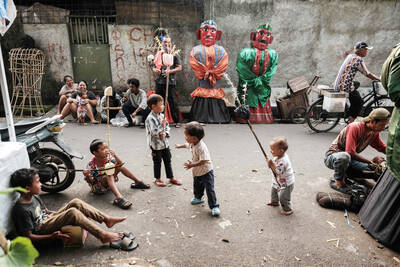
In the sweltering streets of Jakarta, buskers carry towering, hollow puppets and pass around a bucket for donations. Now, they fear becoming outlaws. City authorities said they would crack down on use of the sacred ondel-ondel puppets, which can stand as tall as a truck, and they are drafting legislation to remove what they view as a street nuisance. Performances featuring the puppets — originally used by Jakarta’s Betawi people to ward off evil spirits — would be allowed only at set events. The ban could leave many ondel-ondel buskers in Jakarta jobless. “I am confused and anxious. I fear getting raided or even

Eleven people, including a former minister, were arrested in Serbia on Friday over a train station disaster in which 16 people died. The concrete canopy of the newly renovated station in the northern city of Novi Sad collapsed on Nov. 1, 2024 in a disaster widely blamed on corruption and poor oversight. It sparked a wave of student-led protests and led to the resignation of then-Serbian prime minister Milos Vucevic and the fall of his government. The public prosecutor’s office in Novi Sad opened an investigation into the accident and deaths. In February, the public prosecutor’s office for organized crime opened another probe into
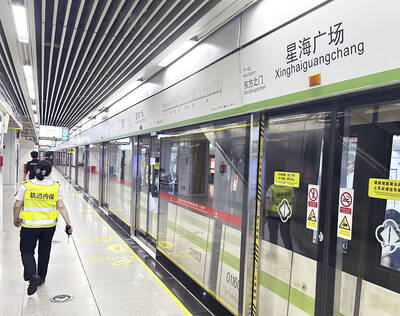
RISING RACISM: A Japanese group called on China to assure safety in the country, while the Chinese embassy in Tokyo urged action against a ‘surge in xenophobia’ A Japanese woman living in China was attacked and injured by a man in a subway station in Suzhou, China, Japanese media said, hours after two Chinese men were seriously injured in violence in Tokyo. The attacks on Thursday raised concern about xenophobic sentiment in China and Japan that have been blamed for assaults in both countries. It was the third attack involving Japanese living in China since last year. In the two previous cases in China, Chinese authorities have insisted they were isolated incidents. Japanese broadcaster NHK did not identify the woman injured in Suzhou by name, but, citing the Japanese

RESTRUCTURE: Myanmar’s military has ended emergency rule and announced plans for elections in December, but critics said the move aims to entrench junta control Myanmar’s military government announced on Thursday that it was ending the state of emergency declared after it seized power in 2021 and would restructure administrative bodies to prepare for the new election at the end of the year. However, the polls planned for an unspecified date in December face serious obstacles, including a civil war raging over most of the country and pledges by opponents of the military rule to derail the election because they believe it can be neither free nor fair. Under the restructuring, Myanmar’s junta chief Min Aung Hlaing is giving up two posts, but would stay at the


 RSS
RSS