


US military operations in Iraq following the 2003 ouster of Iraqi president Saddam Hussein suffered from poor planning and lack of vision, an Army report released yesterday said.
The 696-page report, called On Point II: Transition to the New Campaign, is the Army’s historical account of the 18 months following US President George W. Bush’s declaration of the end of major combat in May 2003.
Military leaders and civilian officials were fixated on military triumph and removing Saddam from power, but paid too little attention to the phases that would follow, said the report posted on the army’s combined arms center Web site.
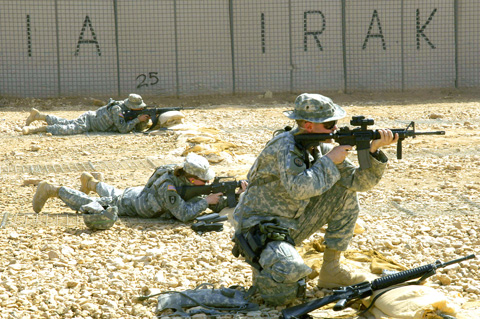
PHOTO: AFP
“The transition to a new campaign was not well thought out, planned for and prepared for before it began,” wrote report authors Donald Wright and Colonel Timothy Reese, both military historians.
“Additionally, the assumptions about the nature of post-Saddam Iraq on which the transition was planned proved to be largely incorrect,” they wrote.
The army’s Contemporary Operations Study Team, along with the report authors, said the Army “should have insisted on better Phase IV planning and preparations through its voice on the Joint Chiefs of Staff.”
“The military means employed were sufficient to destroy the Saddam regime; they were not sufficient to replace it with the type of nation-state the United States wished to see in its place,” the report said.
The study is the second in a series — the first On Point covered the start of combat through to the ouster of Saddam in April 2003 — and is described by the authors as “neither triumphant nor defeatist.”
Its aim is to provide “military professionals with a means to understand important and relevant lessons from the army’s recent operational experience.”
Meanwhile, a car bomb in the central Iraqi town of Dhuluiya yesterday killed at least seven policemen and wounded two more, the town’s police chief said.
Lieutenant Colonel Mohammed Khalid said the explosion occurred at around 7:30am in the town 70km north of Baghdad in the central Sunni province of Salaheddin.
“The police received a call that there was an abandoned car on a road. A team of policemen went to check and as they reached the car it exploded,” Khalid said.
The latest attack came as the Salaheddin authorities yesterday gave insurgents until July 8 to surrender to US and Iraqi forces.
Last month around 500 combatants turned themselves in as part of a national reconciliation program.
The US military said it expects another 500 insurgents to give up their arms in Salaheddin.
The province has been a hotbed of Sunni Arab insurgency led by Saddam loyalists. Saddam’s hometown was Tikrit, the capital of Salaheddin.
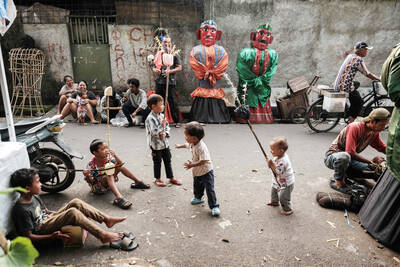
In the sweltering streets of Jakarta, buskers carry towering, hollow puppets and pass around a bucket for donations. Now, they fear becoming outlaws. City authorities said they would crack down on use of the sacred ondel-ondel puppets, which can stand as tall as a truck, and they are drafting legislation to remove what they view as a street nuisance. Performances featuring the puppets — originally used by Jakarta’s Betawi people to ward off evil spirits — would be allowed only at set events. The ban could leave many ondel-ondel buskers in Jakarta jobless. “I am confused and anxious. I fear getting raided or even
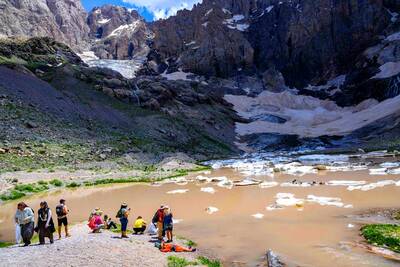
Kemal Ozdemir looked up at the bare peaks of Mount Cilo in Turkey’s Kurdish majority southeast. “There were glaciers 10 years ago,” he recalled under a cloudless sky. A mountain guide for 15 years, Ozdemir then turned toward the torrent carrying dozens of blocks of ice below a slope covered with grass and rocks — a sign of glacier loss being exacerbated by global warming. “You can see that there are quite a few pieces of glacier in the water right now ... the reason why the waterfalls flow lushly actually shows us how fast the ice is melting,” he said.

RISING RACISM: A Japanese group called on China to assure safety in the country, while the Chinese embassy in Tokyo urged action against a ‘surge in xenophobia’ A Japanese woman living in China was attacked and injured by a man in a subway station in Suzhou, China, Japanese media said, hours after two Chinese men were seriously injured in violence in Tokyo. The attacks on Thursday raised concern about xenophobic sentiment in China and Japan that have been blamed for assaults in both countries. It was the third attack involving Japanese living in China since last year. In the two previous cases in China, Chinese authorities have insisted they were isolated incidents. Japanese broadcaster NHK did not identify the woman injured in Suzhou by name, but, citing the Japanese
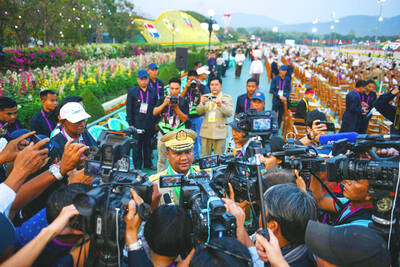
RESTRUCTURE: Myanmar’s military has ended emergency rule and announced plans for elections in December, but critics said the move aims to entrench junta control Myanmar’s military government announced on Thursday that it was ending the state of emergency declared after it seized power in 2021 and would restructure administrative bodies to prepare for the new election at the end of the year. However, the polls planned for an unspecified date in December face serious obstacles, including a civil war raging over most of the country and pledges by opponents of the military rule to derail the election because they believe it can be neither free nor fair. Under the restructuring, Myanmar’s junta chief Min Aung Hlaing is giving up two posts, but would stay at the


 RSS
RSS