


The Pakistani army must stay out of politics, the party of slain former prime minister Benazir Bhutto said, as it worked to build a government that can strip its former military president of much of his power.
Pakistani President Pervez Musharraf, meanwhile, urged the victors of the Feb. 18 elections to "stop politicking and move toward forming a government." He said parliament would be convened within a week and a half.
"I promise that if peace is maintained, I will support whichever coalition is formed," he said on Friday.
Bhutto's party won most seats in the elections, that were supposed to return Pakistan to democracy after eight years of military rule. Musharraf's allies fared badly.
Negotiations are still under way on forming a coalition government but the winning parties appear on a collision course with the former army strongman, which could herald fresh turmoil in a country under attack from Islamic militants.
During his tenure, Musharraf entrenched the military's say in policymaking.
He imposed de facto martial law last year in order to secure a new five-year presidential term for himself -- with the public backing of his fellow generals.
A spokesman for Bhutto's Pakistan People's Party welcomed a pledge on Thursday from Musharraf's successor as army chief to "stay out of the political process."
But he said the value of that commitment "lies in how sincerely and effectively it is implemented."
"While hoping that the army would stay out of politics, the party [will] watch keenly whether it really stays out," spokesman Farhatullah Babar said in a statement.
Generals have governed Pakistan for more than half of its turbulent 60-year history.
Coup leaders like Musharraf insist that they stepped in to save the country from incompetent civilian governments. But they have proved reluctant to relinquish control.
Musharraf said after his tearful retirement as army chief in November that his hand-picked successor, General Ashfaq Parvez Kayani, would still owe him loyalty.
But Kayani has moved to distance the army from politics and opposition warnings that the military's intelligence agencies would rig last month's parliamentary vote to ensure victory for the unpopular president's allies proved hollow.
In a sign of Musharraf's diminished political authority and the growing clout of the mainstream opposition parties, seven lawmakers who contested the election as independents have since joined Bhutto's party, lifting its strength to 120, the election commission said.
Four more independents have lined up with Nawaz Sharif, an arch enemy of Musharraf since the former general ousted his government in a 1999 coup, giving him 90 seats.
Voters returned just 51 lawmakers from the former ruling Pakistan Muslim League-Q to the 342-seat National Assembly, or lower house of parliament.
Eleven seats are yet to be filled, mainly because of litigation and the deaths of candidates, including Bhutto, who was assassinated in a suicide attack in December.
The two largest parties are expected to form a loose coalition government.
They lack the two-thirds majority needed in both the upper and lower houses of parliament to impeach Musharraf.

Nauru has started selling passports to fund climate action, but is so far struggling to attract new citizens to the low-lying, largely barren island in the Pacific Ocean. Nauru, one of the world’s smallest nations, has a novel plan to fund its fight against climate change by selling so-called “Golden Passports.” Selling for US$105,000 each, Nauru plans to drum up more than US$5 million in the first year of the “climate resilience citizenship” program. Almost six months after the scheme opened in February, Nauru has so far approved just six applications — covering two families and four individuals. Despite the slow start —

MOGAMI-CLASS FRIGATES: The deal is a ‘big step toward elevating national security cooperation with Australia, which is our special strategic partner,’ a Japanese official said Australia is to upgrade its navy with 11 Mogami-class frigates built by Japan’s Mitsubishi Heavy Industries, Australian Minister for Defence Richard Marles said yesterday. Billed as Japan’s biggest defense export deal since World War II, Australia is to pay US$6 billion over the next 10 years to acquire the fleet of stealth frigates. Australia is in the midst of a major military restructure, bolstering its navy with long-range firepower in an effort to deter China. It is striving to expand its fleet of major warships from 11 to 26 over the next decade. “This is clearly the biggest defense-industry agreement that has ever
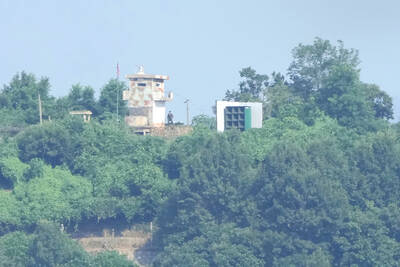
North Korean troops have started removing propaganda loudspeakers used to blare unsettling noises along the border, South Korea’s military said on Saturday, days after Seoul’s new administration dismantled ones on its side of the frontier. The two countries had already halted propaganda broadcasts along the demilitarized zone, Seoul’s military said in June after the election of South Korean President Lee Jae-myung, who is seeking to ease tensions with Pyongyang. The South Korean Ministry of National Defense on Monday last week said it had begun removing loudspeakers from its side of the border as “a practical measure aimed at helping ease
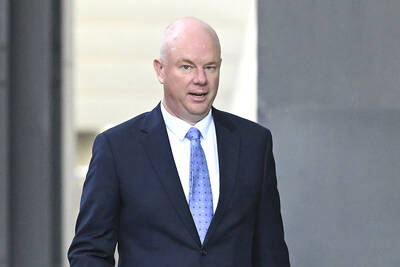
DEADLY TASTE TEST: Erin Patterson tried to kill her estranged husband three times, police said in one of the major claims not heard during her initial trial Australia’s recently convicted mushroom murderer also tried to poison her husband with bolognese pasta and chicken korma curry, according to testimony aired yesterday after a suppression order lapsed. Home cook Erin Patterson was found guilty last month of murdering her husband’s parents and elderly aunt in 2023, lacing their beef Wellington lunch with lethal death cap mushrooms. A series of potentially damning allegations about Patterson’s behavior in the lead-up to the meal were withheld from the jury to give the mother-of-two a fair trial. Supreme Court Justice Christopher Beale yesterday rejected an application to keep these allegations secret. Patterson tried to kill her


 RSS
RSS