

Venezuelan President Hugo Chavez said on Wednesday that his mentor and friend Fidel Castro has "recovered his fastball," but needs more time to warm up before returning to the field.
Chavez met with the recovering 80-year-old Castro for six hours behind closed doors during a surprise visit to Cuba's capital.
He said the pair usually talk for longer and could have continued chatting on Tuesday, but that it was "enough already."
"I can tell you that he has recovered his fastball of 90 miles an hour [145kph]," Chavez said on Wednesday, applying a baseball metaphor to Castro, who was an accomplished pitcher as a young man.
Castro "has his uniform hanging near him and he's peeking at it, but he's still warming up his arm," the 52-year-old Chavez told a group of top Cuban government leaders and students from Havana and Venezuela.
"He's not yet ready to take the diamond," he added.
Chavez then told a joke, hinting that when Castro does don his trademark olive-green military uniform anew, his 75-year-old brother Raul, Cuba's acting president, would broadcast the ceremony, panning over the statue with the city's iconic San Cristobal de la Cabana Fortress in the background as a military band played.
Wearing thick sunglasses and his trademark olive fatigues, Raul Castro traded jokes with Chavez, but official microphones did not pick up what was said.
Chavez left Cuba late on Wednesday, but only after Raul saw him off at Havana's airport, state media said.

The picturesque Lac des Brenets between France and Switzerland has dried up after a record-breaking hot summer, leaving locals crying out for help to save the lake. Indeed, the words “HELP” and “SOS” have been scratched out in the weeds now flourishing on the exposed lake bed. The drought has ruined pleasure boat tourism, while some question whether the lake will ever return to enduring full health. “It’s absolutely heartbreaking,” said historian David Favre, who lives in Les Brenets. “As children, we used to spend all our summers swimming at the beach, having fun by the water, diving, jumping in and sometimes even
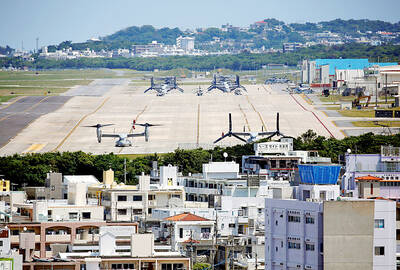
STRAIN ON TIES: The police arrested a 20-year-old man who matched the description of a suspect caught on CCTV leaving a hotel in Naha with the victim’s belongings A US Marine stationed on Japan’s southern island of Okinawa was arrested on suspicion of the murder of a Japanese woman, police said yesterday. The suspect “killed the 39-year-old woman at a hotel in Naha and stole her wallet on Saturday,” a local police spokesman said. US Ambassador George Glass posted on social media that he had spoken with Japan’s foreign ministry and Okinawa’s governor to offer “our sincere condolences and pledging full cooperation as the investigation continues.” Japanese Prime Minister Sanae Takaichi called the crime “exceptionally brutal and vicious” on X. The government has urged the US “to provide maximum cooperation

WARNING: Some analysts have expressed concern over what kind of investors the citizenship scheme would attract, saying it could bring in people of dubious origin Argentine President Javier Milei’s government on Friday said the country would offer citizenship to foreigners who invest at least US$350,000 in the country. Latin America’s third-largest economy lagged far behind Brazil and Mexico in the foreign direct investment stakes last year, according to the Organisation for Economic Co-operation and Development (OECD). Milei, a free-market radical, has slashed public spending, deregulated the economy and dismantled trade barriers in a bid to make Argentina more competitive and boost the Treasury’s dwindling dollar reserves. However, investors are still waiting for Argentina’s roller-coaster economy to “prove that what it’s doing will actually be sustainable over time,” economist
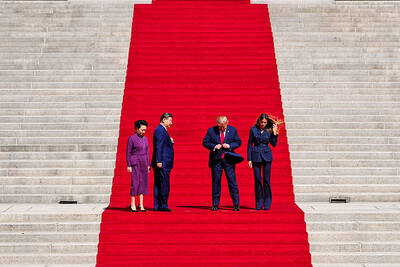
China’s influence in Latin America is now viewed more positively than that of the US, a major poll conducted in 17 Latin American countries showed on Friday. China overtook the US in terms of influence for the first time since the annual Latinobarometro survey began in 1995. It showed 57 percent of people in Latin America considering the US to be a positive influence, down from 60 percent in 2020. Meanwhile, China was considered a positive influence by 65 percent of respondents, a jump from 48 percent six years ago. Costa Rica and the Dominican Republic were the only countries in the region where


 RSS
RSS