


The Somali town of Jowhar, the last stronghold of the US-backed warlords, braced for new clashes yesterday after three militia chiefs fled the township, residents said.
Gunmen loyal to warlord Mohamed Dheere, the ruler of Middle Shabelle region, fired into the air as they tested their weapons in the outskirts of Jowhar, about 90km north of Mogadishu, amid fears that Islamic fighters were approaching, an AFP correspondent said.
"We heard gunfire at about 5am, but we were told they were Dheere's men firing in the air," a resident said.
Late Tuesday, Mohamed Afrah Qanyare and Issa Botan Alin -- who were evicted from the capital last week -- and a little-known local warlord, Abdu Nure, Said left Jowhar in a convoy of pick-up trucks mounted with machine guns and headed further north.
Residents said the warlords, who left without saying a word, fled to Qanyare's hometown of el Bur in the central Somali region of Galgudud.
The warlords, who were members of the US-backed Alliance for the Restoration of Peace and Counter-Terrorism, arrived in the this Somalia township after they were evicted from Mogadishu, by gunmen loyal to hardline Joint Islamic Courts.
The alliance was dealt a major blow when its powerful Mogadishu member Abdi Hassan Awale Qeydid defected to the Islamic courts, saying he wanted to end bloodshed in the bullet-riddled capital.
His abrupt exit leaves warlords Musa Sudi Yalahow, Bashir Raghe Shirar and Omar Muhamoud Finnish as the only faction chiefs still holed up in northern Mogadishu under the protection of their powerful Abgal subclan and still vowing to fight on.
Qeydid, a former Somali police commissioner during the regime of dictator Mohamed Siad Barre, who was toppled in 1991, was the feared warlord in charge of Afgoi belt, about 30km south of Mogadishu.
With their US-backed mission to rid Somalia the influence of hardline Islamists in disarray, it's unclear strategy will come next.

Former Nicaraguan president Violeta Chamorro, who brought peace to Nicaragua after years of war and was the first woman elected president in the Americas, died on Saturday at the age of 95, her family said. Chamorro, who ruled the poor Central American country from 1990 to 1997, “died in peace, surrounded by the affection and love of her children,” said a statement issued by her four children. As president, Chamorro ended a civil war that had raged for much of the 1980s as US-backed rebels known as the “Contras” fought the leftist Sandinista government. That conflict made Nicaragua one of
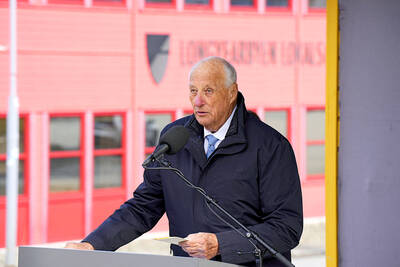
COMPETITION: The US and Russia make up about 90 percent of the world stockpile and are adding new versions, while China’s nuclear force is steadily rising, SIPRI said Most of the world’s nuclear-armed states continued to modernize their arsenals last year, setting the stage for a new nuclear arms race, the Stockholm International Peace Research Institute (SIPRI) said yesterday. Nuclear powers including the US and Russia — which account for about 90 percent of the world’s stockpile — had spent time last year “upgrading existing weapons and adding newer versions,” researchers said. Since the end of the Cold War, old warheads have generally been dismantled quicker than new ones have been deployed, resulting in a decrease in the overall number of warheads. However, SIPRI said that the trend was likely
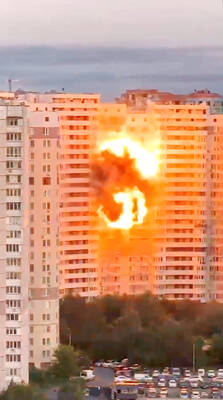
BOMBARDMENT: Moscow sent more than 440 drones and 32 missiles, Volodymyr Zelenskiy said, in ‘one of the most terrifying strikes’ on the capital in recent months A nighttime Russian missile and drone bombardment of Ukraine killed at least 15 people and injured 116 while they slept in their homes, local officials said yesterday, with the main barrage centering on the capital, Kyiv. Kyiv City Military Administration head Tymur Tkachenko said 14 people were killed and 99 were injured as explosions echoed across the city for hours during the night. The bombardment demolished a nine-story residential building, destroying dozens of apartments. Emergency workers were at the scene to rescue people from under the rubble. Russia flung more than 440 drones and 32 missiles at Ukraine, Ukrainian President Volodymyr Zelenskiy
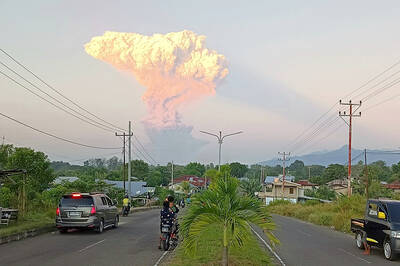
Indonesia’s Mount Lewotobi Laki-Laki yesterday erupted again with giant ash and smoke plumes after forcing evacuations of villages and flight cancelations, including to and from the resort island of Bali. Several eruptions sent ash up to 5km into the sky on Tuesday evening to yesterday afternoon. An eruption on Tuesday afternoon sent thick, gray clouds 10km into the sky that expanded into a mushroom-shaped ash cloud visible as much as 150km kilometers away. The eruption alert was raised on Tuesday to the highest level and the danger zone where people are recommended to leave was expanded to 8km from the crater. Officers also


 RSS
RSS