


In perhaps the final chapter of a Swedish murder mystery of Agatha Christie caliber, a nanny and a Pentecostal minister were found guilty of murder and incitement to murder on Friday.
Helge Fossmo, 32, was sentenced by an Uppsala court, north of Stockholm, to life in prison for the incitement to murder of his second wife, as well as of incitement to murder of his neighbor. He was cleared of charges that he had killed his first wife.
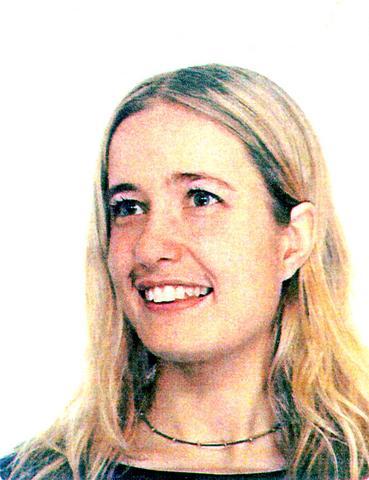
PHOTO: AP
Sara Svensson, 27, who the court had previously deemed mentally ill, was meanwhile sentenced to psychiatric care for the attempted murder and later murder of Fossmo's second wife and the attempted murder of his neighbor.
Ever since 23-year-old Alexandra Fossmo, Helge Fossmo's second wife, was shot to death in her bed on Jan. 10, and her next-door neighbor Daniel Linde was shot and injured in his bedroom minutes later, Swedes have been glued to tabloids and TV sets in anticipation of what could happen next. They have not been disappointed.
Just a day after the shootings, Svensson, who had cared for Fossmo's three children from his first marriage, confessed to the crimes.
The image of a delusional nanny on a lone, murderous rampage through a small, idyllic Swedish town was soon shattered by revelations that the Pentecostal minister had not only been sexually involved with her, but also with at least one other woman -- the injured neighbor's wife, who would come on nightly visits to his house while Svensson slept on the sofa and his own wife slept in the guest bedroom.
And then there was the minister's fist wife, 27-year-old Helene Fossmo, who died in what looked like a bathtub accident in 1999.
Following Alexandra's murder, police reopened the case, revealing that the blow to Helene's head may not have been caused by a fall, and finding that she had the drug Dexofan in her system when she died.
The Uppsala court on Friday ruled that it had not been proved that the minister had anything to do with his first wife's death.
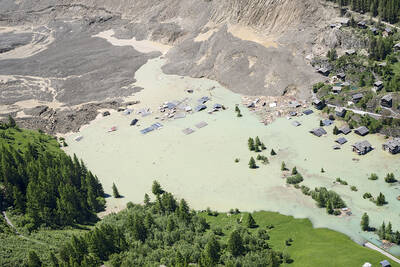
The collapse of the Swiss Birch glacier serves as a chilling warning of the escalating dangers faced by communities worldwide living under the shadow of fragile ice, particularly in Asia, experts said. Footage of the collapse on Wednesday showed a huge cloud of ice and rubble hurtling down the mountainside into the hamlet of Blatten. Swiss Development Cooperation disaster risk reduction adviser Ali Neumann said that while the role of climate change in the case of Blatten “still needs to be investigated,” the wider impacts were clear on the cryosphere — the part of the world covered by frozen water. “Climate change and

Packed crowds in India celebrating their cricket team’s victory ended in a deadly stampede on Wednesday, with 11 mainly young fans crushed to death, the local state’s chief minister said. Joyous cricket fans had come out to celebrate and welcome home their heroes, Royal Challengers Bengaluru, after they beat Punjab Kings in a roller-coaster Indian Premier League (IPL) cricket final on Tuesday night. However, the euphoria of the vast crowds in the southern tech city of Bengaluru ended in disaster, with Indian Prime Minister Narendra calling it “absolutely heartrending.” Karnataka Chief Minister Siddaramaiah said most of the deceased are young, with 11 dead

Poland is set to hold a presidential runoff election today between two candidates offering starkly different visions for the country’s future. The winner would succeed Polish President Andrzej Duda, a conservative who is finishing his second and final term. The outcome would determine whether Poland embraces a nationalist populist trajectory or pivots more fully toward liberal, pro-European policies. An exit poll by Ipsos would be released when polls close today at 9pm local time, with a margin of error of plus or minus 2 percentage points. Final results are expected tomorrow. Whoever wins can be expected to either help or hinder the

DENIAL: Musk said that the ‘New York Times was lying their ass off,’ after it reported he used so much drugs that he developed bladder problems Elon Musk on Saturday denied a report that he used ketamine and other drugs extensively last year on the US presidential campaign trail. The New York Times on Friday reported that the billionaire adviser to US President Donald Trump used so much ketamine, a powerful anesthetic, that he developed bladder problems. The newspaper said the world’s richest person also took ecstasy and mushrooms, and traveled with a pill box last year, adding that it was not known whether Musk also took drugs while heading the so-called US Department of Government Efficiency (DOGE) after Trump took power in January. In a


 RSS
RSS