


London's busy Oxford Street on a damp and drizzly evening seems an unlikely battlefront in the Middle East conflict.
But every Thursday, supporters of Palestinians and Israelis take their fight to the main shopping district, converging on department store Marks and Spencer to bombard passers-by with chants, drums and politically-charged leaflets.
Across Britain and the world, disparate activists and lobby groups have been vying for attention of their views on the seemingly intractable Middle East issue.
For more than two years, Palestinian supporters have been staging a weekly picket outside M&S, urging consumers to boycott the store for what they say is its support for the Jewish state -- a charge Marks and Spencer denies.
But in recent months Jewish protesters have set up a counter stall to tell their side of the story.
Palestinian flags flutter on one side, Israeli flags on the other. The two camps are separated by metal barriers and demonstrators stand 60m apart with a strong police presence visible every week.
"This demonstration is part of a global, European and nationwide campaign to boycott Israeli goods and to put pressure on the Israeli government to withdraw from the occupied territories of Palestine, which [the occupation] is illegal under international law," said Laurey Mitchell, chief steward on the Victory to the Intifada picket.
"We chose M&S because they have declared openly that one of their objectives is to fund the State of Israel. M&S is a symbol of Zionism."
Mitchell, 25, said the pro-Palestinian demonstration drew a diverse range of people, adding that the protest was in support of the Palestinian struggle for independence.
"Intifada means uprising, so we are saying victory to the struggle in Palestine. Suicide bombing is awful and a reflection of the situation of desperation there," he said.
More than 2,000 Palestinians and over 800 Israelis have been killed since the start of a Palestinian uprising against Israeli military occupation in September 2000.
"[The demonstration] reflects on the streets of Britain the reality of the situation in Palestine: the Zionists against Palestinians."
The tone a short walk down the street is just as conviction-driven.
"There are tens of pro-Palestine and pro-Arab demonstrations across the UK and it is important that British people should see the other side," said Shimon Shamila, the Israeli born emissary of the Zionist group Betar-Tagar, which organizes the stall.
"They do not get it through the media or through the newspapers and we thought to have a pro-Israel stall in Oxford Street where thousands of people walk by every Thursday. Our mission is to bring them that other side: the side of Israel."
The pro-Israel picket attracts Jewish and Christian demonstrators and Shamila, 29, was just as adamant that public opinion was crucial.
"Israel is fighting two wars: a war of existence fighting terrorism and a war of public opinion. This is our small contribution towards public opinion," he said.
Commenting on the weekly demonstrations, a spokeswoman for M&S said: "It is an unfortunate situation we have learned to live with. We don't support any country, nationality or religion over the other. We source goods from many more countries than we do from Israel."
While the current wave of activism has arguably stepped up since the start of the second uprising in 2000, it is seen by some as an extension of previous efforts to influence opinion.
"The issue of Israel-Palestine is hotter now than it was in the mid to late 1990s and it is probably easier to get people who are non die-hard activists out on the streets," said Jonathan Cummings, researcher at Tel Aviv University's Jaffee Center for Strategic Studies.
"But lobbying groups have existed from time immemorial and it is not new that people are trying to influence public debate."
Some see the wave of activity as inflaming an already volatile situation further.
Bassem Eid, director of the Jerusalem-based Palestinian Human Rights Monitoring Group, which documents human rights abuses of Palestinians by both Israel and the Palestinian Authority, said: "The whole information war around the world makes the Palestinian-Israeli conflict more complicated. These people think they are trying to help either the Israelis or Palestinians which is not the case."
"I [witness] so many foreign groups who come to the [conflict] area, some are pro-Israeli and some are pro-Palestinian. But if you are a foreigner and want to help, you should not be considered either pro-Israeli or pro-Palestinian because when you become one sided, it does not provide any help here."
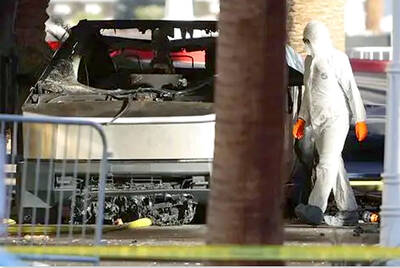
ACTIONABLE ADVICE: The majority of chatbots tested provided guidance on weapons, tactics and target selections, with Perplexity and Meta AI deemed to be the least safe From school shootings to synagogue bombings, leading artificial intelligence (AI) chatbots helped researchers plot violent attacks, according to a study published on Wednesday that highlighted the technology’s potential for real-world harm. Researchers from the nonprofit watchdog Center for Countering Digital Hate and CNN posed as 13-year-old boys in the US and Ireland to test 10 chatbots, including ChatGPT, Google Gemini, Perplexity, Deepseek and Meta AI. Eight of the chatbots assisted the make-believe attackers in more than half the responses, providing advice on “locations to target” and “weapons to use” in an attack, the study said. The chatbots had become a “powerful accelerant for
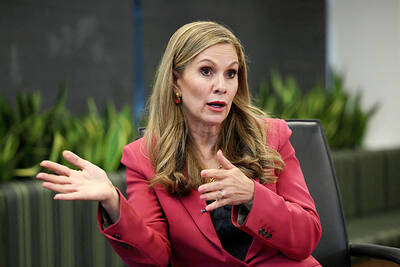
Australians were downloading virtual private networks (VPNs) in droves, while one of the world’s largest porn distributors said it was blocking users from its platforms as the country yesterday rolled out sweeping online age restriction. Australia in December became the first country to impose a nationwide ban on teenagers using social media. A separate law now requires artificial intelligence (AI)-powered chatbot services to keep certain content — including pornography, extreme violence and self-harm and eating disorder material — from minors or face fines of up to A$49.5 million (US$34.6 million). The country also joined Britain, France and dozens of US states requiring
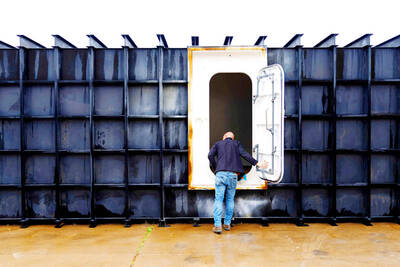
Since the war in the Middle East began nearly two weeks ago, the telephone at Ron Hubbard’s bomb shelter company in Texas has not stopped ringing. Foreign and US clients are rushing to buy his bunkers, seeking refuge in case of air raids, nuclear fallout or apocalypse. With the US and Israel pounding Iran, and Tehran retaliating with strikes across the region, Hubbard has seen demand for his product soar, mostly from Gulf nation customers in Bahrain, Qatar, Kuwait and the United Arab Emirates. “You can imagine how many people are thinking: ‘I wish I had a bomb shelter,’” Hubbard, 63, said in
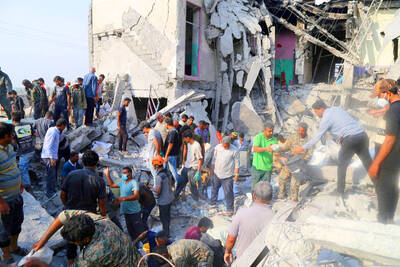
STILL IN POWER: US intelligence reports showed that the Iranian regime is not in danger of collapse and retains control of the public, casting doubt on Trump’s exit Nearly every US Senate Democrat on Wednesday signed a letter sent to US Secretary of Defense Pete Hegseth requesting a “swift investigation” of airstrikes on a girls’ school in Iran that killed scores of children and any other potential US military actions causing civilian harm. Reuters reported on Thursday last week that US military investigators believe it is likely that US forces were responsible for the Feb. 28 strike on the school, as US and Israeli forces launched attacks on Iran. “The results of this school attack are horrific. The majority of those killed in the strikes were girls between the ages


 RSS
RSS