

The Taipei District Prosecutors’ Office yesterday indicted a former official of the National Institute of Cyber Security’s research and acquisition center for allegedly hacking into a classified institute database.
Hsu Hsih-chung (許世璋), a former deputy director of the center, and three of his subordinates are accused of breaking into the institute’s database to obtain classified information, the office said.
The defendants face charges over alleged contraventions of cybersecurity and digital privacy rules in the Criminal Code and the Personal Data Protection Act (個人資料保護法), it said.
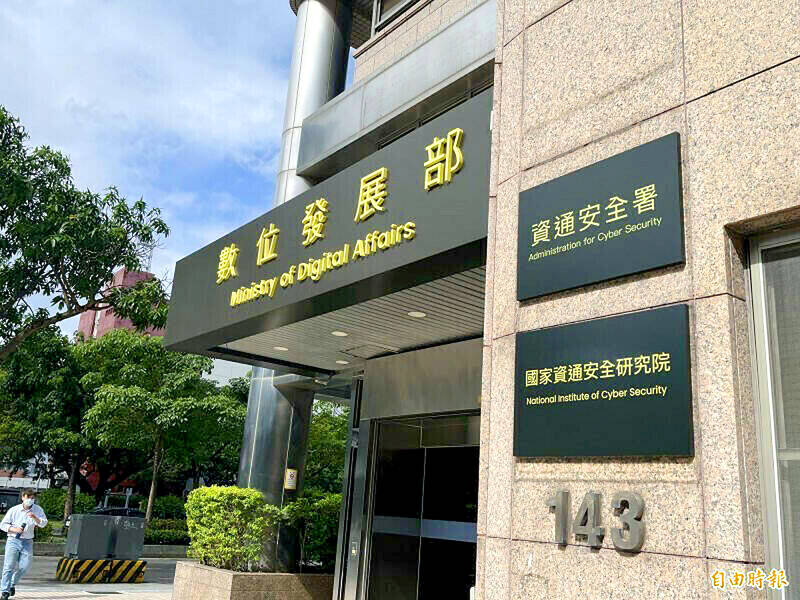
Photo: Hsu Tzu-ling, Taipei Times
Hsu allegedly built an unauthorized crawler to access administrative information, bypassing the organization’s budget management system, which he believed to be inefficient, the indictment said.
Using the crawler, Hsu and his accomplices compromised the institute’s internal budget documents, as well as national identification and National Health Insurance numbers of institute employees, among other privileged information, it said.
In January 2024, Hsu inadvertently discovered a back door into the institute’s human resource system and obtained personal data of all of the employees, which he allegedly shared with the three codefendants, it said.
Believing that the organization’s project budget management system was inadequate, Hsu in March last year asked the institute to adopt a new system, but his proposal was rejected, prosecutors said.
Hsu allegedly told subordinate Peng Ming-chun (彭敏君) to bypass the internal system’s authorization mechanisms by exploiting the loophole he had previously identified in handling the center’s budget documents, the office said.
Hsu allegedly instructed Ting Po-feng (丁柏楓) to design a crawler capable of extracting internal documents without authorization, a task Peng facilitated by advising Ting on a programing language and other technical matters, it said.
Ting discovered that any document could be accessed by entering the document’s serial number on the enterprise information portal, enabling him to design the crawler Hsu had specified, it said.
Ting saved the institute’s entire payroll in his private cloud storage and internal documents on a personally owned computer, it said.
Ting regularly used Microsoft Azure to summarize confidential budget documents, including budgets and timelines, which he saved into a folder shared with the other defendants, the indictment said.
Hsu and his accomplices used the crawler and illegally obtained data to establish an alternate budget platform on the Internet, from which he managed the center’s funding, it said.
The institute in May last year banned virtual private networks from accessing the internal system, prompting Hsu to order subordinate Lee Yu-hsuan (李昱勳) to use the latter’s personal laptop as the crawler’s relay, it said.
Given that there is no evidence that the defendants leaked information to a third party, the office said it sought a reduced sentence for the defendants on account of mitigating circumstances, the indictment said.
The crawler on average accessed the internal system once every 2.6 systems for a total of 207,938 times by March, or 85 percent of all traffic to the institute’s network by employees, it said.

A total of 400 foreign “high- level” professionals have been naturalized as Republic of China (Taiwan) citizens over the past decade as the government has eased nationality rules to attract talent from a wider range of fields, the Ministry of the Interior said yesterday. The 400th high-level professional, who works in the electronics industry, was approved for ROC citizenship on Aug. 26, the MOI said. The MOI quoted the newly naturalized citizen as saying that Taiwan is a leader in fields such as semiconductors, electronics manufacturing, artificial intelligence development and energy technology. He also said
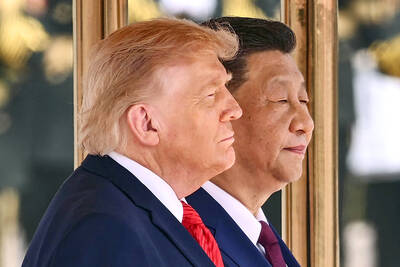
China has warned that it could cancel a planned US-China leaders’ summit if Washington approves new arms sales to Taiwan, a Japanese media outlet quoted sources as saying yesterday. US President Donald Trump, “apparently eager to showcase some diplomatic achievements ahead of November’s midterm congressional elections, places great importance on holding the summit with Chinese President Xi Jinping (習近平),” Japan’s Kyodo News reported. “While preparing for Xi’s upcoming trip, China has restated its position that the Taiwan issue is a ‘red line’ in bilateral relations,” the report said. The report said that when Xi met with Trump in Beijing in May, Xi said
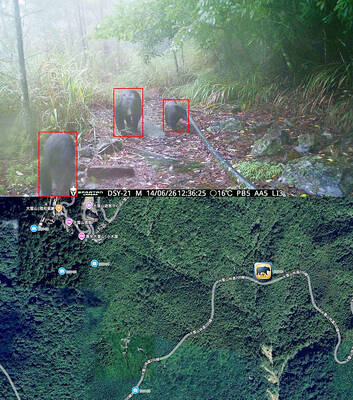
RARE PEEK: The footage released showed one of the bears staying in a cave for as long as 70 days, providing the first record of Formosan black bear’s overwintering The Forestry and Nature Conservation Agency yesterday released tracking records of released Formosan black bears for the first time, showing that they get much closer to human settlements than previously thought. The agency said it had captured two bears, Da Qu-ali (達古阿里) and Aziman (阿里曼), in indigenous villages in Hualien County and began to track them with a camera-mounted satellite collar after releasing them back into the wild. The results confirmed that the bears have moved from deep mountain areas into lowland hills closer to human communities, leading to an increase in human-bear conflicts, it said. The agency has introduced artificial intelligence-assisted early
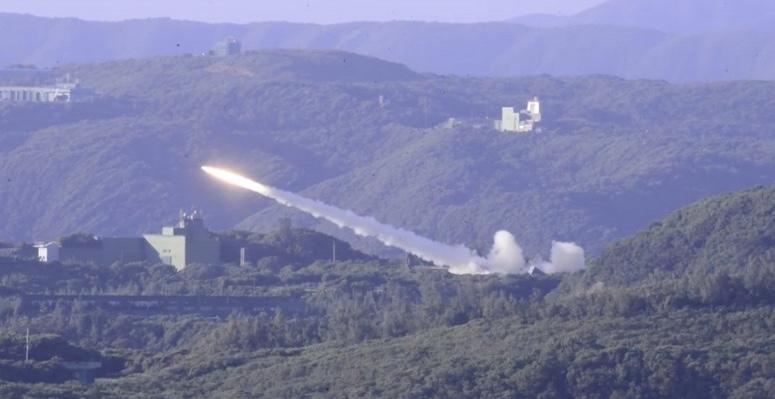
A Chinese military drone was spotted conducting reconnaissance off Taitung County as President William Lai (賴清德) visited Pingtung County this morning to inspect a drill of the armed forces’ precision-strike capabilities, prompting the military to closely monitor its actions. Today was the final day of a three-day military exercise at Jioupeng Base (九鵬基地) to test the joint combat capabilities of the armed forces and coast guard. The exercise began on Wednesday simulating air defense interception and yesterday tested long-range strike capabilities and new air defense weapons. This morning, the military conducted a final exercise involving air defense, anti-ship and drone operations. Military sources said


 RSS
RSS