

The National Chungshan Institute of Science and Technology (NCSIST) yesterday disclosed technical specifications of the Chiang Kung missile, amid a legislative deadlock that cast doubt over the program’s future.
The Chiang Kung missile, also known as Tien Chien IV, is intended to serve as the principal high-altitude interceptor of the proposed “T-Dome,” an integrated air defense matrix for Taiwan proper.
The Ministry of National Defense has confirmed that it would seek to fund Chiang Kung missile production via a supplementary budget, since the program was not included in the special defense budget passed by the Legislative Yuan.
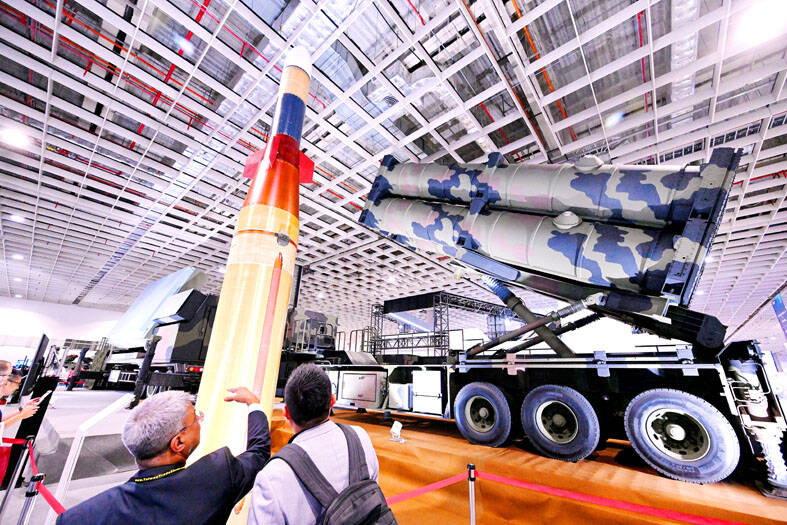
Photo: Fang Pin-chao, Taipei Times
According to the NCSIST, the state-run defense research and development group, the Chiang Kung air defense system uses a land-based vertical launch system to fire hypersonic weapons capable of intercepting ballistic missiles at mesospheric altitudes.
The interceptor missile uses vectored thrust to ensure speed and maneuverability in the low-air-density conditions of high altitudes, the institute said.
The warhead of the Chiang Kung missile is mounted atop a two-stage solid-propellant rocket housed in molded composite materials to enable large-scale production at a low cost, it said.
The Chiang Kung’s radar can identify different types of targets, engage multiple tactical ballistic missiles, and is hardened against electronic warfare countermeasures, the NCSIST said.
Speaking on condition of anonymity, a defense official said that the Chiang Kung system’s ability to intercept ballistic missiles at altitudes up to 70km is a significant improvement over the Tien Kung III.
The Chiang Kung features a mobile active electronically scanned array radar vehicle developed jointly by Taiwan and the US, which possesses formidable detection and is designed to operate under heavy electromagnetic interference and GPS jamming, they said.
The Chiang Kung missile is a crucial part of the planned “T-Dome” air defense network, which incorporates multiple types of interceptors under the control of the US-made Integrated Air and Missile Defense Battle Command System, they said.
This system’s importance stems from its high-altitude capability, which is absent in Taiwan’s arsenal and cannot be otherwise obtained through foreign procurement, the official said.
The ministry’s budget woes have impacted the Chiang Kung system acquisition timetable, which has negative ramifications for the entire “T-Dome” project, they said.
The military cannot integrate its patchwork of air defense missiles when key pieces are missing, the official said, adding that Taiwan can ill afford this problem as Chinese capabilities grow by leaps and bounds.
The uncertainty surrounding the funding of key weapon systems, including Chiang Kung, is highly worrisome to the military’s leadership, they said.

Malaysian Prime Minister Anwar Ibrahim’s remarks that Taiwan is a Chinese province seeking independence threaten regional peace and stability and could undermine Taiwanese businesses’ confidence in investing in Malaysia, the Ministry of Foreign Affairs (MOFA) said today. Anwar recently made remarks implying that Taiwan is a province seeking to separate from China, effectively legitimizing Beijing’s position on using force to take Taiwan, the ministry said in a statement. The Republic of China, Taiwan, is a sovereign, independent country and is not subordinate to the People’s Republic of China, MOFA said, adding that that fact would not be changed no matter
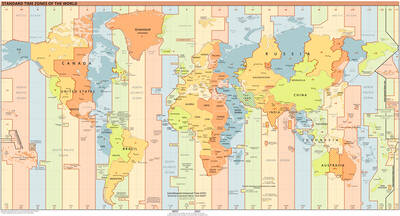
UNNECESSARY?: While some said that the switch would mean more sunlight exposure for workers, others said the government should promote flexible working hours instead An online debate has resurfaced on whether Taiwan should switch to the same time zone as Japan, with supporters citing its geographic location and saying that China would have no right to object. The debate erupted on Threads when users suggested that Taiwan should stop using the same time zone as China, Malaysia and Singapore, GMT+8, and instead switch one hour ahead to the same time zone as Japan and South Korea, GMT+9, which it is geographically closer to. Under GMT+9 the sun would set later year-round, meaning that people would see sunlight after getting off work even in the winter and
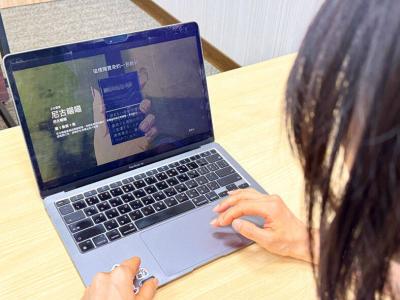
The removal of the anime Chainsmoker Cat (尼古喵喵) from streaming platforms due to tobacco product placement complaints contravenes the principle of proportionality and stifles creative expression, an advocacy group said yesterday, after the Health Promotion Administration launched an investigation that could result in platform operators facing fines of up to NT$1 million (US$31,415). Bahamut Animation Crazy, an animation streaming platform, has confirmed that the show is no longer available in Taiwan, after the John Tung Foundation, the Taiwan Anti-Smoking Alliance and other groups yesterday called on authorities to investigate and urged the show to be removed for allegedly promoting smoking. In response,
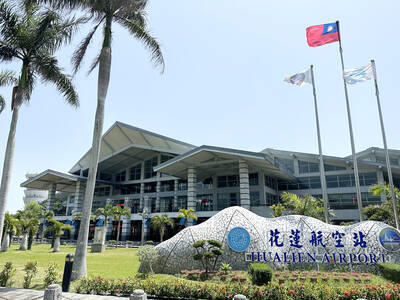
The Civil Aviation Administration (CAA) yesterday confirmed that Uni Air has submitted an application to suspend its Taipei-Hualien flights due to persistently low passenger rates. The airline, which is the only operator of the Taipei-Hualien route, proposed to suspend the service after Mandarin Airlines, another domestic flight carrier, applied to suspend flights to Hualien departing from Kaohsiung and Taichung earlier this year. The average load factor of the Taipei-Hualien flights during the first six months was 24.2 percent, CAA data showed. The average seat occupancy rate dropped even further to 17 percent last month, even though it was the beginning


 RSS
RSS