

A National Taiwan University study found that energy poverty affects 52.2 percent of disadvantaged households in Taiwan’s designated indigenous areas, higher than 42.9 percent of indigenous households in Han-majority areas.
The university’s Risk Society and Policy Research Center conducted the survey from January to March, using questionnaires to poll 578 disadvantaged indigenous households, the research team told a news conference on Thursday.
The study was a partnership with World Vision Taiwan, which assists the households surveyed.
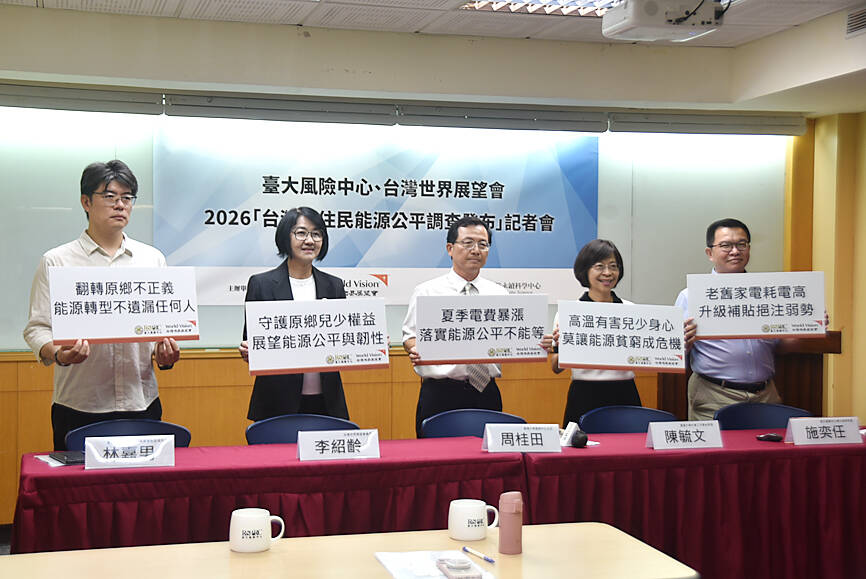
Photo: Wu Po-hsuan, Taipei Times
Shih Yi-jen (施奕任), a post-doctoral fellow at the institute, said that the EU defines energy poverty as using more than 10 percent of all income on electricity.
The study revealed significant structural inequality facing disadvantaged rural residents and ethnic minorities in Taiwan, he said.
It showed that the median monthly household energy costs surged to NT$2,492, up from NT$1,960 in off-season months, marking a 27.1 percent increase, Shih said.
The steep rise in the cost of energy resulted from seasonal electricity price hikes and high temperatures, with a stark increase in the number of households spending more than NT$2,501 a month on energy, he said.
About 57.3 percent of families polled have been in arrears on power bills at least once, and 2.9 percent had their power cut off due to non-payment, Shih said.
It suggested that 32.4 percent of households that have air-conditioning reported barely managing or struggling to pay for their use, and a large share of the households were using old, inefficient systems, he said.
According to the study, 37 percent of the families reported not being able to afford repairing their home air-conditioning system, he said.
Government subsidies for replacing obsolete, power-wasting appliances have limited effect, as 42 percent of households surveyed reported not knowing about the program, he said.
Another 10.2 percent said they knew of the program, but could not afford to replace their air-conditioner even with the subsidy, he said.
This traps impoverished families in a spiral of having to pay more for less, Shih said.
The survey found that 65.1 percent were opposed to the proposed policy of raising electricity costs to facilitate energy transition, and that 29.6 percent reported being willing to support the policy if the price increase is marginal, he said.
Lin Chia-nan (林嘉男), associate professor in National Taitung University’s Department of Public and Cultural Affairs, said the government has long neglected the needs of indigenous people.
The distribution of the nation’s energy infrastructure reflects the structural inequality that diverted resources away from indigenous people, who have little say in energy policy, he said.
The energy poverty of indigenous Taiwanese communities exposed a “green energy colonialism” that forced ethnic minorities to absorb the costs of the energy transformation, he said.
The government is urged to pay more attention to the needs of indigenous communities when deciding on energy policy, he said.
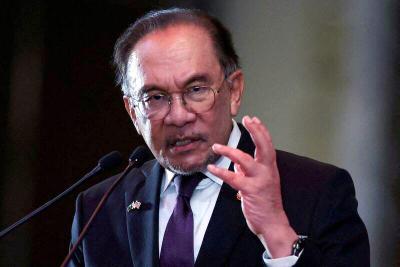
Malaysian Prime Minister Anwar Ibrahim’s remarks that Taiwan is a Chinese province seeking independence threaten regional peace and stability and could undermine Taiwanese businesses’ confidence in investing in Malaysia, the Ministry of Foreign Affairs (MOFA) said today. Anwar recently made remarks implying that Taiwan is a province seeking to separate from China, effectively legitimizing Beijing’s position on using force to take Taiwan, the ministry said in a statement. The Republic of China, Taiwan, is a sovereign, independent country and is not subordinate to the People’s Republic of China, MOFA said, adding that that fact would not be changed no matter
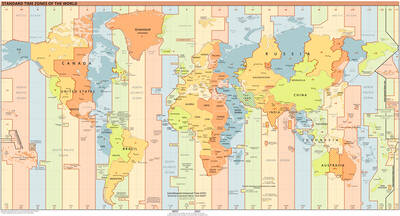
UNNECESSARY?: While some said that the switch would mean more sunlight exposure for workers, others said the government should promote flexible working hours instead An online debate has resurfaced on whether Taiwan should switch to the same time zone as Japan, with supporters citing its geographic location and saying that China would have no right to object. The debate erupted on Threads when users suggested that Taiwan should stop using the same time zone as China, Malaysia and Singapore, GMT+8, and instead switch one hour ahead to the same time zone as Japan and South Korea, GMT+9, which it is geographically closer to. Under GMT+9 the sun would set later year-round, meaning that people would see sunlight after getting off work even in the winter and
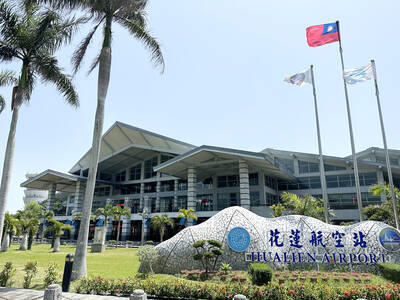
The Civil Aviation Administration (CAA) yesterday confirmed that Uni Air has submitted an application to suspend its Taipei-Hualien flights due to persistently low passenger rates. The airline, which is the only operator of the Taipei-Hualien route, proposed to suspend the service after Mandarin Airlines, another domestic flight carrier, applied to suspend flights to Hualien departing from Kaohsiung and Taichung earlier this year. The average load factor of the Taipei-Hualien flights during the first six months was 24.2 percent, CAA data showed. The average seat occupancy rate dropped even further to 17 percent last month, even though it was the beginning
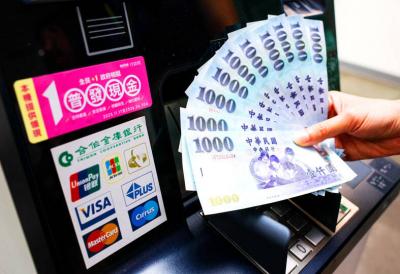
The government would distribute a NT$10,000 cash handout to all citizens next year as Taiwan’s economy continues to grow, President William Lai (賴清德) said today, emphasizing that economic growth could reach a 39-year high. The president made the remarks this morning at the Presidential Office after being briefed on the Executive Yuan’s proposed central government budget for next year for the second time. The forecasts for Taiwan’s economic growth have continued to improve, driven by its longstanding strengths in semiconductors, information and communications technology and manufacturing supply chains, Lai said. The government would focus on five key policies next year: advancing its new


 RSS
RSS