

The Legislative Yuan yesterday passed a bill to authorize a repeatable fine of up to NT$750,000 for top electricity users whose renewable energy capacities do not meet regulatory requirements, although it exempts current heavy users.
The Energy Administration Act (能源管理法) amendments are now headed to President William Lai’s (賴清德) desk.
Taiwanese law mandates that industrial power users with contract capacity of at least 5 megawatts must install renewables capable of generating at least 10 percent of their contract capacity.
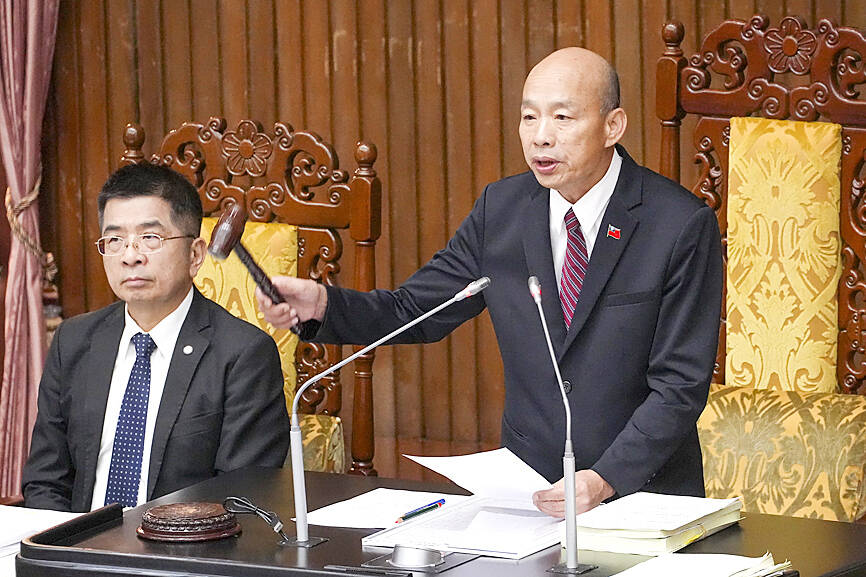
Photo: CNA
In May, the Cabinet proposed amendments adding further requirements for self-use power generation and energy storage equipment.
Lawmakers passed the bill without contest, in a rare show of consensus across the political divide.
The amendments stipulate that new electricity users whose contracted energy capacity meets or exceeds a certain threshold must generate renewable energy or install power storage systems for part of their own use.
While the Cabinet had sought to include current heavy energy users in the bill, the final version passed yesterday limits the scope to only newly established or expanding large energy consumers — a change that has been criticized by environmental groups such as Greenpeace.
The authority tasked with implementing the act is empowered to determine the specific legal threshold of contract capacity and the required installed capacity of renewables and energy storage to electricity use.
Regulators should warn entities that did not install renewable energy or power storage systems or had installed systems that failed to meet government standards before imposing sanctions.
Energy users who did not heed warnings would be punished with a fine of NT$150,000 to NT$750,000, and failure to comply would incur repeated penalties.
Changes to the law are to require top power consumers to appoint a qualified energy management specialist, and failure to comply would result in a NT$100,000 to NT$500,000 fine, up from NT$20,000 to NT$100,000.
Regulators would also name enterprises that endanger the public or negatively affect consumer rights with their energy consumption.
Energy suppliers would be required to publish power sales data for public and government scrutiny to facilitate energy policy, but considerations must be made to protect privacy, the amendments state.
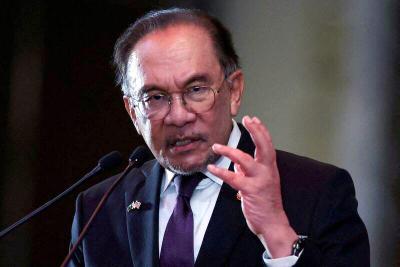
Malaysian Prime Minister Anwar Ibrahim’s remarks that Taiwan is a Chinese province seeking independence threaten regional peace and stability and could undermine Taiwanese businesses’ confidence in investing in Malaysia, the Ministry of Foreign Affairs (MOFA) said today. Anwar recently made remarks implying that Taiwan is a province seeking to separate from China, effectively legitimizing Beijing’s position on using force to take Taiwan, the ministry said in a statement. The Republic of China, Taiwan, is a sovereign, independent country and is not subordinate to the People’s Republic of China, MOFA said, adding that that fact would not be changed no matter
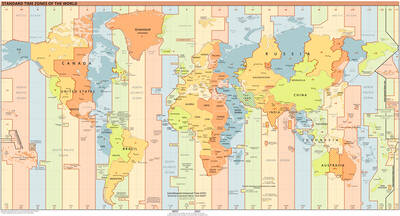
UNNECESSARY?: While some said that the switch would mean more sunlight exposure for workers, others said the government should promote flexible working hours instead An online debate has resurfaced on whether Taiwan should switch to the same time zone as Japan, with supporters citing its geographic location and saying that China would have no right to object. The debate erupted on Threads when users suggested that Taiwan should stop using the same time zone as China, Malaysia and Singapore, GMT+8, and instead switch one hour ahead to the same time zone as Japan and South Korea, GMT+9, which it is geographically closer to. Under GMT+9 the sun would set later year-round, meaning that people would see sunlight after getting off work even in the winter and
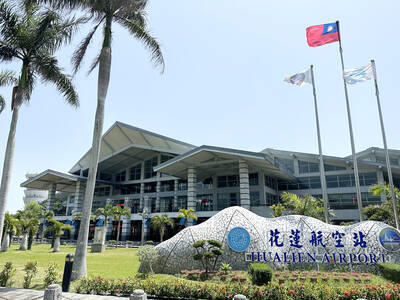
The Civil Aviation Administration (CAA) yesterday confirmed that Uni Air has submitted an application to suspend its Taipei-Hualien flights due to persistently low passenger rates. The airline, which is the only operator of the Taipei-Hualien route, proposed to suspend the service after Mandarin Airlines, another domestic flight carrier, applied to suspend flights to Hualien departing from Kaohsiung and Taichung earlier this year. The average load factor of the Taipei-Hualien flights during the first six months was 24.2 percent, CAA data showed. The average seat occupancy rate dropped even further to 17 percent last month, even though it was the beginning
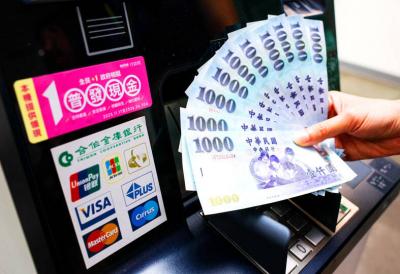
The government would distribute a NT$10,000 cash handout to all citizens next year as Taiwan’s economy continues to grow, President William Lai (賴清德) said today, emphasizing that economic growth could reach a 39-year high. The president made the remarks this morning at the Presidential Office after being briefed on the Executive Yuan’s proposed central government budget for next year for the second time. The forecasts for Taiwan’s economic growth have continued to improve, driven by its longstanding strengths in semiconductors, information and communications technology and manufacturing supply chains, Lai said. The government would focus on five key policies next year: advancing its new


 RSS
RSS