

The Legislative Yuan yesterday passed an amendment to the Income Tax Act (所得稅法) raising the tax exemption threshold for dependent minor children and expanding itemized deductions for social insurance premiums.
The amendment, which cleared its third reading, increases the tax exemption for dependent minor children by 50 percent to NT$151,500 (US$4,757).
It also removes the NT$24,000 annual limit on itemized deductions for insurance premiums for labor insurance, farmers’ health insurance, National Pension Insurance, and insurance for military personnel, civil servants and public-school teachers.
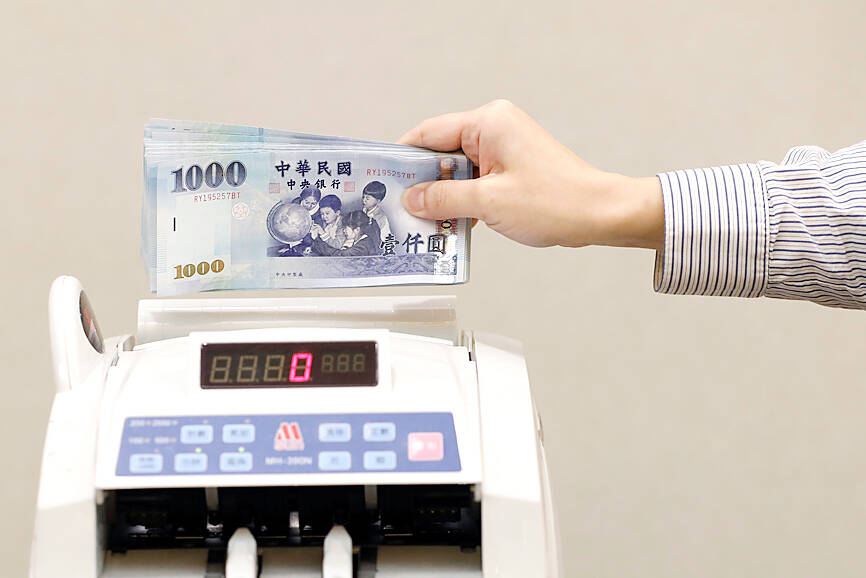
Photo: Tyrone Siu, Reuters
The new rules are to take effect retroactively from Jan. 1, meaning taxpayers would be able to apply the increased exemptions and expanded deductions when filing their income tax returns in May next year.
The Executive Yuan proposed the amendment on June 25 to alleviate financial pressure on families raising children and create a more family-friendly tax environment.
The 50 percent increase for minor children is modeled after the tax code, which already grants a 50 percent exemption increase for dependents over the age of 70.
During an initial review, Minister of Finance Chuang Tsui-yun (莊翠雲) said that the increased exemption for minor children would result in a tax revenue loss of about NT$8 billion, but would directly benefit an estimated 2.37 million households.
Under the previous regulations, only National Health Insurance premiums were exempt from the NT$24,000 annual itemized deduction cap.
The amendment expands this exemption to include the other forms of social insurance.
In addition, lawmakers passed a bipartisan attached resolution requiring the Ministry of Finance to study the feasibility of amending Article 17 of the act to alleviate the tax burden on wage earners.
The resolution aims to ensure that the original intent of special deductions for salary income is not eroded by regular wage growth.
The ministry is required to submit a report on its findings by the end of this year.
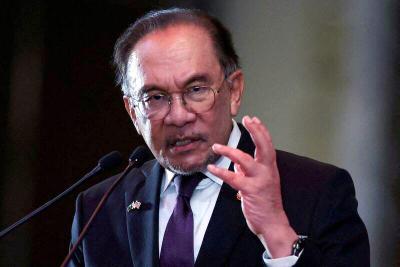
Malaysian Prime Minister Anwar Ibrahim’s remarks that Taiwan is a Chinese province seeking independence threaten regional peace and stability and could undermine Taiwanese businesses’ confidence in investing in Malaysia, the Ministry of Foreign Affairs (MOFA) said today. Anwar recently made remarks implying that Taiwan is a province seeking to separate from China, effectively legitimizing Beijing’s position on using force to take Taiwan, the ministry said in a statement. The Republic of China, Taiwan, is a sovereign, independent country and is not subordinate to the People’s Republic of China, MOFA said, adding that that fact would not be changed no matter
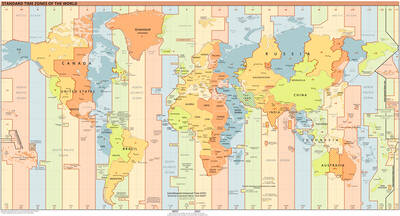
UNNECESSARY?: While some said that the switch would mean more sunlight exposure for workers, others said the government should promote flexible working hours instead An online debate has resurfaced on whether Taiwan should switch to the same time zone as Japan, with supporters citing its geographic location and saying that China would have no right to object. The debate erupted on Threads when users suggested that Taiwan should stop using the same time zone as China, Malaysia and Singapore, GMT+8, and instead switch one hour ahead to the same time zone as Japan and South Korea, GMT+9, which it is geographically closer to. Under GMT+9 the sun would set later year-round, meaning that people would see sunlight after getting off work even in the winter and
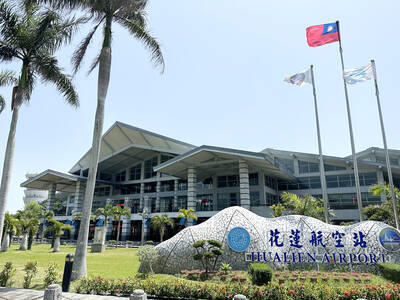
The Civil Aviation Administration (CAA) yesterday confirmed that Uni Air has submitted an application to suspend its Taipei-Hualien flights due to persistently low passenger rates. The airline, which is the only operator of the Taipei-Hualien route, proposed to suspend the service after Mandarin Airlines, another domestic flight carrier, applied to suspend flights to Hualien departing from Kaohsiung and Taichung earlier this year. The average load factor of the Taipei-Hualien flights during the first six months was 24.2 percent, CAA data showed. The average seat occupancy rate dropped even further to 17 percent last month, even though it was the beginning
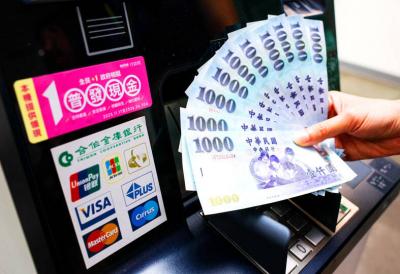
The government would distribute a NT$10,000 cash handout to all citizens next year as Taiwan’s economy continues to grow, President William Lai (賴清德) said today, emphasizing that economic growth could reach a 39-year high. The president made the remarks this morning at the Presidential Office after being briefed on the Executive Yuan’s proposed central government budget for next year for the second time. The forecasts for Taiwan’s economic growth have continued to improve, driven by its longstanding strengths in semiconductors, information and communications technology and manufacturing supply chains, Lai said. The government would focus on five key policies next year: advancing its new


 RSS
RSS