

The Ministry of Environment has set up an exhibition of heat adaptation products in front of its building to showcase the industry’s development and encourage public participation.
The ministry on Thursday held a news conference to unveil the exhibition demonstrating the cooling technologies of a “high-transparency, heat-insulating balloon canopy” and “nano-mineral diffused light net.”
Temperatures of 40°C or higher are expected to become the new normal in Taiwan within the next 10 years due to global warming and the urban heat island effect, Minister of Environment Peng Chi-ming (彭啟明) said.
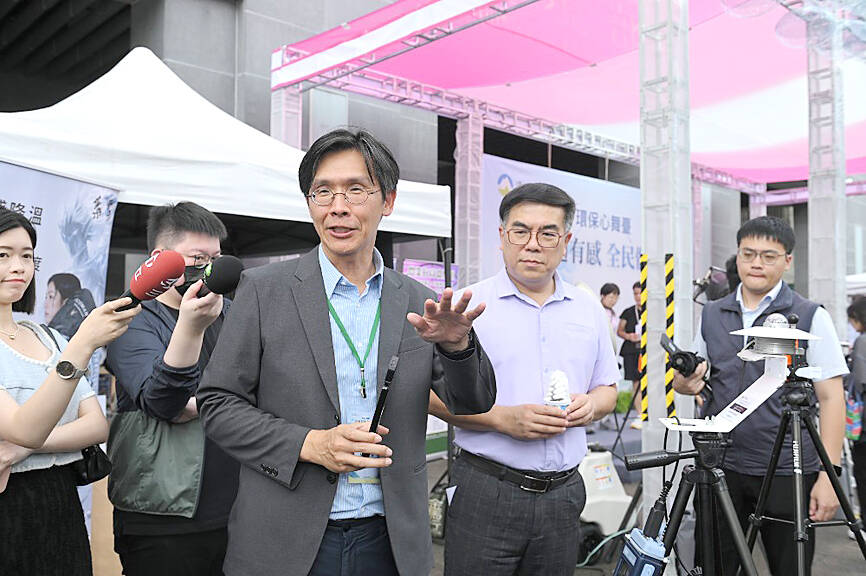
Photo courtesy of the Ministry of Environment
The ministry has therefore been promoting interagency efforts to plant more trees to increase green shade coverage, he said.
While it is difficult to plant trees in some places and seedlings need time to grow big enough to provide shade, locally developed innovative cooling technologies can be applied to protect pedestrians against heat injuries, Peng said.
Using lightweight shading structures to provide “immediate coverage” can help reduce solar heat load, said Lin Tzu-ping (林子平), a member of the Executive Yuan’s National Urban Forest Promotion Committee.
Such measures are a key strategy for preserving people’s thermal comfort and protecting health in urban areas where planting trees might be unsuitable or where trees have yet to grow big enough, said Lin, a professor of architecture at National Cheng Kung University.
The two shading technologies demonstrated in the exhibition area are capable of blocking shortwave solar radiation by 30 to 40 percent, Lin added.
Lin Yi-chun (林怡君), who invented the nano-mineral diffused light net, said the net incorporates mica minerals produced locally in Taiwan into recycled PET polyester fibers.
It transforms harsh direct sunlight into soft, diffused light, while the nano-minerals allow the fibers to absorb moisture from the air, she said.
When the net is exposed to sunlight, the moisture evaporates and lowers temperatures, she said.
Huang Yi-xing (黃翌星), the inventor of the balloon canopy, said the balloons can lower temperatures by up to 6°C, depending on how cloudy it is.
The balloons feature a dual-layer structure and a cesium tungsten oxide nanoparticle film, making them capable of blocking 86 percent of infrared radiation and more than 99 percent of ultraviolet radiation from the sun, he said.
The exhibition, scheduled to run for 100 days, was set up to showcase how heat adaptation technoliges can be integrated into people’s lives, the ministry said.
Aided by investments from industry, more comprehensive heat adaptation strategies can be developed for outdoor workers, vulnerable groups and the general public, it said.
Additional reporting by CNA
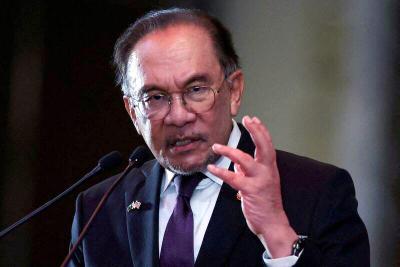
Malaysian Prime Minister Anwar Ibrahim’s remarks that Taiwan is a Chinese province seeking independence threaten regional peace and stability and could undermine Taiwanese businesses’ confidence in investing in Malaysia, the Ministry of Foreign Affairs (MOFA) said today. Anwar recently made remarks implying that Taiwan is a province seeking to separate from China, effectively legitimizing Beijing’s position on using force to take Taiwan, the ministry said in a statement. The Republic of China, Taiwan, is a sovereign, independent country and is not subordinate to the People’s Republic of China, MOFA said, adding that that fact would not be changed no matter
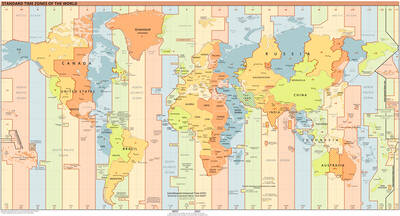
UNNECESSARY?: While some said that the switch would mean more sunlight exposure for workers, others said the government should promote flexible working hours instead An online debate has resurfaced on whether Taiwan should switch to the same time zone as Japan, with supporters citing its geographic location and saying that China would have no right to object. The debate erupted on Threads when users suggested that Taiwan should stop using the same time zone as China, Malaysia and Singapore, GMT+8, and instead switch one hour ahead to the same time zone as Japan and South Korea, GMT+9, which it is geographically closer to. Under GMT+9 the sun would set later year-round, meaning that people would see sunlight after getting off work even in the winter and
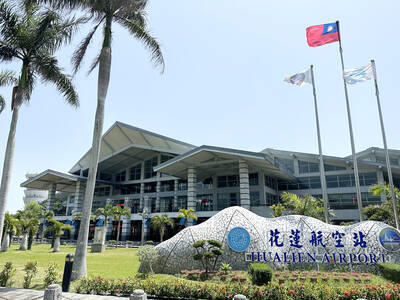
The Civil Aviation Administration (CAA) yesterday confirmed that Uni Air has submitted an application to suspend its Taipei-Hualien flights due to persistently low passenger rates. The airline, which is the only operator of the Taipei-Hualien route, proposed to suspend the service after Mandarin Airlines, another domestic flight carrier, applied to suspend flights to Hualien departing from Kaohsiung and Taichung earlier this year. The average load factor of the Taipei-Hualien flights during the first six months was 24.2 percent, CAA data showed. The average seat occupancy rate dropped even further to 17 percent last month, even though it was the beginning
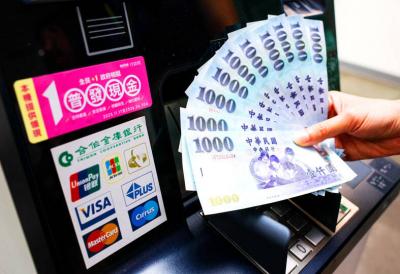
The government would distribute a NT$10,000 cash handout to all citizens next year as Taiwan’s economy continues to grow, President William Lai (賴清德) said today, emphasizing that economic growth could reach a 39-year high. The president made the remarks this morning at the Presidential Office after being briefed on the Executive Yuan’s proposed central government budget for next year for the second time. The forecasts for Taiwan’s economic growth have continued to improve, driven by its longstanding strengths in semiconductors, information and communications technology and manufacturing supply chains, Lai said. The government would focus on five key policies next year: advancing its new


 RSS
RSS