

China is responding to closer cooperation between the Philippines and Japan by expanding its presence east of Taiwan in an apparent bid to establish jurisdiction over waters in the Philippine Sea, the Asia Maritime Transparency Initiative (AMTI) said in a report released on Wednesday.
The “unprecedented” Chinese operations — including sustained “law-enforcement” patrols, surveys near Taiwan and questioning nearly 200 commercial vessels — followed a May agreement between Japan and the Philippines to negotiate a maritime boundary, said the research group, which monitors maritime security issues in Asia.
The activity could also help normalize a Chinese presence around Taiwan and is stoking concerns that Beijing is testing tactics relevant to a future quarantine or blockade, AMTI said.
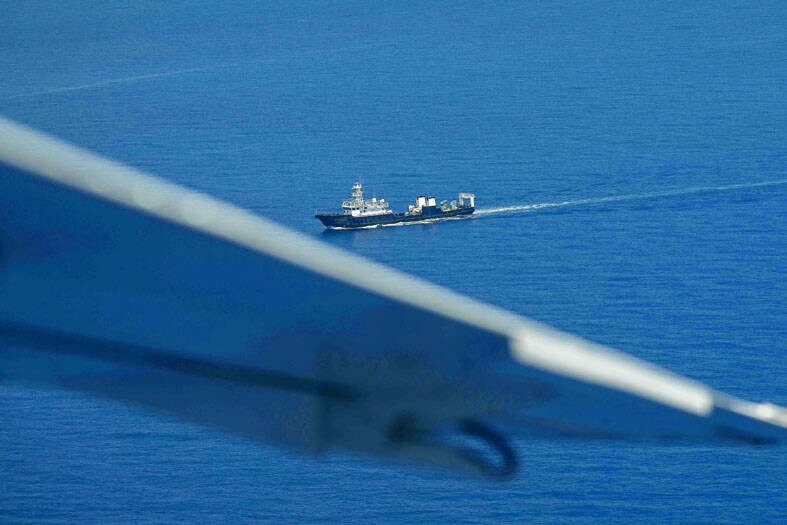
Photo: AFP
“The scale and character of China’s response suggest that these operations are not just about sending a signal to Tokyo and Manila,” the Washington-based policy program said in the report.
Beijing might be trying to alter the “status quo” by establishing a semipermanent presence east of Taiwan and asserting authority there, AMTI said.
The maneuvers mark an escalation in tensions with Tokyo and Manila and employ the same kind of “gray zone” tactics commonplace in Beijing’s South China Sea disputes.
Japan and the Philippines have taken more assertive positions, suggesting in the past few months they could be drawn into any fight over Taiwan, remarks that have irked Beijing.
Japan and the Philippines have also moved to deepen military ties, agreeing this year to elevate their relationship and open a series of defense talks.
Since June, Chinese law-enforcement activity, mainly involving two ships, was concentrated east of Taiwan in an area where Japan and the Philippines have overlapping maritime claims, AMTI said.
By contrast, virtually no Chinese law-enforcement deployment was observed there in the five months before the delimitation talks were announced.
China also issued a legal warning against the two nations last month over their maritime border talks, saying the discussions “constitute a severe provocation against the ‘one China’ principle.”
Beijing disputes Japan’s control of the Diaoyutai Islands (釣魚台) — known as the Senkaku Islands in Japan — in the East China Sea.
With the Philippines, it contests sovereignty and maritime rights across parts of the South China Sea, including at Scarborough Shoal (Huangyan Island, 黃岩島) and in the Spratly Islands (Nansha Islands, 南沙群島), where other nations, including Vietnam, are also bolstering defenses as China’s military capabilities grow.
Taiwan also lays claim to the Diaoyutais, Scarborough Shoal and the Spratly Islands.
“The operations in the Philippine Sea suggest Beijing seeks broad and unprecedented jurisdiction over what it calls its ‘near seas,’” AMTI said in its report.
Additional reporting by staff writer
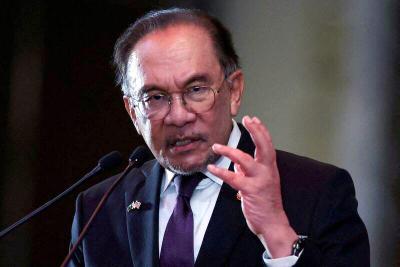
Malaysian Prime Minister Anwar Ibrahim’s remarks that Taiwan is a Chinese province seeking independence threaten regional peace and stability and could undermine Taiwanese businesses’ confidence in investing in Malaysia, the Ministry of Foreign Affairs (MOFA) said today. Anwar recently made remarks implying that Taiwan is a province seeking to separate from China, effectively legitimizing Beijing’s position on using force to take Taiwan, the ministry said in a statement. The Republic of China, Taiwan, is a sovereign, independent country and is not subordinate to the People’s Republic of China, MOFA said, adding that that fact would not be changed no matter
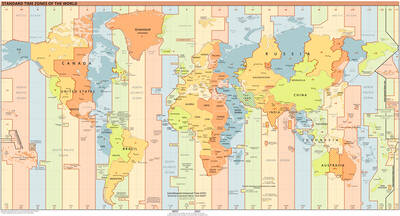
UNNECESSARY?: While some said that the switch would mean more sunlight exposure for workers, others said the government should promote flexible working hours instead An online debate has resurfaced on whether Taiwan should switch to the same time zone as Japan, with supporters citing its geographic location and saying that China would have no right to object. The debate erupted on Threads when users suggested that Taiwan should stop using the same time zone as China, Malaysia and Singapore, GMT+8, and instead switch one hour ahead to the same time zone as Japan and South Korea, GMT+9, which it is geographically closer to. Under GMT+9 the sun would set later year-round, meaning that people would see sunlight after getting off work even in the winter and
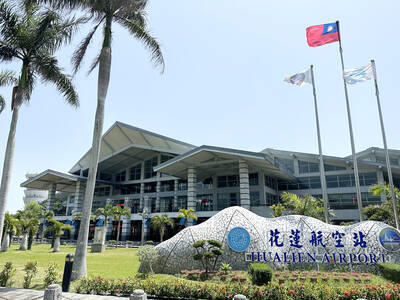
The Civil Aviation Administration (CAA) yesterday confirmed that Uni Air has submitted an application to suspend its Taipei-Hualien flights due to persistently low passenger rates. The airline, which is the only operator of the Taipei-Hualien route, proposed to suspend the service after Mandarin Airlines, another domestic flight carrier, applied to suspend flights to Hualien departing from Kaohsiung and Taichung earlier this year. The average load factor of the Taipei-Hualien flights during the first six months was 24.2 percent, CAA data showed. The average seat occupancy rate dropped even further to 17 percent last month, even though it was the beginning
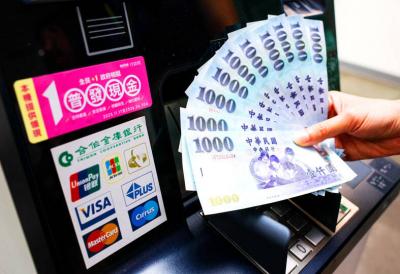
The government would distribute a NT$10,000 cash handout to all citizens next year as Taiwan’s economy continues to grow, President William Lai (賴清德) said today, emphasizing that economic growth could reach a 39-year high. The president made the remarks this morning at the Presidential Office after being briefed on the Executive Yuan’s proposed central government budget for next year for the second time. The forecasts for Taiwan’s economic growth have continued to improve, driven by its longstanding strengths in semiconductors, information and communications technology and manufacturing supply chains, Lai said. The government would focus on five key policies next year: advancing its new


 RSS
RSS